Quantum Device Maps Earth's Magnetic Field from Space
Scientists tested a revolutionary diamond-based quantum magnetometer aboard the ISS, successfully mapping Earth's magnetic field and proving quantum sensors can operate reliably in space.

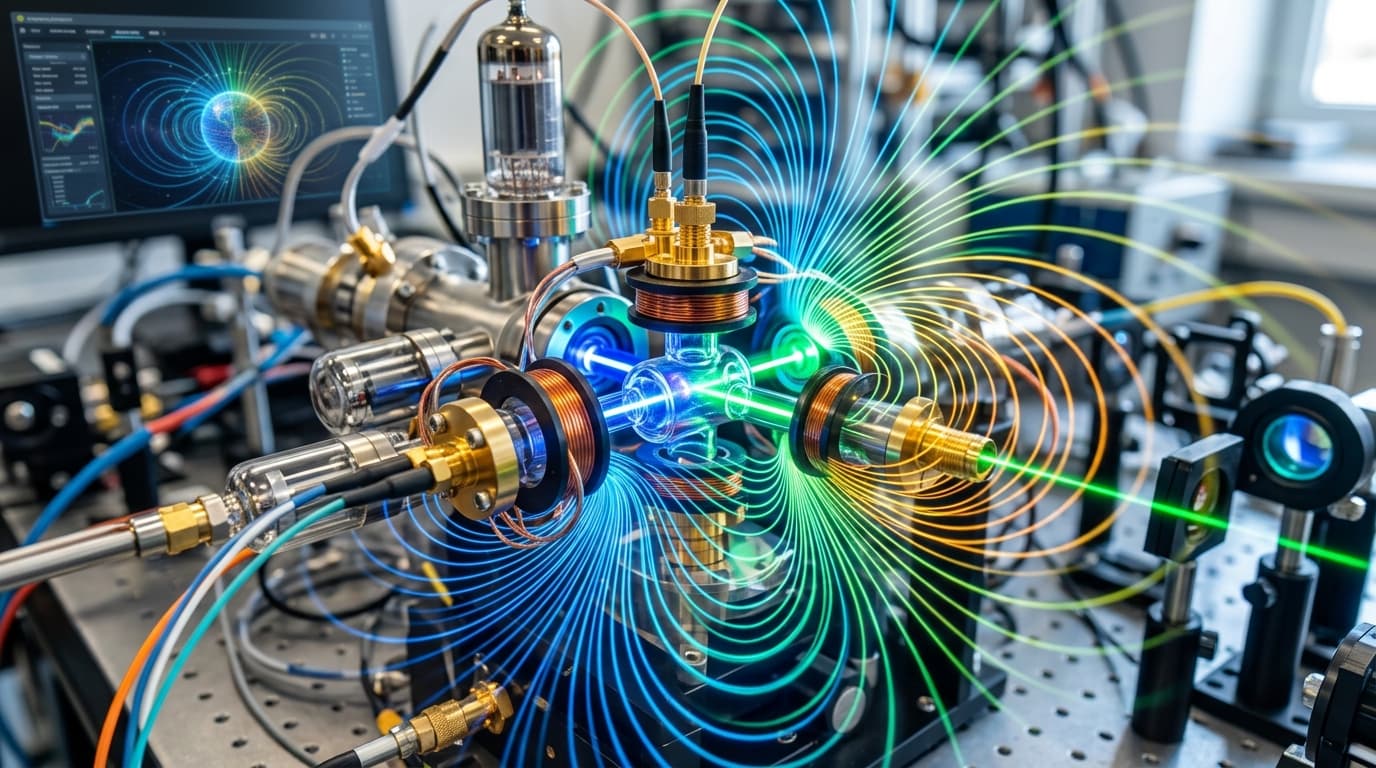
Scientists Test Revolutionary Quantum Magnetometer on the International Space Station
Learn more about move cakewalk content folder to external drive (2024)
Scientists aboard the International Space Station tested a revolutionary grapefruit-sized quantum magnetometer that could transform how we measure Earth's magnetic field from orbit. This diamond-based sensor represents a breakthrough in quantum technology, offering unprecedented precision in a compact package. The experiment demonstrates that quantum devices can operate reliably in the harsh conditions of space.
How Does a Quantum Magnetometer Work?
Quantum magnetometers use the unique properties of quantum mechanics to detect magnetic fields with extreme sensitivity. Unlike traditional magnetometers that rely on moving parts or electrical currents, these devices exploit the behavior of electrons in diamond crystals.
The ISS experiment utilized nitrogen-vacancy centers in synthetic diamonds. These are essentially atomic-scale defects that act as quantum sensors.
When exposed to magnetic fields, these nitrogen-vacancy centers change their quantum state in measurable ways. Scientists shine laser light onto the diamond and monitor how the defects respond. The changes in fluorescence reveal the strength and direction of magnetic fields with remarkable accuracy.
The Technology Behind Diamond-Based Sensors
The quantum device tested on the ISS contains a small synthetic diamond with carefully engineered defects. These defects consist of a nitrogen atom adjacent to a missing carbon atom in the diamond's crystal lattice. This configuration creates a quantum system that responds predictably to magnetic fields.
The sensor operates at room temperature, unlike many quantum devices that require extreme cooling. This practical advantage makes it suitable for space applications where complex cooling systems add weight and consume power.
The compact design, roughly the size of a grapefruit, packs sophisticated quantum sensing capabilities into a deployable package.
For a deep dive on virtual wings reshape the brain: 25 people learned to fly, see our full guide
Why Map Earth's Magnetic Field from Space?
Earth's magnetic field serves as an invisible shield protecting our planet from harmful solar radiation and cosmic particles. Understanding this field helps scientists predict space weather events that can disrupt satellites, power grids, and communication systems.
For a deep dive on dirtyfrag: universal linux lpe exploit explained, see our full guide
Current satellite-based magnetometers provide valuable data, but quantum sensors promise significantly improved precision. The magnetic field also reveals information about Earth's interior structure and geological processes.
Variations in the field indicate mineral deposits, tectonic activity, and even ocean currents. More accurate measurements enable better models of these phenomena.
What Applications Exist Beyond Earth Science?
Quantum magnetometers offer benefits across multiple scientific disciplines:
- Space weather forecasting: Enhanced detection of solar storms and geomagnetic disturbances
- Navigation systems: Backup navigation when GPS signals are unavailable or compromised
- Mineral exploration: Identifying subsurface resources from orbital platforms
- Climate research: Tracking changes in ocean circulation patterns through magnetic signatures
- Fundamental physics: Testing theories about Earth's core dynamics and magnetic field generation
What Makes This Quantum Device Different?
Traditional magnetometers aboard satellites use proven technologies like fluxgate sensors or optically pumped magnetometers. These instruments work well but face limitations in sensitivity and size.
The quantum approach offers several advantages that could revolutionize space-based magnetic field measurements. The diamond-based sensor achieves higher sensitivity while consuming less power than conventional alternatives.
It also resists radiation damage better than many electronic components, a critical factor for long-duration space missions. The solid-state design eliminates moving parts that could fail in the space environment.
How Did the Device Perform in Space?
The ISS experiment validated that quantum magnetometers can survive launch stresses and operate reliably in microgravity. Temperature fluctuations, radiation exposure, and vacuum conditions all pose challenges for sensitive instruments. The diamond sensor maintained its quantum properties throughout the testing period.
Researchers collected magnetic field data that matched or exceeded the quality of readings from conventional instruments. The device successfully mapped variations in Earth's magnetic field as the ISS orbited overhead.
This proof-of-concept demonstration paves the way for dedicated satellite missions carrying quantum sensors.
How Could This Technology Transform Satellite Missions?
Future Earth observation satellites could carry fleets of these compact quantum magnetometers to create detailed magnetic field maps. The small size allows multiple sensors on a single spacecraft, providing redundancy and enabling gradient measurements.
This capability reveals how the magnetic field changes across distances. The reduced power requirements mean satellites can operate longer or carry additional scientific instruments.
Lower mass also decreases launch costs, making missions more economically feasible. Space agencies could deploy constellations of small satellites equipped with quantum sensors for continuous global monitoring.
When Will Quantum Magnetometers Launch Operationally?
Engineers must refine the design for specific mission requirements and develop production methods for multiple units. Regulatory approvals and mission planning typically span several years.
Experts predict the first dedicated missions carrying operational quantum magnetometers could launch within the next five to seven years. Early adopters will likely be research satellites focused on geophysics and space weather. Commercial applications may follow as the technology matures and costs decrease.
What Are the Broader Implications for Quantum Technology?
This successful space deployment represents a milestone for practical quantum devices beyond laboratory settings. Quantum technologies have long promised revolutionary capabilities but faced challenges transitioning from research to real-world applications.
The magnetometer demonstrates that quantum systems can deliver tangible benefits today. The achievement encourages investment in other quantum sensing applications.
Quantum gravimeters, quantum clocks, and quantum communication systems could follow similar development paths. Each successful deployment builds confidence in quantum technology's reliability and practicality.
What Challenges Remain for Widespread Adoption?
Manufacturing consistency must improve to produce multiple identical sensors for satellite constellations. Scientists need to develop better calibration methods that account for the space environment's unique conditions.
Integration with existing satellite systems requires standardized interfaces and data formats. Mission planners must understand how to optimize orbital parameters for quantum sensor performance. These technical and operational challenges will be addressed as more missions incorporate the technology.
What Does the Future Hold for Quantum Sensing in Space?
The grapefruit-sized quantum device aboard the ISS opens new possibilities for space-based scientific instruments. As quantum technology advances, sensors will become even smaller, more sensitive, and more versatile.
Future spacecraft might carry quantum sensor suites measuring multiple physical properties simultaneously. Combining quantum magnetometers with other quantum sensors could reveal correlations between different phenomena.
Simultaneous measurements of magnetic fields and gravitational variations might uncover new insights about Earth's interior. The synergy between quantum technologies could accelerate scientific discovery.
Continue learning: Next, explore google's video streaming strategy backfires: what went wrong
This breakthrough demonstrates that quantum physics has moved from theoretical curiosity to practical tool. The successful operation of a quantum device in space validates decades of research and engineering effort. Scientists and engineers worldwide now have a proven template for deploying quantum technology beyond Earth's atmosphere, marking a new chapter in both quantum science and space exploration.
Related Articles

Anthropic's $1.5B Settlement: A Turning Point for AI & Authors
Anthropic agrees to a $1.5B settlement with book authors, highlighting the complex relationship between AI development and copyright laws.
Sep 6, 2025

Why I Switched from Docker to Podman: A Deep Dive
Exploring the strategic shift from Docker to Podman, focusing on security, ease of use, and system resource management in container technology.
Sep 6, 2025

iPhone 17 Unveiled: Features & Expectations
With the iPhone 17 launch just a week away, explore the rumored features, technological advancements, and Apple's push for sustainability.
Sep 5, 2025