Harnessing eDNA to Help Conserve Australia's Oceans
West Australian scientists pioneer environmental DNA techniques to protect marine ecosystems, detecting species from microscopic genetic traces in water samples.

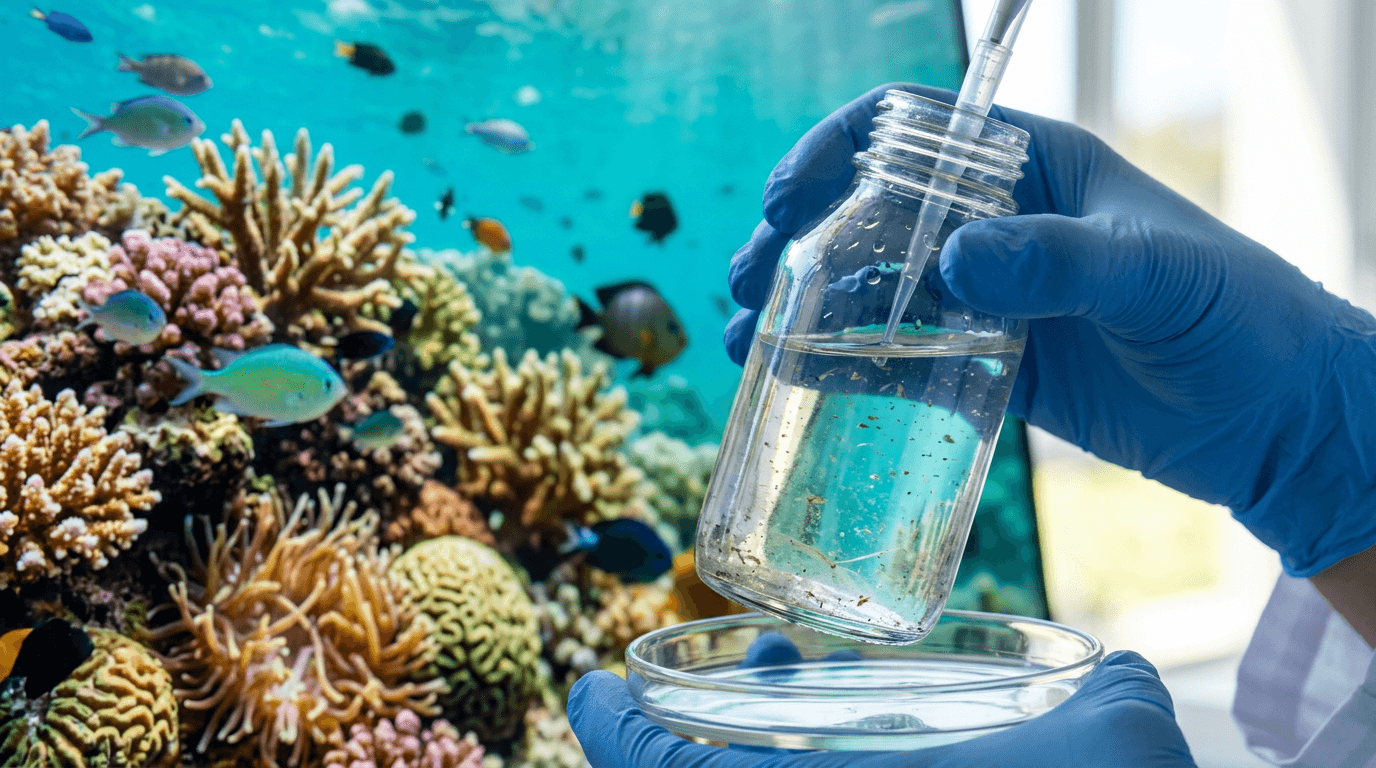
Australia's Marine Ecosystems Face Growing Threats: Can eDNA Technology Save Them?
Learn more about ex-microsoft lead reviews macbook neo: 'stay excellent'
Australia's vast marine ecosystems face mounting pressures from climate change, pollution, and overfishing. Traditional monitoring methods struggle to keep pace with the scale of these threats.
Environmental DNA, or eDNA, offers a revolutionary approach to tracking marine biodiversity without ever seeing the creatures themselves. Scientists can now detect species presence from water samples containing microscopic traces of genetic material. West Australian researchers are pioneering new applications of this technology to protect the continent's unique ocean environments.
What Is Environmental DNA and How Does It Work?
Every living organism constantly sheds genetic material into its surroundings. Fish release scales, mucus, and waste products that contain their DNA. Marine mammals leave behind skin cells, while even microscopic plankton contribute their genetic signatures to the water column.
Researchers collect water samples and filter them to capture these tiny DNA fragments. Laboratory analysis then identifies which species left their genetic calling cards behind. The process reveals biodiversity patterns without traditional survey methods like nets, traps, or underwater cameras.
The Science Behind eDNA Detection
eDNA analysis relies on advanced molecular techniques to amplify and sequence genetic material. Scientists use polymerase chain reaction (PCR) to create millions of copies of DNA fragments.
Next-generation sequencing technologies then read these genetic codes and match them against reference databases. The method detects species at concentrations as low as a few cells per liter of water. This sensitivity surpasses conventional survey techniques by orders of magnitude, allowing researchers to identify rare or elusive species that traditional methods might miss entirely.
How Long Does eDNA Persist in Marine Environments?
Environmental DNA degrades relatively quickly in ocean water, typically within days to weeks. Several factors influence persistence rates:
- Water temperature affects degradation speed
- UV radiation breaks down genetic material
- Microbial activity consumes DNA fragments
- Water chemistry and pH levels impact stability
- Ocean currents disperse and dilute eDNA signals
This limited persistence actually benefits researchers by providing snapshots of recent species presence. The data reflects current conditions rather than historical populations.
How Are West Australian Researchers Pushing eDNA Boundaries?
West Australian scientists are expanding eDNA applications beyond simple species detection. Their innovative approaches target conservation challenges specific to Australia's marine environments, combining cutting-edge genetic analysis with ecological expertise.
These projects aim to create comprehensive biodiversity baselines for understudied marine regions. The data will inform management decisions and track ecosystem health over time.
For a deep dive on google maps adds gemini ai 'ask maps' feature, see our full guide
Mapping Biodiversity Hotspots
Researchers are using eDNA to identify critical habitats along Western Australia's 12,500-kilometer coastline. They collect samples from diverse environments including coral reefs, seagrass meadows, and deep-sea canyons.
For a deep dive on fix clicking & static in refx nexus: complete guide, see our full guide
The resulting genetic maps reveal species distribution patterns at unprecedented scales. This approach detects biodiversity gradients that traditional surveys would require years to document. Scientists can prioritize conservation efforts based on hotspot locations and identify areas where threatened species concentrate.
Monitoring Threatened Marine Species
Several iconic Australian marine species face extinction risks. White sharks, sawfish, and various whale species require constant monitoring to assess population trends.
eDNA provides a non-invasive alternative to traditional tagging and tracking methods. Researchers can detect these species without physical capture or disturbance. The technique proves especially valuable for studying juvenile animals in nursery habitats, allowing managers to implement protective measures before crises develop.
Detecting Invasive Species Early
Marine invasive species cost Australia's economy millions annually and threaten native ecosystems. Traditional detection methods often discover invaders only after populations become established. eDNA surveillance offers early warning capabilities.
Scientists can screen water samples for known invasive species genetic signatures. This biosecurity application allows rapid response before populations explode. Ports and harbors represent priority monitoring locations where ballast water introduces foreign species.
What Are the Advantages of eDNA Over Traditional Methods?
Environmental DNA technology transforms marine conservation by addressing limitations of conventional approaches. The benefits extend beyond simple cost savings to fundamental improvements in data quality and scope. Traditional surveys require extensive field time, specialized equipment, and significant expertise, while eDNA sampling reduces these barriers and increases detection rates.
Cost-Effectiveness and Efficiency
A single researcher can collect dozens of water samples in a day. Traditional visual surveys or netting operations require larger teams and more time.
Laboratory analysis costs continue declining as sequencing technologies improve. The method also reduces vessel operating costs and carbon emissions. Smaller boats and shorter field campaigns suffice for comprehensive sampling, allowing researchers to survey larger areas more frequently.
Non-Invasive Monitoring
eDNA collection does not harm or stress marine organisms. Traditional methods often involve capture, handling, or disturbance that affects animal behavior.
Some endangered species cannot ethically be subjected to invasive sampling. The non-invasive nature also eliminates bycatch concerns, as nets and traps frequently capture non-target species, sometimes causing injury or mortality. Water sampling poses zero risk to marine life.
Enhanced Detection of Rare Species
Elusive and cryptic species evade traditional survey methods. eDNA detects organisms regardless of visibility, behavior, or abundance. Researchers have discovered species in areas where visual surveys found nothing.
The technique proves especially valuable for nocturnal species, deep-water organisms, and animals with patchy distributions. Detection sensitivity exceeds human observation capabilities by substantial margins.
What Challenges and Limitations Does eDNA Technology Face?
Despite its promise, environmental DNA analysis faces several technical and interpretive challenges. Researchers continue developing solutions to improve accuracy and reliability.
Understanding these limitations helps contextualize results appropriately. The technology cannot yet answer all conservation questions, and complementary methods remain necessary for comprehensive ecosystem assessments.
Quantification Difficulties
eDNA concentration does not directly translate to population size or biomass. Multiple factors influence how much genetic material organisms shed. Large animals do not necessarily produce proportionally more eDNA than small ones.
Water movement, degradation rates, and sampling timing all affect detected concentrations. Researchers struggle to convert genetic signals into abundance estimates. The method excels at presence-absence data but requires refinement for quantitative applications.
Reference Database Gaps
Species identification depends on comprehensive genetic reference libraries. Australia's marine biodiversity includes thousands of species lacking genetic reference data.
Unknown sequences cannot be assigned to specific organisms. Scientists are actively building reference databases through specimen collection and sequencing. However, completing this work for all Australian marine species requires years of effort, with rare and undescribed species presenting particular challenges.
Contamination and False Positives
eDNA samples can contain genetic material from unexpected sources. Ocean currents transport DNA across large distances, while contamination during collection or laboratory processing introduces errors.
Strict protocols minimize these risks but cannot eliminate them entirely. Researchers use multiple controls and replication to verify results. Interpreting detections requires ecological knowledge and careful quality assessment.
What Future Applications Could eDNA Have for Marine Conservation?
The West Australian research represents just the beginning of eDNA's conservation potential. Scientists envision expanded applications addressing diverse management challenges as technological improvements unlock new capabilities.
Integrating eDNA with other monitoring approaches creates powerful conservation toolkits. The combination provides comprehensive ecosystem understanding.
Real-Time Biosecurity Monitoring
Automated eDNA sampling systems could provide continuous surveillance at high-risk locations. Ports, marinas, and aquaculture facilities would benefit from early invasive species warnings.
Rapid alert systems would trigger immediate response protocols. Developers are creating portable sequencing devices for field deployment that eliminate laboratory delays and enable same-day results. Real-time monitoring represents a paradigm shift in biosecurity management.
Climate Change Impact Assessment
eDNA time series will document how marine communities respond to warming oceans. Researchers can track range shifts, seasonal timing changes, and community composition alterations.
This information guides adaptive management strategies. Long-term monitoring programs will establish baselines for measuring change, allowing proactive rather than reactive conservation. The data supports predictive modeling of future ecosystem states.
Indigenous Knowledge Integration
Australian Indigenous communities possess deep ecological knowledge spanning millennia. Combining traditional observations with eDNA data creates holistic understanding.
Collaborative research respects cultural values while advancing conservation science. Indigenous rangers can collect eDNA samples as part of existing land and sea management programs. This partnership approach builds capacity and ensures culturally appropriate methods, strengthening both knowledge systems.
How Can Conservation Managers Implement eDNA Technology?
Translating research findings into practical management applications requires careful planning. Conservation agencies must develop protocols, train staff, and allocate resources.
The transition from experimental tool to standard practice takes time. Successful implementation depends on collaboration between researchers, managers, and policymakers, with clear communication ensuring stakeholders understand capabilities and limitations.
Managers need user-friendly tools and decision frameworks. Raw genetic data requires interpretation through ecological lenses. Researchers must present results in formats that inform specific management questions, while training programs build capacity within conservation agencies.
Funding represents another critical consideration. While eDNA offers long-term cost savings, initial infrastructure investments are substantial. Governments must commit resources to establish monitoring networks and laboratory facilities.
A Genetic Revolution in Ocean Conservation
Environmental DNA technology transforms how scientists monitor and protect Australia's marine ecosystems. The West Australian research demonstrates eDNA's potential to address pressing conservation challenges, from detecting rare species to tracking invasive organisms.
The method offers cost-effective, non-invasive surveillance across vast ocean areas. While technical challenges remain, ongoing research continues improving accuracy and applications. Integration with traditional methods creates comprehensive conservation strategies.
Continue learning: Next, explore discodsp usual suspect emulators: profit or problem?
Australia's unique marine biodiversity deserves cutting-edge protection tools. eDNA represents a powerful addition to the conservation toolkit, enabling proactive management in the face of accelerating environmental change. The genetic traces organisms leave behind may ultimately help save the oceans we depend upon.
Related Articles

Mariana Trench Mysteries: Unveiling New Species
Recent expeditions to the Mariana Trench have unveiled new species, showcasing the resilience and diversity of life in Earth's deepest abyss.
Sep 6, 2025

iPhone 17 Unveiled: Features & Expectations
With the iPhone 17 launch just a week away, explore the rumored features, technological advancements, and Apple's push for sustainability.
Sep 5, 2025

Atlassian's Strategic Move: Acquiring The Browser Company
Atlassian's acquisition of The Browser Company marks a significant shift towards integrated, innovative digital workspaces and team collaboration tools.
Sep 4, 2025
Comments
Loading comments...