Google Maps Adds Gemini AI 'Ask Maps' Feature
Google Maps now features Gemini AI integration, introducing Ask Maps for complex queries and 3D Immersive Navigation for enhanced driving directions with spatial understanding.

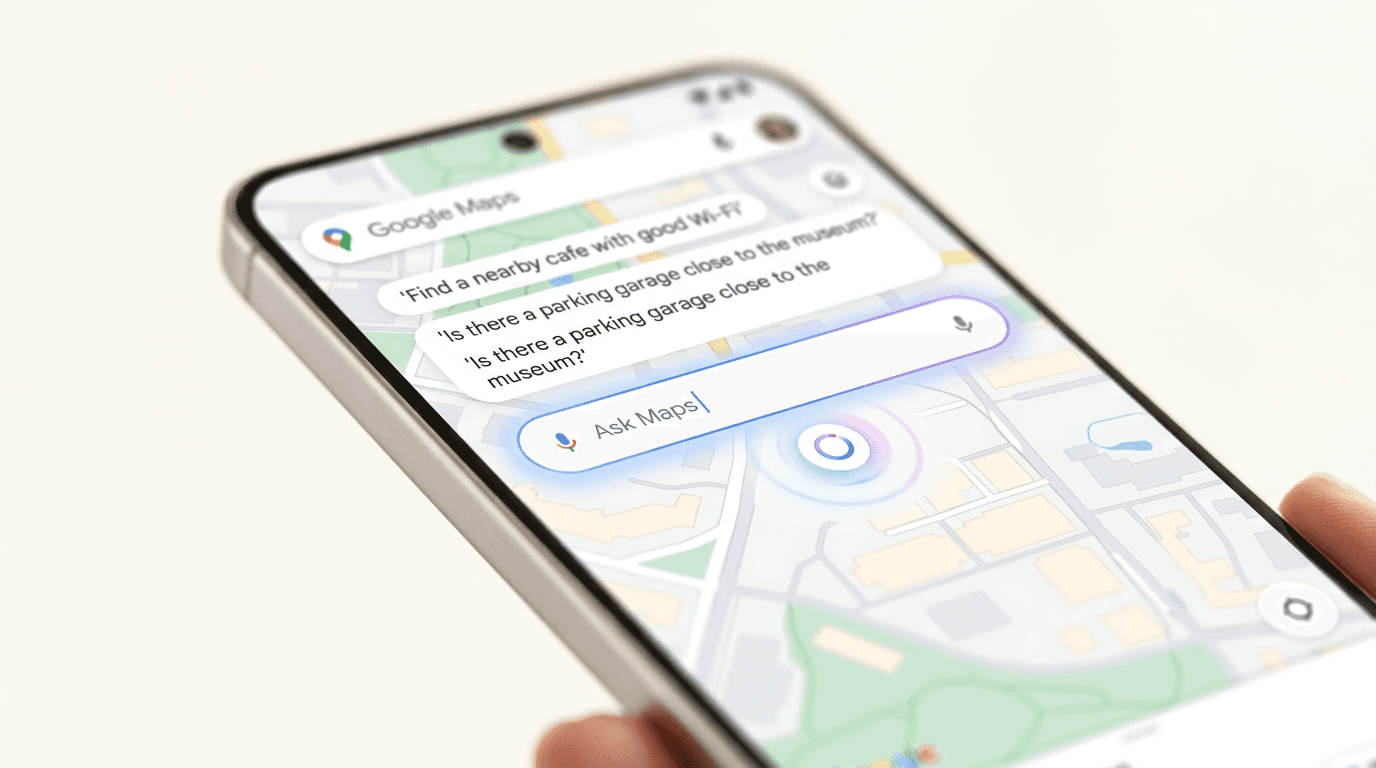
Google Maps Transforms Navigation with Gemini AI Integration
Learn more about fix clicking & static in refx nexus: complete guide
Google Maps just received its most significant upgrade in over a decade. The tech giant integrated Gemini AI into its mapping platform, fundamentally changing how users interact with location data. This is not just another incremental update - it is a complete reimagining of what a navigation app can accomplish.
The new Google Maps Gemini AI features address a critical pain point: finding specific, nuanced information that traditional map searches could not handle. Users can now ask complex questions and receive instant, comprehensive answers. No more scrolling through dozens of reviews or making multiple searches.
How Does the Ask Maps Feature Work?
The Ask Maps button represents Google's answer to conversational AI in navigation. This feature transforms Google Maps from a simple directional tool into an intelligent assistant that understands context and nuance. Users type or speak natural language queries directly into the app.
The system leverages Gemini's advanced language processing to interpret complex questions like "is there a public tennis court with lights on that I can play at tonight?" Previously, answering this question required checking multiple locations, reading through reviews, verifying amenities, and confirming operating hours. Now, Google Maps delivers a custom map with relevant locations in seconds.
Ask Maps taps into Google's database of more than 300 million places. It analyzes reviews from the Google community, business information, and user-generated content to provide accurate responses. This massive data integration makes the feature remarkably powerful for both everyday queries and complex trip planning.
Does Ask Maps Learn Your Preferences?
Personalization sets Ask Maps apart from generic search functions. The feature remembers your prior searches and considers saved information in your Google Maps profile. If you have previously searched for vegetarian restaurants or saved parks to your favorites, Gemini incorporates these preferences into future recommendations.
For a deep dive on ai auto-complete subtly shapes views on social issues, see our full guide
This contextual awareness means the AI learns your habits and preferences over time. Someone who frequently visits coffee shops receives different suggestions than someone who searches for hiking trails. The system builds a profile of your interests without requiring explicit input.
Google Maps now builds complete trip itineraries based on a single conversational query. Ask about "a day trip with family-friendly activities and good lunch spots," and the app generates a full schedule with timing, directions, and recommendations. Each suggestion considers factors like crowd levels, peak hours, and user ratings.
For a deep dive on discodsp usual suspect emulators: profit or problem?, see our full guide
What Makes Immersive Navigation Different from Standard Maps?
Google Maps introduced Immersive Navigation alongside Ask Maps, marking what the company calls its most substantial driving update since the app's early years. This feature transforms the standard 2D map view into a detailed 3D environment that displays buildings, overpasses, and terrain with remarkable accuracy.
The 3D view provides practical navigation benefits beyond visual enhancement. Google Maps now highlights critical road details including lanes, crosswalks, traffic lights, and stop signs as you approach them. This spatial understanding helps drivers prepare for complex intersections and highway exits well in advance.
How Does Gemini Power Spatial Understanding?
Gemini models analyze real-world imagery from Street View and aerial photographs to create this enhanced navigation experience. The AI processes millions of images to understand road layouts, building positions, and terrain features. This analysis happens continuously as Google updates its imagery database.
The spatial understanding capability means Google Maps now comprehends routes in three dimensions rather than simple lines on a flat map. It recognizes that an overpass exists above your current position or that a building might obstruct your view of a turn. These insights translate into better navigation instructions and fewer missed exits.
Google's system combines satellite imagery, Street View data, and real-time traffic information to build accurate 3D models. The Gemini AI identifies patterns and features that traditional mapping algorithms miss. This includes subtle details like parking lot entrances, building setbacks, and pedestrian pathways.
What Features Does Immersive Navigation Include?
The updated navigation interface provides several practical improvements for drivers:
- Broader route view: See more of your upcoming path with contextual information about what lies ahead
- Alternate route tradeoffs: Understand why one route might be faster despite being longer, or how much time you save by taking a toll road
- Route previews: Plan parking locations and final approach before you arrive at your destination
- Lane guidance: Clear visual indicators show which lane to use for upcoming turns or exits
- Landmark recognition: Buildings and notable features help you orient yourself in unfamiliar areas
These features work together to reduce navigation anxiety, especially in complex urban environments or unfamiliar territories. The 3D visualization helps drivers mentally prepare for challenging maneuvers like multi-lane highway merges or confusing intersections.
Does Google Maps Work with CarPlay and Android Auto?
Google confirmed that these new features extend to CarPlay and Android Auto platforms. iPhone users who prefer Google Maps over Apple Maps can access both Ask Maps and Immersive Navigation through their vehicle's display system. This cross-platform availability ensures the features reach the widest possible audience.
The CarPlay integration maintains the same functionality as the mobile app while adapting the interface for in-car use. Voice commands work seamlessly with Ask Maps, allowing drivers to make complex queries without taking their hands off the wheel. The 3D navigation scales appropriately for larger vehicle displays.
Android Auto users receive the same treatment, with optimized layouts for different screen sizes and aspect ratios. The system prioritizes safety by adjusting information density based on whether the vehicle is moving or stationary. More detailed information appears when parked, while simplified views activate during driving.
Why Should Apple Users Care About Google Maps AI?
Apple Maps has made significant strides in recent years, but Google Maps' Gemini integration raises the competitive bar considerably. iPhone users now face a compelling choice between native Apple Maps integration and Google's more advanced AI capabilities. The decision becomes especially relevant for users invested in the Google ecosystem.
Many Apple device owners already use Google Maps as their primary navigation app. These new features strengthen that preference by offering capabilities that Apple Maps does not currently match. The conversational AI approach to search represents a paradigm shift that could influence how Apple develops its own mapping features.
The CarPlay integration ensures iPhone users do not sacrifice functionality when choosing Google Maps. They receive the full Gemini AI experience through their vehicle's native interface. This seamless integration demonstrates Google's commitment to serving users regardless of their device ecosystem preference.
What Are the Privacy Implications of AI-Powered Maps?
As Google Maps becomes more personalized through Gemini AI, privacy questions naturally arise. The system learns from your search history, saved locations, and movement patterns to provide better recommendations. Users should understand what data Google collects and how the company uses this information.
Google maintains that location data and search queries help improve the service for everyone while personalizing individual experiences. The company's privacy controls allow users to delete location history, pause tracking, or use incognito mode. However, some AI features may work less effectively with limited data access.
The tradeoff between personalization and privacy remains a personal choice. Users who value highly customized recommendations might accept more data sharing, while privacy-focused individuals can limit what Google collects. The Ask Maps feature still functions with reduced personalization when privacy settings restrict data access.
What Does the Future Hold for AI Navigation?
Google's Gemini integration into Maps represents just the beginning of AI-powered navigation evolution. Future updates will likely expand the types of questions Ask Maps can answer and improve the accuracy of 3D modeling. Real-time updates to Immersive Navigation based on current conditions seem like a logical next step.
Competitors including Apple, Microsoft, and smaller navigation app developers will respond with their own AI features. This competition benefits users by accelerating innovation and expanding capabilities across platforms. The navigation app landscape will look dramatically different within the next few years.
Voice interaction will probably become more sophisticated as language models improve. Future versions might support multi-turn conversations where users refine queries through natural dialogue. Integration with other AI assistants could create seamless experiences across different Google services and third-party apps.
The Bottom Line: Navigation Enters a New Era
Google Maps' integration of Gemini AI fundamentally changes what users can expect from navigation apps. The Ask Maps feature answers complex questions that would have required extensive manual research, while Immersive Navigation provides unprecedented spatial awareness for drivers. These updates represent a complete reimagining of the navigation experience.
For Apple users, these updates create an interesting dilemma. Google Maps now offers AI capabilities that surpass Apple Maps in several key areas, yet they remain accessible through CarPlay integration. The choice between native integration and advanced features becomes more nuanced with each Google update.
Continue learning: Next, explore 8 steps to maximize your business management app roi
The navigation app category just became significantly more interesting. As AI technology continues advancing, expect even more dramatic changes to how we interact with maps and discover the world around us.
Related Articles

AI's Role in Unveiling ICE Officers' Identities
AI unmasking ICE officers underscores a shift towards transparent law enforcement, raising questions about privacy and ethics in the digital age.
Sep 2, 2025

AI's Role in Unveiling ICE Officers' Identities
AI's application in unveiling ICE officers' identities sparks debate over privacy and accountability, highlighting a new era in technology.
Sep 2, 2025

AI Tools Reveal Identities of ICE Officers Online
AI's emerging role in unmasking ICE officers spotlights the intersection of technology, privacy, and ethics, sparking a crucial societal debate.
Sep 2, 2025
Comments
Loading comments...