If Wings Came Before Flight, What Were They For?
Wings existed long before flight. Scientists now use robotic dinosaurs and real insect brains to solve this evolutionary mystery and reveal what proto-wings were actually used for.

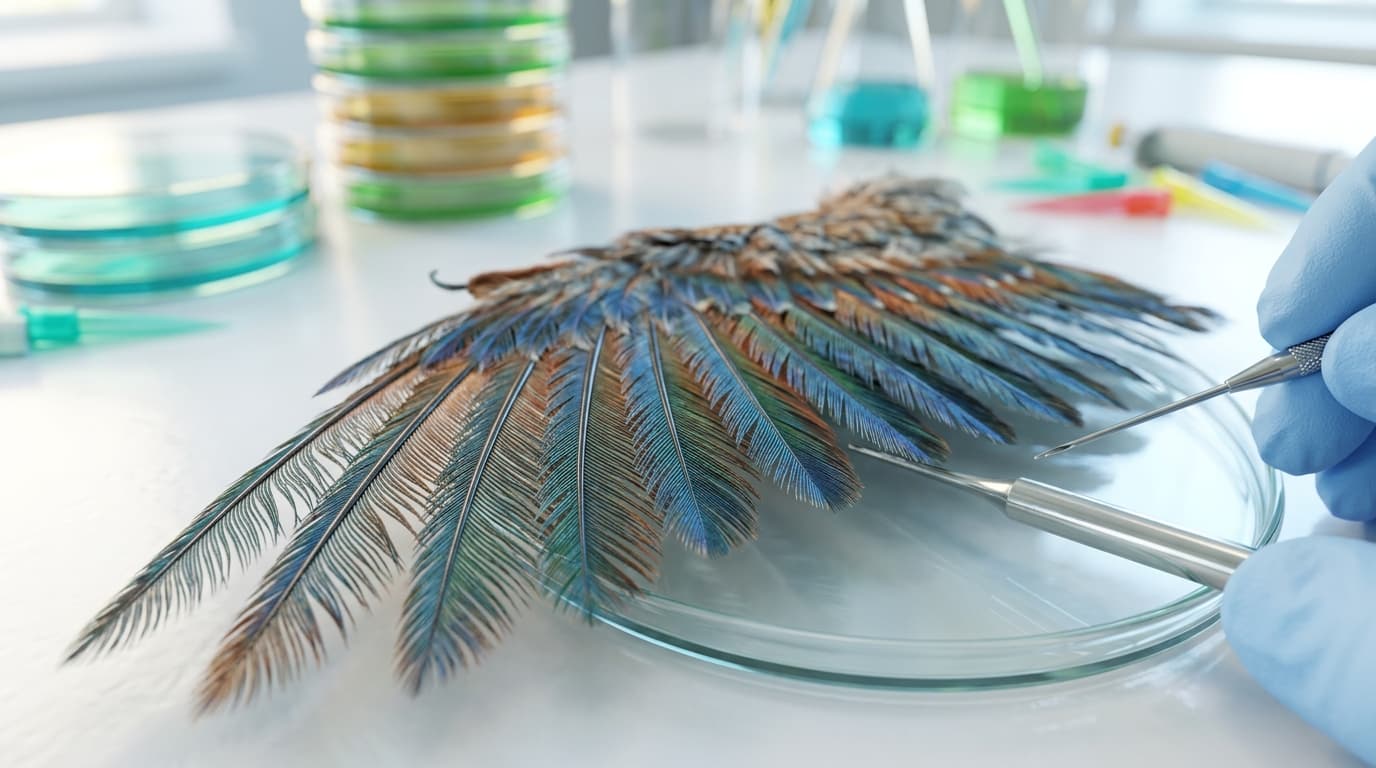
If Wings Came Before Flight, What Were They For?
Learn more about poland joins top 20 economies: tech innovation drives growth
Evolution rarely follows a straight path. The structures we see today often served completely different purposes millions of years ago. Wings present one of nature's most fascinating puzzles: if early proto-wings could not generate lift, why did they evolve in the first place?
Scientists have long debated this question, proposing theories ranging from temperature regulation to mating displays. Now, researchers are using an ingenious approach to solve this mystery. They trigger real insect brains with simulated dinosaurs to understand how wings originally evolved.
Why Does Wing Evolution Create a Chicken-and-Egg Problem?
Flight requires sophisticated wings, but sophisticated wings take millions of years to evolve. This creates an evolutionary paradox that has puzzled biologists for decades.
Natural selection only preserves traits that provide immediate survival advantages, not features that might become useful later. Early feathered dinosaurs possessed structures that looked like primitive wings but lacked the size and strength for powered flight. Archaeopteryx, the famous transitional fossil, had asymmetric feathers similar to modern birds, yet its wing structure suggests it was a poor flyer at best.
The question becomes more intriguing when we consider the metabolic cost of growing wings. Developing and maintaining these structures requires significant energy. Evolution does not invest resources in useless appendages.
How Do Scientists Test Ancient Wing Functions With Modern Technology?
Researchers developed a groundbreaking experimental approach to test wing function hypotheses. They created robotic models of feathered dinosaurs and presented them to living insects. By monitoring neural activity in the insects' brains, scientists could determine which wing configurations triggered escape responses.
The experiments revealed something remarkable. Small, partially-developed wings created visual patterns that confused and startled prey animals.
For a deep dive on how sakana's 7b model orchestrates gpt, claude & gemini, see our full guide
These proto-wings did not need to enable flight to provide a survival advantage. They worked as hunting tools. Modern birds like hawks use their wings to flush prey from hiding spots, and early dinosaurs may have exploited this same response millions of years before achieving true flight.
What Functions Did Proto-Wings Serve Before Flight?
For a deep dive on quantum device maps earth's magnetic field from space, see our full guide
Scientific evidence now supports multiple pre-flight functions for wing-like structures. Each provided evolutionary advantages that justified the energy investment:
- Prey manipulation: Wings created visual disturbances that flushed insects and small animals from cover
- Thermoregulation: Feathered appendages helped control body temperature in variable climates
- Balance and stability: Proto-wings assisted with running, jumping, and climbing in complex environments
- Display and communication: Colorful or patterned wings served as visual signals for mating or territorial disputes
- Egg protection: Brooding dinosaurs used feathered limbs to cover and insulate nests
Did Early Dinosaurs Use Wings as Hunting Tools?
The robotic dinosaur experiments provided compelling support for the hunting hypothesis. Researchers programmed their models to approach grasshoppers and other insects while monitoring the prey's neural responses.
When the robot extended its proto-wings, the insects showed heightened neural activity consistent with escape preparation. The most effective wing movements were not flapping motions. Simple extension and positioning created sufficient visual stimulation to trigger prey responses, suggesting early wings functioned more like hunting aids than flight structures.
Modern roadrunners demonstrate similar behavior. They spread their wings while pursuing lizards and insects, using the wings to corral and confuse prey. This hunting strategy requires no flight capability whatsoever.
How Did Temperature Control Lead to Flight?
Thermoregulation represents another strong candidate for proto-wing function. Feathered appendages increase surface area, allowing animals to absorb heat when cold or dissipate it when warm. Small theropod dinosaurs living in temperate climates would have benefited significantly from this adaptation.
Fossil evidence shows that many feathered dinosaurs possessed asymmetric feather arrangements unsuitable for flight. These patterns make perfect sense for temperature regulation. The feathers created insulating layers while allowing heat exchange through controlled positioning.
As these structures grew larger through generations, they eventually reached a threshold where limited gliding became possible. This marked the transition point where wings began serving dual purposes.
How Do Researchers Simulate Dinosaur Behavior?
The experimental setup combines robotics, neuroscience, and paleontology in innovative ways. Researchers built scale models based on fossil evidence of feathered dinosaurs. These robots replicated realistic movements informed by biomechanical studies of dinosaur skeletal structure.
The team then exposed living insects to these simulations while recording neural activity through tiny electrodes. This technique, called electrophysiology, measures electrical signals in individual neurons.
By comparing responses to different wing configurations, scientists identified which features most effectively triggered prey reactions. The insects served as proxies for ancient prey species. While modern grasshoppers did not exist alongside dinosaurs, their basic neural architecture evolved hundreds of millions of years ago.
What Does Wing Evolution Reveal About Natural Selection?
The wing evolution story illustrates a crucial principle: natural selection works with what is available. Structures evolve for one purpose and later get co-opted for entirely different functions. Biologists call this process exaptation.
Bird wings did not evolve "for" flight. They evolved because they provided immediate survival advantages through hunting, thermoregulation, or other functions. Flight emerged as a secondary benefit once these structures reached sufficient size and complexity.
This pattern repeats throughout evolutionary history. Feathers originally evolved for insulation, not flight. Lungs developed from swim bladders in fish. The bones in your middle ear once formed part of reptilian jaws.
Why Does This Research Matter for Understanding Complex Traits?
This research challenges the assumption that complex structures must evolve for their current function. Many sophisticated biological systems began as simple solutions to immediate problems.
They became more elaborate through incremental improvements, eventually enabling entirely new capabilities. The findings also demonstrate the value of creative experimental approaches. By combining paleontology with neuroscience, researchers answered questions that fossil evidence alone could not resolve.
How Did Proto-Wings Transform Into Flight-Capable Structures?
Once wings provided hunting or thermoregulation benefits, natural selection could refine them further. Slightly larger wings offered better prey capture success. Improved feather arrangements enhanced temperature control.
Each small improvement increased survival rates. Eventually, these incremental changes produced wings capable of generating lift. Early attempts at flight probably resembled controlled falling rather than true flying.
The transition to powered flight required additional adaptations. Stronger chest muscles, lighter bones, and more efficient respiratory systems all evolved in concert. This process took millions of years and numerous evolutionary experiments.
Do Modern Birds Use Wings for Non-Flight Purposes?
Contemporary birds demonstrate that wings serve multiple functions beyond flight. Penguins use their wings as flippers for underwater propulsion. Ostriches employ wings for balance while running and for shading their chicks.
Peacocks display elaborate wing and tail feathers to attract mates. These diverse uses remind us that evolution does not optimize for a single purpose. Structures that provide multiple benefits enjoy stronger selective pressure.
What Can We Learn From Evolution's Unexpected Pathways?
Wings did not evolve for flight. They emerged as solutions to immediate survival challenges like hunting and temperature regulation.
Through clever experiments with robotic dinosaurs and living insects, scientists have demonstrated how proto-wings provided evolutionary advantages long before enabling flight. This research reveals evolution's opportunistic nature. Natural selection builds on existing structures, repurposing them for new functions as circumstances change.
The journey from simple feathered appendages to sophisticated flight machinery took millions of years and countless intermediate steps. Understanding this process helps us appreciate the complexity of life's history. Every structure in your body, every behavior you exhibit, emerged through similar roundabout pathways.
Continue learning: Next, explore virtual wings reshape the brain: 25 people learned to fly
Evolution does not plan ahead. It works with what is available, creating solutions that sometimes enable entirely unexpected capabilities.
Related Articles

Navigating the Future: Innovations in Tech
Dive into the latest in technology, covering AI, digital trends, cybersecurity, and emerging technologies shaping our world.
Sep 6, 2025

Unpacking The Bitter Lesson in AI Evolution
Delving into the Bitter Lesson in AI: Unraveling its true meaning and impact on future technological innovations and trends.
Sep 4, 2025

Smartphones Before 13: A Risk to Lifelong Mental Health?
Early smartphone use linked to mental health issues later in life, urging action to protect young minds from social media, cyberbullying, and sleep loss.
Sep 6, 2025