Fed's Goolsbee Warns on Inflation in Fraught Climate
Federal Reserve's Austan Goolsbee describes inflation concerns in a "fraught but intense" environment. Learn how this impacts business planning and what strategies help navigate uncertainty.

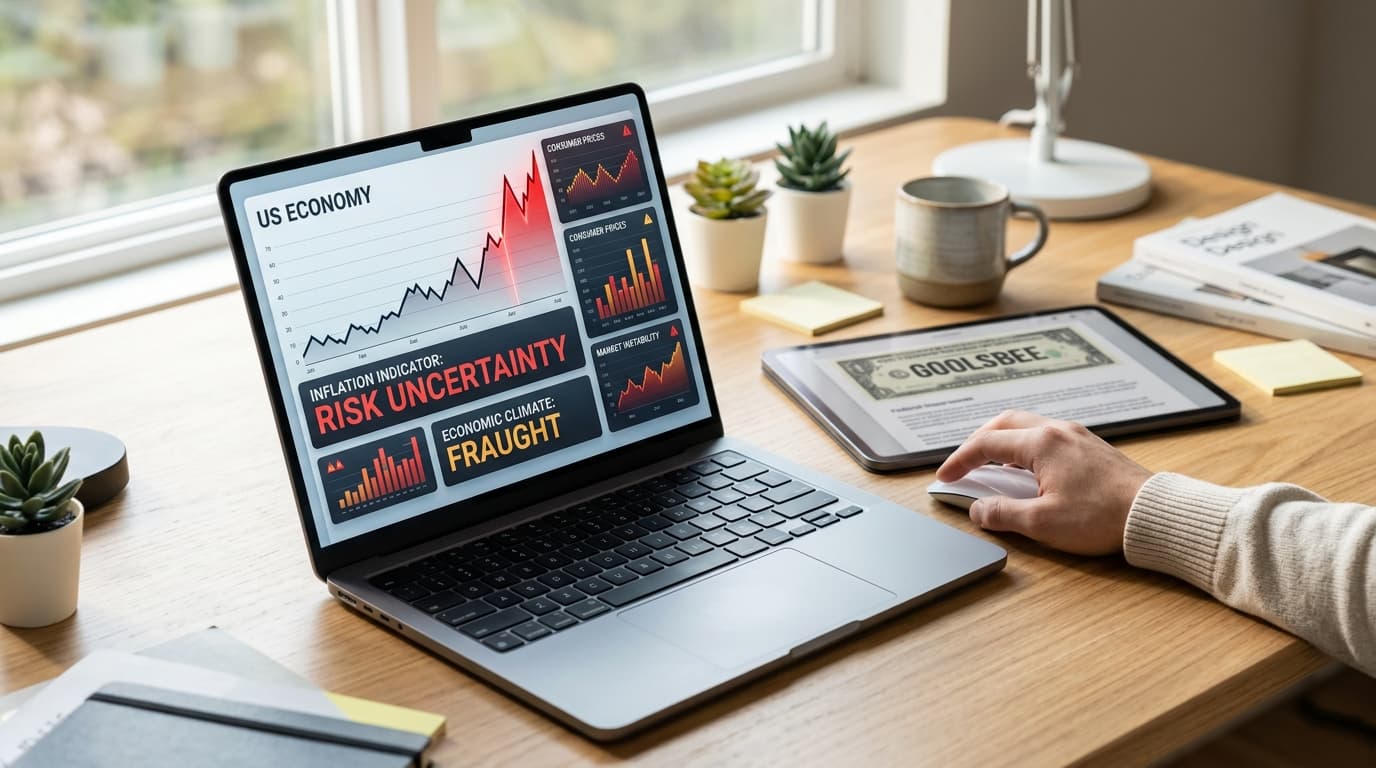
Fed's Goolsbee Warns of "Fraught" Inflation Climate: What Business Leaders Must Know
Learn more about oil tumbles after trump postpones iran strikes 5 days
Federal Reserve Bank of Chicago President Austan Goolsbee recently voiced concerns about inflation challenges facing the central bank, describing the current policymaking environment as "fraught but intense." His comments, made during a CNBC interview, highlight the delicate balancing act the Fed faces as it navigates economic uncertainties while trying to maintain price stability and support employment growth.
Business leaders and investors should pay close attention to these signals from Fed officials. The central bank's decisions on interest rates directly impact borrowing costs, investment strategies, and overall economic conditions that shape your business planning for the months ahead.
What Are Goolsbee's Primary Inflation Concerns?
Austan Goolsbee's remarks reflect the complex economic landscape the Federal Reserve must navigate. The "fraught but intense" characterization suggests multiple competing pressures that make monetary policy decisions particularly challenging right now.
The Chicago Fed president's concerns center on persistent inflation dynamics that refuse to follow predictable patterns. Despite aggressive interest rate hikes over the past two years, inflation has proven stubborn in certain sectors, particularly services and housing. This resistance to traditional monetary policy tools creates significant uncertainty for both policymakers and business planners.
What Makes the Current Climate So Challenging?
Several factors contribute to the difficulty Goolsbee describes. Economic data has sent mixed signals, with some indicators pointing toward cooling while others suggest continued strength. This ambiguity makes it harder for policymakers to determine the appropriate course of action.
Geopolitical tensions and supply chain disruptions continue to create uncertainty. These external shocks can trigger unexpected price pressures that complicate the Fed's inflation-fighting efforts.
The labor market remains remarkably resilient despite higher interest rates. Strong employment typically supports consumer spending, which can fuel inflation even as the Fed attempts to cool demand. This dynamic creates a puzzle that traditional economic models struggle to explain.
How Does This Affect Your Business Decisions?
For entrepreneurs and business executives, Goolsbee's comments signal that interest rates may remain elevated longer than previously anticipated. This environment requires strategic adjustments across several critical areas.
Financial Planning Considerations:
- Borrowing costs will likely stay high, making debt financing more expensive
- Capital expenditure decisions need careful scrutiny with higher discount rates
- Cash flow management becomes increasingly critical
- Variable-rate debt exposure should be evaluated and potentially hedged
Companies with strong balance sheets and cash reserves gain competitive advantages in this environment. They can pursue growth opportunities while competitors struggle with financing constraints. This divergence creates market share opportunities for well-capitalized businesses.
How Does the Fed Balance Inflation Against Growth?
For a deep dive on apple: the first 50 years book now 30% off on amazon, see our full guide
The Federal Reserve operates under a dual mandate: maintaining price stability and maximizing employment. These objectives sometimes conflict, creating the tension Goolsbee references in his interview.
When inflation runs too hot, the Fed raises interest rates to cool economic activity. However, aggressive rate hikes risk triggering a recession that destroys jobs and business growth. Finding the right balance requires careful calibration based on evolving economic data.
For a deep dive on halide co-founder lawsuit: apple acquisition gone wrong, see our full guide
Why Has Policymaking Become More Difficult?
Historical relationships between economic variables have weakened, making traditional models less reliable. The pandemic fundamentally altered consumer behavior, labor market dynamics, and supply chain structures in ways that complicate forecasting.
Inflation itself has proven less responsive to interest rate changes than expected. Core services inflation, which excludes volatile food and energy prices, has remained stubbornly elevated despite the Fed's aggressive tightening campaign. This persistence suggests structural changes in the economy that policymakers are still working to understand.
Fiscal policy decisions by Congress create cross-currents that affect the Fed's work. Large government spending programs can stimulate demand even as the Fed tries to restrain it through higher rates.
Which Economic Indicators Should You Monitor?
Several key economic indicators deserve close attention as you navigate this uncertain environment:
- Core PCE inflation - The Fed's preferred inflation measure
- Wage growth trends - Particularly in service sectors
- Consumer spending patterns - Signs of demand softening or resilience
- Credit conditions - Lending standards and availability
- Labor market data - Job openings, unemployment rates, and participation
These metrics provide insights into where the economy is heading and how the Fed might respond. Regular monitoring helps you anticipate policy shifts and adjust business strategies accordingly. Set up a dashboard or regular review process to track these indicators systematically.
What Strategic Changes Should Businesses Make?
Goolsbee's cautious stance on inflation suggests the higher-for-longer interest rate scenario remains in play. This reality demands proactive business strategies rather than waiting for rate cuts that may not materialize soon.
Why Does Operational Efficiency Matter More Now?
In a high-rate environment, operational excellence becomes paramount. Companies cannot rely on cheap capital to fuel growth, so they must extract maximum value from existing resources.
Focus on productivity improvements, automation where appropriate, and eliminating waste. Lean operations generate stronger cash flows that reduce dependence on external financing. Every dollar saved through efficiency improvements directly strengthens your competitive position.
Pricing power also matters more than ever. Businesses that deliver clear value propositions can maintain margins even as input costs rise. Those competing primarily on price face margin compression and profitability challenges.
How Should You Approach Investment Decisions?
Capital allocation requires heightened discipline when borrowing costs remain elevated. Every investment must clear higher return hurdles to justify the expense.
Prioritize projects with shorter payback periods and stronger cash generation. Strategic acquisitions may offer opportunities as some competitors struggle with financing constraints, but due diligence becomes even more critical. Look for distressed assets or competitors that lack access to capital.
Geographic expansion and new market entry should be evaluated carefully. The risks of moving into unfamiliar territory increase when economic conditions remain uncertain and capital is expensive.
What Talent Strategies Work in This Environment?
The labor market's resilience, despite higher rates, means competition for skilled workers continues. However, some sectors are seeing layoffs and hiring freezes as companies adjust to tighter financial conditions.
This creates opportunities for strategic hiring while also requiring careful workforce planning. Retain your top performers through competitive compensation and development opportunities. Consider selective hiring to fill critical gaps when quality candidates become available.
Flexibility in workforce structure helps manage uncertainty. Contract workers, consultants, and project-based arrangements provide scalability without long-term fixed cost commitments. This approach lets you adjust quickly as conditions change.
How Do Different Sectors Respond to Fed Policy?
The impact of Goolsbee's inflation concerns varies significantly across industries. Understanding these sector-specific dynamics helps business leaders anticipate challenges and opportunities.
Which Industries Feel the Most Pressure?
Real estate, construction, and automotive sectors feel immediate pressure from higher rates. Mortgage rates above 7% have cooled housing demand substantially. Commercial real estate faces additional headwinds from remote work trends and higher capitalization rates.
Businesses in these sectors must adapt through creative financing, value-added services, or pivoting to less rate-sensitive market segments. Some construction companies have shifted focus from new residential development to renovation and commercial projects. This flexibility separates survivors from casualties in challenging markets.
How Are Technology Companies Adapting?
High-growth technology firms that prioritize expansion over profitability face particular challenges. Higher discount rates reduce the present value of future earnings, pressuring valuations.
Many tech companies have responded by cutting costs, slowing hiring, and focusing on path-to-profitability. This shift from "growth at all costs" to sustainable business models represents a fundamental change in sector dynamics. Investors now reward cash flow generation over user growth metrics.
What Challenges Face Consumer Businesses?
Retailers and consumer-focused companies navigate complex demand patterns. While employment remains strong, higher debt service costs reduce discretionary spending capacity for many households.
Successful consumer businesses are segmenting markets carefully, recognizing that high-income consumers continue spending while middle and lower-income groups pull back. Product mix and positioning strategies must reflect these diverging consumer behaviors. Premium offerings may outperform mid-market products as the consumer base bifurcates.
How Can You Prepare for Multiple Scenarios?
Goolsbee's characterization of the environment as "fraught" suggests significant uncertainty remains. Smart business planning accounts for multiple potential outcomes rather than betting on a single scenario.
What Should Your Planning Framework Include?
Develop contingency plans for three potential paths: continued inflation requiring more Fed tightening, successful soft landing with gradual rate cuts, or economic downturn forcing rapid policy reversal.
Each scenario demands different strategic responses. Stress-test your business model against these possibilities. Identify which variables most impact your performance and monitor them closely.
Maintain strategic flexibility by avoiding irreversible commitments when possible. Modular approaches to expansion, variable cost structures, and staged investments preserve options as conditions evolve. This optionality has real value in uncertain times.
How Do You Build Business Resilience?
Resilience matters more than optimization in uncertain times. Companies that can weather multiple scenarios outperform those perfectly positioned for one outcome that fails to materialize.
Strong balance sheets, diversified revenue streams, and adaptable business models provide resilience. Customer relationships built on value rather than price create stability when economic conditions shift.
Leadership communication also plays a crucial role. Keep employees, investors, and partners informed about how you are navigating uncertainty. Transparency builds trust and alignment during challenging periods. Regular updates demonstrate control and preparedness even when external conditions remain volatile.
What Actions Should You Take Now?
Fed President Goolsbee's concerns about inflation in a "fraught but intense" climate underscore the challenging economic environment facing businesses today. The central bank's ongoing struggle to balance inflation control with economic growth creates uncertainty that demands strategic responses from business leaders.
Higher-for-longer interest rates require operational discipline, careful capital allocation, and scenario planning. Companies that adapt proactively, maintain financial flexibility, and focus on value creation will navigate this period more successfully than those waiting for conditions to improve.
Continue learning: Next, explore apple stores running low on apple tv & homepod stock
Stay informed about Fed communications and economic indicators that signal policy direction. Use this intelligence to refine strategies, adjust operations, and position your business for success regardless of how the economic situation unfolds. The current environment challenges all businesses, but it also creates opportunities for well-prepared companies to gain competitive advantages.
Related Articles

Apple AirPods Pro 3: What Missing Charging Cables Mean for Business
Apple's decision to exclude a charging cable in the AirPods Pro 3 raises questions about sustainability, consumer perception, and business strategy. Explore the implications.
Sep 15, 2025

OpenAI Enhances Voice AI for Enterprise with GPT-Realtime
OpenAI's gpt-realtime sets a new voice AI standard with naturalistic voices and advanced capabilities, aiming to transform enterprise applications.
Sep 10, 2025

Revolutionizing AI: Sakana AI's Evolutionary Algorithm Unveiled
Sakana AI introduces an evolutionary algorithm for building powerful AI models, minimizing costs and data needs. Explore its business implications.
Sep 9, 2025