Europe's Space Rider Clears Key Hurdles Before Launch
Space Rider advances through key testing phases, positioning Europe to join elite nations with reusable spacecraft capabilities and transforming European space access.

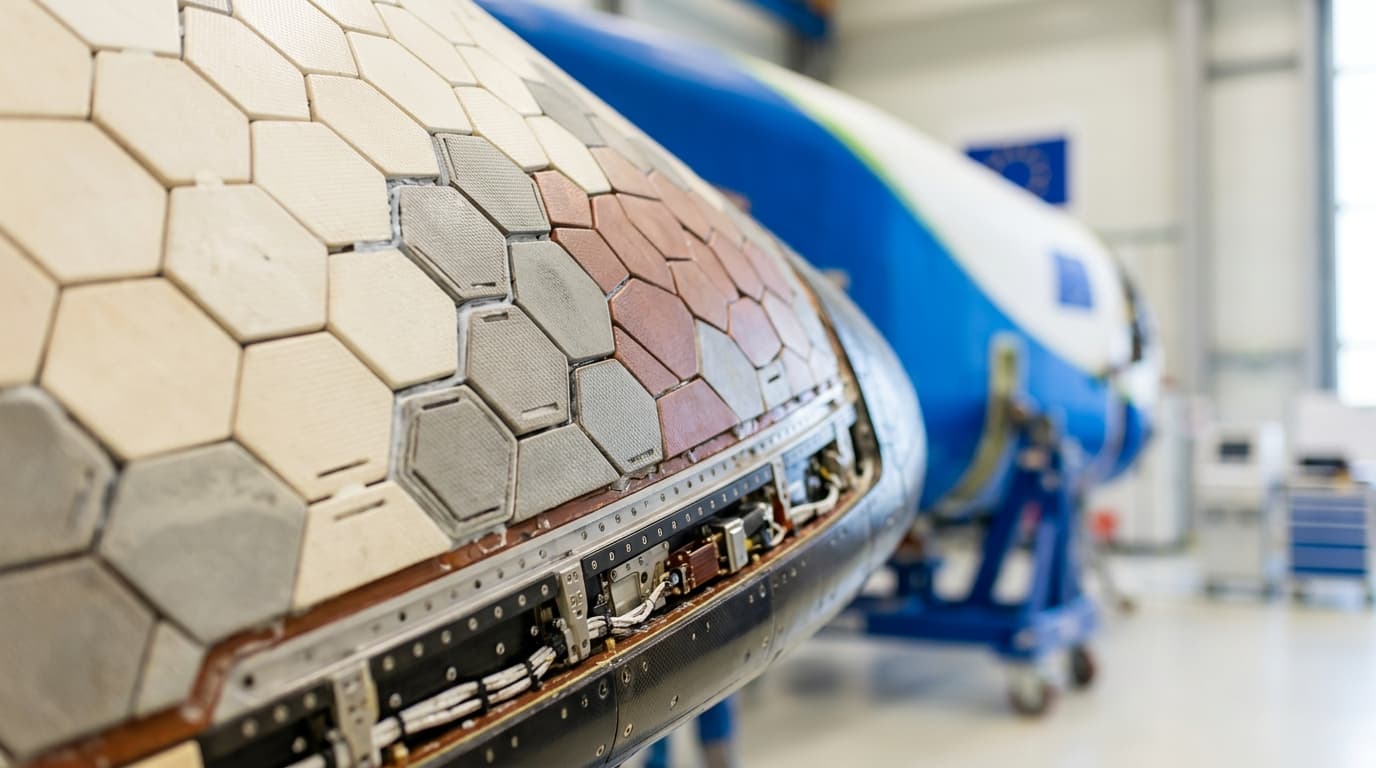
Europe's Reusable Spacecraft Revolution: Space Rider Passes Critical Tests
Learn more about kevin o'leary pushes back against utah data center protes...
Europe stands on the brink of a spaceflight revolution. The European Space Agency's Space Rider spacecraft is advancing through critical testing phases, positioning the continent to join an elite group of nations capable of launching, recovering, and reusing orbital vehicles. This milestone represents more than technological achievement. It signals Europe's commitment to maintaining independent access to space and competing in the rapidly evolving commercial space sector.
What Makes Space Rider Europe's First Reusable Spacecraft?
Space Rider represents a fundamental shift in European space capabilities. Unlike traditional satellites that burn up during reentry or capsules designed for single missions, Space Rider combines the best features of both spacecraft types into one versatile platform.
The vehicle measures approximately 7 meters in length. It features a lifting body design that generates aerodynamic lift during reentry. This design allows controlled descent and precise landing, similar to NASA's retired Space Shuttle but on a smaller, unmanned scale.
Space Rider can carry up to 800 kilograms of payload and remain in orbit for up to two months. The spacecraft then returns experiments and equipment safely to Earth.
How Does Space Rider's Design Enable Reusability?
The spacecraft's innovative architecture separates into two main components: a reusable reentry module and an expendable service module. The reentry module houses payloads in a protected cargo bay and incorporates thermal protection systems capable of withstanding temperatures exceeding 1,600 degrees Celsius during atmospheric reentry.
Engineers designed the service module to provide propulsion, power generation, and thermal control during orbital operations. After completing its mission, the service module detaches and burns up in the atmosphere. The reentry module returns to Earth for refurbishment and reuse. This approach significantly reduces mission costs compared to building entirely new spacecraft for each flight.
What Critical Testing Milestones Has Space Rider Passed?
The spacecraft has successfully navigated several demanding qualification tests throughout 2024. These assessments validate that Space Rider can survive the extreme conditions of launch, orbital operations, and reentry.
For a deep dive on musk vs openai: judge challenges tesla ceo in court battle, see our full guide
How Did Environmental Testing Validate Flight Readiness?
Recent environmental testing subjected Space Rider's components to conditions mimicking actual spaceflight scenarios. The reentry module endured vibration tests simulating launch stresses. Thermal vacuum tests replicated the temperature extremes of space. Acoustic tests matched the intense sound levels during liftoff.
For a deep dive on hugging face launches robot app store with 200+ apps, see our full guide
These tests confirmed the structural integrity of critical systems including:
- Thermal protection materials that shield the spacecraft during reentry
- Avionics systems controlling flight operations and navigation
- Payload accommodation hardware securing experiments during flight
- Landing gear mechanisms enabling safe touchdown
- Communication systems maintaining ground contact throughout missions
Engineers also validated the spacecraft's ability to withstand electromagnetic interference. The tests confirmed Space Rider can handle radiation exposure typical of low Earth orbit environments.
What Engineering Challenges Did the Team Overcome?
Developing reusable spacecraft presents unique engineering challenges. The thermal protection system required extensive material testing to identify compounds that could endure multiple reentry cycles without degradation.
Engineers selected advanced ceramic matrix composites and ablative materials. These materials balance heat resistance with weight constraints.
The landing system posed another significant challenge. Space Rider employs a parafoil guidance system that provides precise control during final descent. This system allows the spacecraft to land on conventional runways. The capability eliminates the need for ocean recovery operations and enables faster turnaround between missions.
Why Is Space Rider Strategically Important for Europe?
Space Rider addresses a critical gap in European space infrastructure. Currently, Europe relies on international partners or commercial providers for returning experiments and cargo from orbit. This dependency limits scientific flexibility and raises security concerns for sensitive payloads.
What Economic and Scientific Benefits Does Space Rider Offer?
The spacecraft opens new opportunities for European researchers and industries. Microgravity experiments in materials science, biology, and physics can return to Earth for detailed analysis rather than relying on remote data transmission.
Pharmaceutical companies can test drug manufacturing processes in space. They can retrieve samples for evaluation. Manufacturers of space hardware gain access to a testbed for validating new technologies in actual flight conditions.
Components can undergo space exposure testing and return for examination. This capability accelerates development cycles for satellites and other spacecraft systems. Small and medium enterprises particularly benefit, as they often lack resources for dedicated satellite missions.
How Does Space Rider Compare to International Competitors?
Space Rider joins a select group of reusable spacecraft programs worldwide. The United States operates the X-37B spaceplane, which has completed multiple long-duration missions but remains shrouded in military secrecy. China's Shenlong spacecraft has flown several times with limited public information about its capabilities.
Space Rider distinguishes itself through its civilian focus and international cooperation model. The European Space Agency designed the vehicle explicitly for scientific research and technology demonstration. The program features transparent mission objectives and opportunities for commercial and academic payloads. This openness contrasts with the classified nature of competing programs.
When Will Space Rider Launch and What Will It Do?
The inaugural Space Rider mission targets a 2025 launch window, pending final system qualifications. The spacecraft will lift off aboard a Vega-C rocket from Europe's Guiana Space Centre in French Guiana. This launch vehicle pairing provides sufficient performance to place Space Rider into its operational orbit while maintaining cost efficiency.
What Will the First Mission Accomplish?
The maiden flight serves primarily as a technology demonstration to validate all spacecraft systems in actual flight conditions. The mission duration spans approximately two months. During this time, Space Rider will execute various orbital maneuvers and test its payload accommodation capabilities.
European Space Agency officials have identified several experiments for the first flight. These include materials exposure studies, Earth observation sensor testing, and robotics demonstrations. The mission will also validate reentry procedures, thermal protection system performance, and landing accuracy.
What Are Space Rider's Future Operational Capabilities?
Following successful demonstration flights, Space Rider will transition to operational status with regular mission opportunities. The European Space Agency plans to fly the spacecraft multiple times per year. Each flight offers dedicated slots for scientific experiments, technology demonstrations, and commercial payloads.
Each spacecraft in the Space Rider fleet can fly up to six missions before requiring major refurbishment. This reusability factor reduces per-mission costs by an estimated 40 percent compared to expendable alternatives. The economic advantage makes space access more affordable for universities, research institutions, and smaller nations within the European consortium.
What Technical Innovations Drive Space Rider's Success?
Space Rider incorporates several cutting-edge technologies that enable its reusable mission profile. The thermal protection system uses next-generation materials developed specifically for multiple reentry cycles. These materials maintain protective properties across repeated heating and cooling cycles without significant degradation.
How Do Advanced Guidance and Control Systems Work?
The spacecraft employs sophisticated guidance algorithms that calculate optimal reentry trajectories in real-time. Onboard computers process atmospheric data and adjust flight control surfaces to maintain the desired flight path. This works despite variable atmospheric conditions. This autonomous capability reduces ground control requirements and enables landing at predetermined sites with high precision.
Redundant navigation systems combine GPS receivers, inertial measurement units, and star trackers. These systems maintain accurate position knowledge throughout all mission phases. This redundancy ensures safe operations even if individual components fail.
What Does Space Rider Mean for European Space Policy?
Space Rider's development reflects Europe's evolving space strategy. The program demonstrates commitment to maintaining technological sovereignty in critical space capabilities. By developing indigenous reusable spacecraft technology, Europe reduces dependence on foreign providers and retains control over sensitive missions.
The spacecraft also positions Europe competitively in the emerging space economy. As commercial space activities expand, nations with advanced space transportation capabilities gain economic and strategic advantages. Space Rider provides European companies with domestic access to space testing and manufacturing opportunities that would otherwise require international partnerships.
Europe's Reusable Spaceflight Future Begins Now
Space Rider's progression through critical testing milestones marks a pivotal moment for European spaceflight capabilities. The spacecraft combines innovative engineering with practical mission requirements. It creates a versatile platform for scientific research and technology development.
As Space Rider moves closer to its inaugural launch, Europe positions itself among the world's leaders in reusable spacecraft technology. The successful development of Space Rider demonstrates that international cooperation and focused engineering can produce world-class space systems.
Continue learning: Next, explore find a custom windows optimization project for music prod...
The spacecraft will provide European researchers, industries, and institutions with unprecedented access to space-based experimentation and return capabilities. This achievement represents not just technological progress but a strategic investment in Europe's future space ambitions.
Related Articles

Anthropic's $1.5B Settlement: A Turning Point for AI & Authors
Anthropic agrees to a $1.5B settlement with book authors, highlighting the complex relationship between AI development and copyright laws.
Sep 6, 2025
EU Leader's Flight Disrupted by Suspected GPS Jamming
A high-ranking EU official's plane was reportedly targeted by GPS interference, highlighting digital warfare's evolving landscape.
Sep 2, 2025

Why I Switched from Docker to Podman: A Deep Dive
Exploring the strategic shift from Docker to Podman, focusing on security, ease of use, and system resource management in container technology.
Sep 6, 2025