Cyma Forma RND: Random Hardware Synth Revolution
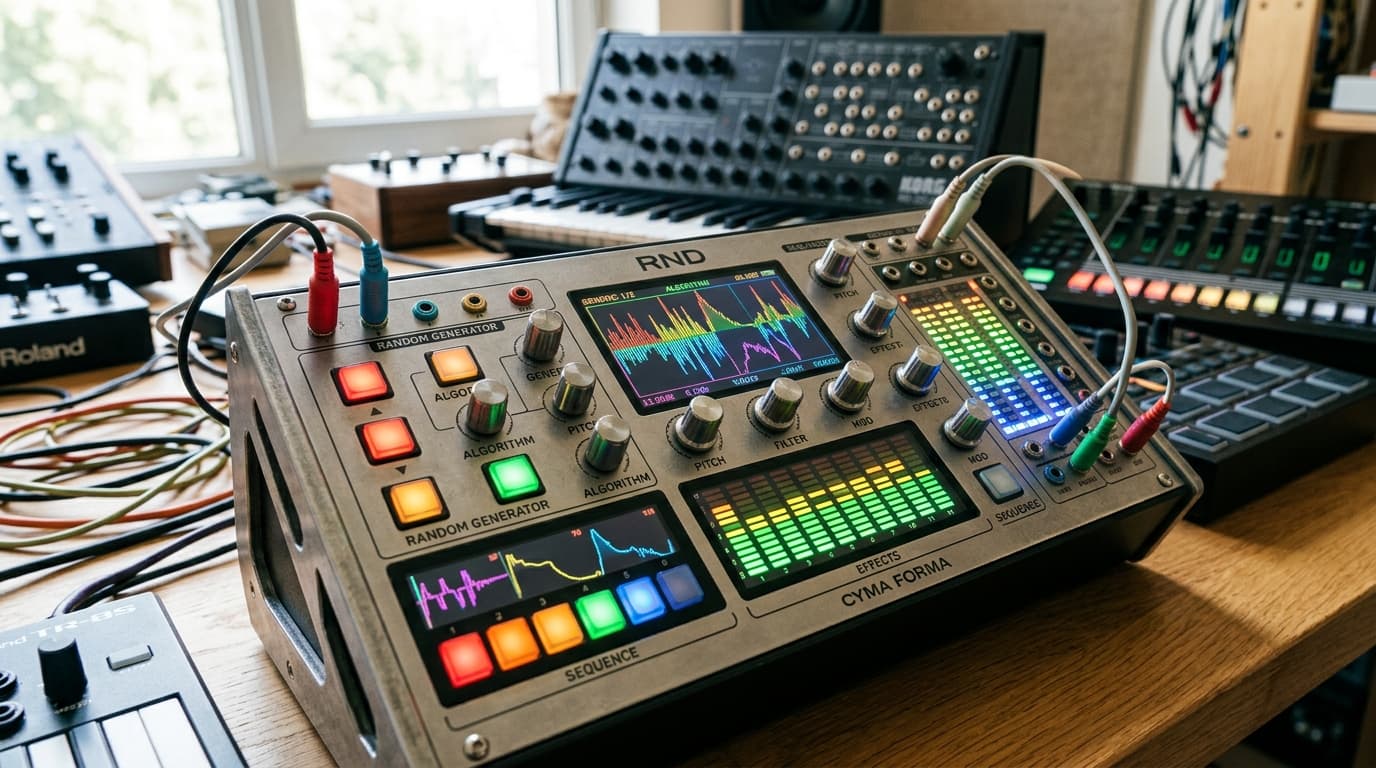
The Cyma Forma RND reduces synthesizer design to a single button that generates random patches. Is this minimalist approach genius or gimmick for modern producers?

The Hardware Synthesizer World Thrives on Complexity
Learn more about .de tld offline: dnssec outage shakes german domain trust
Endless knobs, countless buttons, and matrix-style routing have become the expected norm. But what if a synthesizer stripped away all that control and left you with just one button?
The Cyma Forma RND challenges everything we think we know about sound design by turning randomization into its core philosophy. This unconventional instrument takes the "randomize" function found in software synthesizers and transforms it into a standalone hardware device.
For producers tired of decision fatigue or seeking unexpected sonic inspiration, the Cyma Forma RND offers a refreshingly simple approach to electronic music creation.
What Makes the Cyma Forma RND Different from Traditional Synthesizers?
The Cyma Forma RND represents a radical departure from traditional synthesizer design. Instead of offering detailed parameter control, this device generates random patches at the press of a single button. Each press creates a completely new sound, pulling from an internal synthesis engine that combines various waveforms, filters, and modulation sources.
The concept mirrors the workflow many producers already use in software synthesizers. The Forma RND makes this process tactile and immediate.
This approach removes the paralysis of choice that plagues modern music production. With fewer decisions to make, you can focus on capturing ideas quickly and building arrangements around unexpected textures.
Why Choose Single-Button Synthesis?
Minimalist design in music technology isn't entirely new. The Teenage Engineering OP-1 simplified portable production, while the SOMA Lyra-8 embraced organized chaos through its unique interface.
The Forma RND takes minimalism even further by eliminating traditional sound design workflows entirely. This philosophy appeals to experimental musicians and producers who value serendipity over precision.
Sometimes the best sounds emerge from happy accidents rather than meticulous tweaking. The device forces you to work with what it generates, pushing creative boundaries in unexpected directions.
How Does the Cyma Forma RND Generate Sounds?
While details about the internal architecture remain somewhat mysterious, the Forma RND appears to use a preset synthesis engine with randomized parameter values. Each button press generates a new combination of oscillator settings, filter cutoffs, envelope shapes, and modulation routings.
The device includes basic connectivity options for integration into existing setups. MIDI input allows you to play the randomized patches chromatically, while audio output connects to mixers, audio interfaces, or effects processors.
Some versions may include CV/Gate outputs for modular synthesizer enthusiasts.
What Synthesis Types Does It Use?
The synthesis engine likely draws from multiple synthesis types:
For a deep dive on accelerating gemma 4: multi-token prediction drafters, see our full guide
- Subtractive synthesis with variable filter types
- FM synthesis for metallic and bell-like tones
- Wavetable synthesis for evolving textures
- Noise generation for percussive elements
- Built-in effects processing including reverb and delay
This combination ensures that each randomized patch offers genuine variety rather than subtle variations on a single sound.
For a deep dive on lego star wars at-te walker: 20% off deal analysis, see our full guide
Can You Save Your Favorite Patches on the Forma RND?
The ability to recall patches becomes crucial when randomization is your only sound source. Most single-button synthesizers include some method for storing presets, whether through internal memory banks or external MIDI program changes.
If the Forma RND lacks patch memory, producers would need to record every interesting sound immediately. This limitation could actually enhance creativity by forcing commitment to ideas rather than endless auditioning.
Many producers spend more time browsing presets than actually making music.
Who Should Buy the Cyma Forma RND?
This instrument targets a specific type of music maker. Traditional sound designers who enjoy granular control over every parameter will likely find the Forma RND frustrating.
However, several producer archetypes will appreciate its unique approach.
Experimental Electronic Musicians
Artists working in ambient, drone, or experimental electronic genres often seek unusual textures over predictable sounds. The Forma RND excels at generating the kind of unpredictable tones that define these styles.
Press the button until something inspiring appears, then build a composition around that sonic foundation.
Beat Makers Seeking Unique Textures
Hip-hop and electronic producers constantly search for fresh sounds that help their tracks stand out. The Forma RND can generate one-shot samples, pad textures, or bass sounds that competitors won't have in their libraries.
Record the output, process it further in your DAW, and create signature sounds.
Live Performers Embracing Chaos
Performers who incorporate improvisation into their sets will appreciate the spontaneity this device offers. Each performance becomes truly unique when your primary instrument generates different sounds every time.
This unpredictability adds excitement for both performer and audience.
Content Creators and Sound Designers
YouTubers, podcasters, and game audio designers need constant access to fresh sound effects and musical beds. The Forma RND serves as an endless source of raw material for these applications.
Capture interesting generations and process them into usable assets.
How Do You Integrate Random Hardware Into Your Production Workflow?
Owning a randomization-based synthesizer requires workflow adjustments. You can't simply recall your favorite bass patch when inspiration strikes.
Instead, you must develop new strategies for capturing and utilizing generated sounds.
Record Everything
Treat the Forma RND like a sample source rather than a traditional instrument. Set up a dedicated audio track in your DAW with recording always armed.
When the device generates something interesting, capture it immediately. Build a personal library of unique textures organized by category.
Process Random Outputs
Raw sounds from the Forma RND serve as starting points for further manipulation. Apply EQ to shape frequency content, use compression to control dynamics, and add spatial effects for depth.
Layer multiple random generations together to create complex, evolving soundscapes.
Use MIDI Sequencing
Once you find a patch worth exploring, program MIDI sequences to play melodic or rhythmic patterns. The contrast between structured MIDI data and random sound generation creates interesting tension.
Automate the randomize button itself if the device supports MIDI control, creating evolving patches within a single composition.
Combine With Traditional Synthesizers
The Forma RND works best alongside conventional instruments rather than as a replacement. Use traditional synthesizers for your main melodic and harmonic content, then add random textures for atmospheric elements.
This combination provides both control and unpredictability.
What Does the Forma RND Mean for Hardware Synth Design?
The Forma RND represents a broader trend toward specialized, concept-driven instruments. As the synthesizer market becomes increasingly saturated, manufacturers differentiate through unique approaches rather than feature lists.
This specialized category includes instruments designed around specific limitations or unusual interfaces. The Bastl Kastle, Cre8audio Cellz, and various Pocket Operator models all prioritize character over comprehensive functionality.
These devices appeal to collectors and experimentalists who value novelty alongside musical utility. Whether this approach represents the future of hardware synthesis or a temporary novelty remains unclear.
However, the existence of instruments like the Forma RND proves that innovation doesn't always mean adding more features.
Is the Cyma Forma RND Worth Your Money?
Pricing and availability will ultimately determine whether the Forma RND becomes a cult classic or forgotten curiosity. Single-purpose hardware faces tough competition from software alternatives that cost less and offer more flexibility.
The value proposition depends entirely on your creative needs. If you already own comprehensive synthesizers and seek something purely inspirational, the Forma RND might spark ideas that traditional instruments cannot.
Its physical presence and immediate tactile feedback offer advantages over software randomization.
How Does It Compare to Software Alternatives?
Budget-conscious producers might achieve similar results using free VST plugins with randomization features. Software like Vital, Surge XT, and TAL-NoiseMaker all include dice buttons that generate random patches.
Pair these with a simple MIDI controller, and you've essentially replicated the Forma RND's functionality.
What's the Future of Randomized Music Creation?
Artificial intelligence and generative algorithms will likely play increasing roles in music production tools. The Forma RND's simple randomization represents just the beginning of what's possible.
Future devices might learn your preferences, generate variations on existing patches, or create sounds based on text descriptions. These technologies raise questions about creativity and authorship.
When a machine generates your sounds, who deserves credit for the final composition? Most producers view tools as extensions of their creative vision rather than collaborators.
The Forma RND's randomization feels different from AI generation because it lacks apparent intelligence or learning.
Should You Embrace Creative Limitations?
The Cyma Forma RND won't replace your workstation synthesizer or become your primary sound source. Instead, it offers a specific creative tool for specific situations.
When you need unexpected inspiration or want to escape analysis paralysis, this single-button approach provides immediate results. Hardware synthesizers have always balanced control against immediacy.
The Forma RND makes a bold choice by abandoning control entirely in favor of pure spontaneity. Whether this trade-off works for your music depends on how much you value serendipity in your creative process.
For producers who already click the randomize button constantly, this device simply makes that workflow more enjoyable. For those who meticulously craft every sound from scratch, the Forma RND represents everything they avoid.
Continue learning: Next, explore chrome installs 4 gb ai model without user consent
Both approaches create great music, just through different paths.
Related Articles

Transforming Gaza: From Conflict Zone to Tech Hub
A leaked plan from the Trump administration reveals a bold strategy to turn Gaza into a thriving high-tech hub. Discover the potential.
Sep 3, 2025

Gaza's Tech Revolution: Trump's Bold High-Tech Vision
A leaked plan from the Trump administration unveils a vision to make Gaza a high-tech hub, focusing on AI, cybersecurity, and digital innovation.
Sep 3, 2025

Trump's Bold Move: Patent Ownership for University Funding
Trump's administration proposes a bold initiative: patents for new inventions in exchange for university funding. How could this reshape technology?
Sep 2, 2025