Apple Pays $250M to Settle Siri Delay Class Action
Apple has agreed to pay $250 million to settle a class action lawsuit claiming the company delayed Siri features and misled customers about the voice assistant's capabilities.

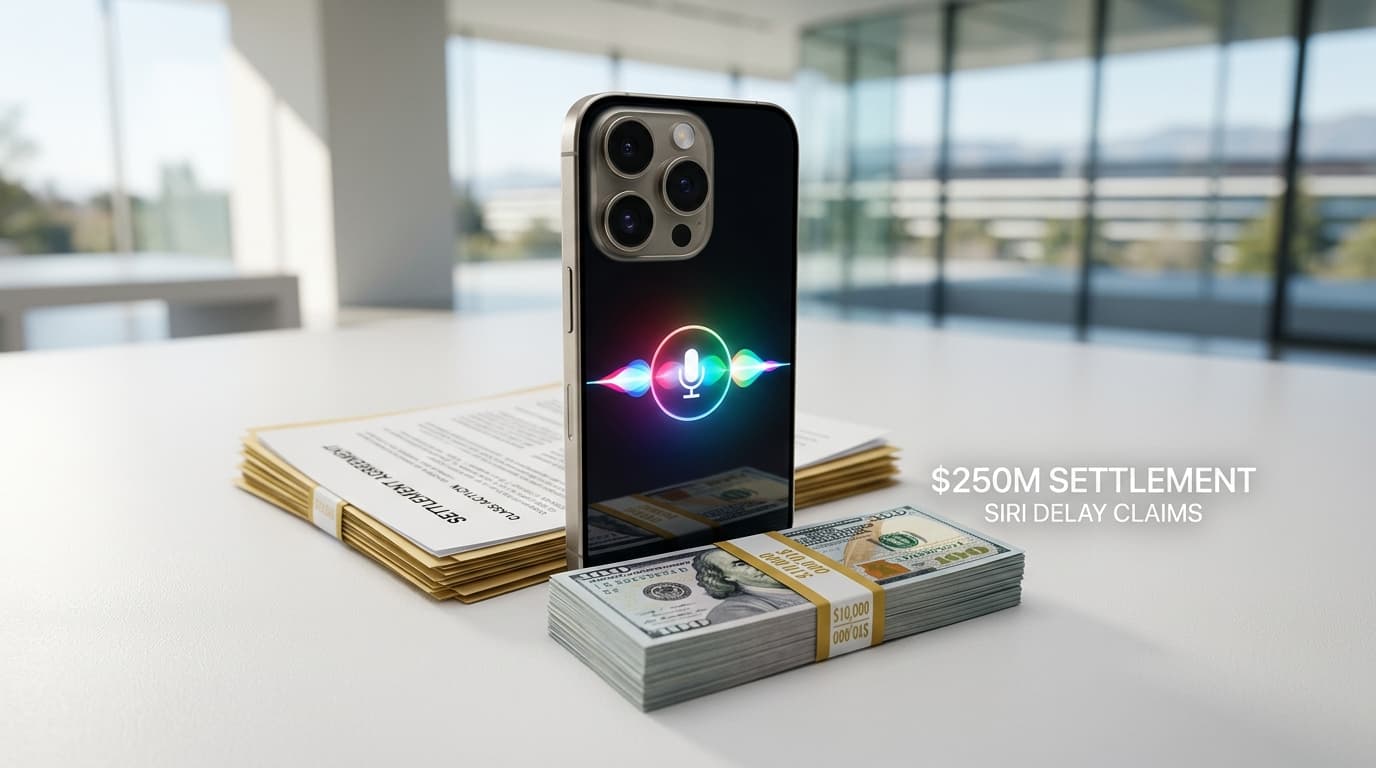
Apple Agrees to $250 Million Settlement Over Siri Feature Delays
Learn more about gta 6 business strategy: trailer theories & pricing impact
Apple has reached a $250 million settlement agreement to resolve a class action lawsuit that accused the tech giant of deliberately delaying Siri features and misleading customers about the voice assistant's capabilities. The lawsuit, ongoing since 2019, claimed Apple knowingly advertised Siri functionality that was not fully available at launch. Millions of iPhone, iPad, and Mac users grew frustrated with the digital assistant's performance.
This settlement marks one of the largest payouts Apple has made regarding product feature disputes. The case sheds light on the challenges tech companies face when promising cutting-edge AI features that may not be ready for prime time.
What Did the Siri Lawsuit Claim Against Apple?
The class action lawsuit centered on Apple's marketing promises versus Siri's actual performance during specific product launches. Plaintiffs argued that Apple promoted Siri as a revolutionary voice assistant with advanced capabilities, but the features either arrived months late or did not work as advertised.
The lawsuit specifically targeted Apple's claims about Siri's natural language processing, contextual awareness, and third-party app integration. Users complained that basic commands often failed. Voice recognition was inconsistent, and promised features like seamless app control remained largely unavailable for extended periods after product releases.
Apple denied any wrongdoing throughout the legal proceedings. The company maintained that Siri development faced typical software challenges and that any delays were necessary to ensure quality and user privacy protection.
What Were the Key Claims in the Lawsuit?
For a deep dive on maintainer month: celebrating open source contributors, see our full guide
The plaintiffs presented several specific allegations against Apple:
- Apple advertised Siri features that were not functional at device launch
- The company delayed critical updates without properly informing customers
- Marketing materials exaggerated Siri's capabilities compared to actual performance
- Users purchased devices based on promised features that took months or years to materialize
- Apple continued selling products with misleading Siri descriptions despite known limitations
For a deep dive on cyma forma rnd: random hardware synth revolution, see our full guide
Who Qualifies for the Apple Siri Settlement?
The settlement covers a broad range of Apple device owners who purchased products during the relevant time period. Eligible class members include anyone who bought an iPhone, iPad, Mac, Apple Watch, or HomePod with Siri functionality between specific dates outlined in the settlement agreement.
Device owners who experienced Siri feature delays or performance issues during the class period can file claims for compensation. The exact payout per person will depend on the total number of valid claims submitted and the verification process. Individual payments could range from modest amounts to several hundred dollars.
Court documents indicate that the settlement fund will be distributed among verified class members after legal fees and administrative costs are deducted.
How Can You File a Claim for the Settlement?
Eligible Apple customers will need to submit claims through an official settlement website once the court grants final approval. The process typically requires proof of purchase, device serial numbers, and attestation that you experienced the issues described in the lawsuit.
Claim forms will likely become available within 60 to 90 days after final court approval. Apple and the plaintiffs' attorneys will notify potential class members through email, direct mail, and public announcements.
How Will This Settlement Impact Siri's Future?
The settlement does not require Apple to admit fault, but it sends a clear message about accountability in AI feature marketing. Tech companies increasingly face scrutiny over promises about artificial intelligence capabilities, especially as competition intensifies in the voice assistant market.
Apple has significantly improved Siri since the lawsuit was filed. Recent iOS updates have enhanced natural language understanding, expanded third-party integrations, and improved response accuracy. The company continues investing heavily in machine learning and AI research to keep Siri competitive with Google Assistant and Amazon Alexa.
Industry analysts suggest this settlement may influence how Apple markets future AI features. The company has already adopted more conservative language in recent product announcements. Apple now often uses phrases like "coming later this year" or "available in a future update" when discussing new Siri capabilities.
What Does This Mean for Tech Marketing Practices?
This case highlights growing legal risks for technology companies that aggressively market AI features before they are fully developed. Consumers have become less tolerant of "beta" experiences in premium products, especially when paying top dollar for flagship devices.
Other tech giants face similar scrutiny over AI feature promises. Samsung, Google, and Microsoft have all encountered criticism when advertised AI capabilities did not meet user expectations at launch. This settlement could establish precedent for future cases involving delayed or underperforming artificial intelligence features.
What Is Apple's Official Response to the Settlement?
Apple released a brief statement acknowledging the settlement while maintaining its position that the lawsuit lacked merit. The company emphasized its commitment to user privacy and quality, stating that any feature delays resulted from prioritizing security and reliability over rushed releases.
The tech giant noted that Siri handles billions of requests monthly and continues improving through machine learning advancements. Apple pointed to recent innovations like on-device processing, improved contextual understanding, and expanded language support as evidence of ongoing investment in voice assistant technology.
Legal experts say Apple likely chose to settle to avoid prolonged litigation costs and potential discovery processes that could reveal internal communications about Siri development timelines. The $250 million payout represents a tiny fraction of Apple's quarterly revenue but resolves a persistent legal distraction.
What Can Consumers and Tech Companies Learn?
This settlement offers important lessons for both consumers and technology companies. For buyers, it reinforces the importance of researching actual product capabilities rather than relying solely on marketing materials. Reading reviews, watching demonstrations, and understanding that "available at launch" does not always mean "fully functional" can prevent disappointment.
For tech companies, the case demonstrates the legal risks of overpromising AI features. As artificial intelligence becomes central to product differentiation, companies must balance marketing enthusiasm with realistic capability assessments. Transparency about development timelines and feature availability helps manage customer expectations and reduces legal exposure.
What Should Apple Device Owners Do Now?
Current and former Apple device owners should watch for official settlement notifications. If you purchased an eligible device during the class period and experienced Siri issues, filing a claim costs nothing and could result in compensation.
Keep documentation of your Apple purchases, including receipts, order confirmations, and device serial numbers. This information will streamline the claims process once the settlement website launches. Monitor your email and mailbox for official communications from the settlement administrator.
Key Takeaways from the Apple Siri Settlement
Apple's $250 million settlement over delayed Siri features represents a significant moment in tech accountability. While the company admits no wrongdoing, the payout acknowledges customer frustration with promised features that did not materialize as advertised.
Continue learning: Next, explore .de tld offline: dnssec outage shakes german domain trust
Eligible device owners should prepare to file claims once the settlement receives final court approval. This case serves as a reminder that even tech giants face consequences when marketing promises outpace product reality. The settlement may reshape how companies communicate about AI capabilities in future product launches.
Related Articles

AI's Role in Unveiling ICE Officers' Identities
AI is revolutionizing transparency in law enforcement by identifying ICE officers, sparking debates on privacy and ethics.
Sep 2, 2025

AI's Role in Unveiling ICE Officers' Identities
AI is revolutionizing transparency in law enforcement by identifying ICE officers, raising critical ethical and cybersecurity questions.
Sep 2, 2025

AI Tools Reveal Identities of ICE Officers Online
AI's emerging role in unmasking ICE officers spotlights the intersection of technology, privacy, and ethics, sparking a crucial societal debate.
Sep 2, 2025