3D-Printed Cruise Missiles: America's Arsenal of Tomorrow
Inside a California factory, 3D printers produce cruise missiles for $300,000 instead of $5 million. This is the Pentagon's Arsenal of Freedom initiative in action.
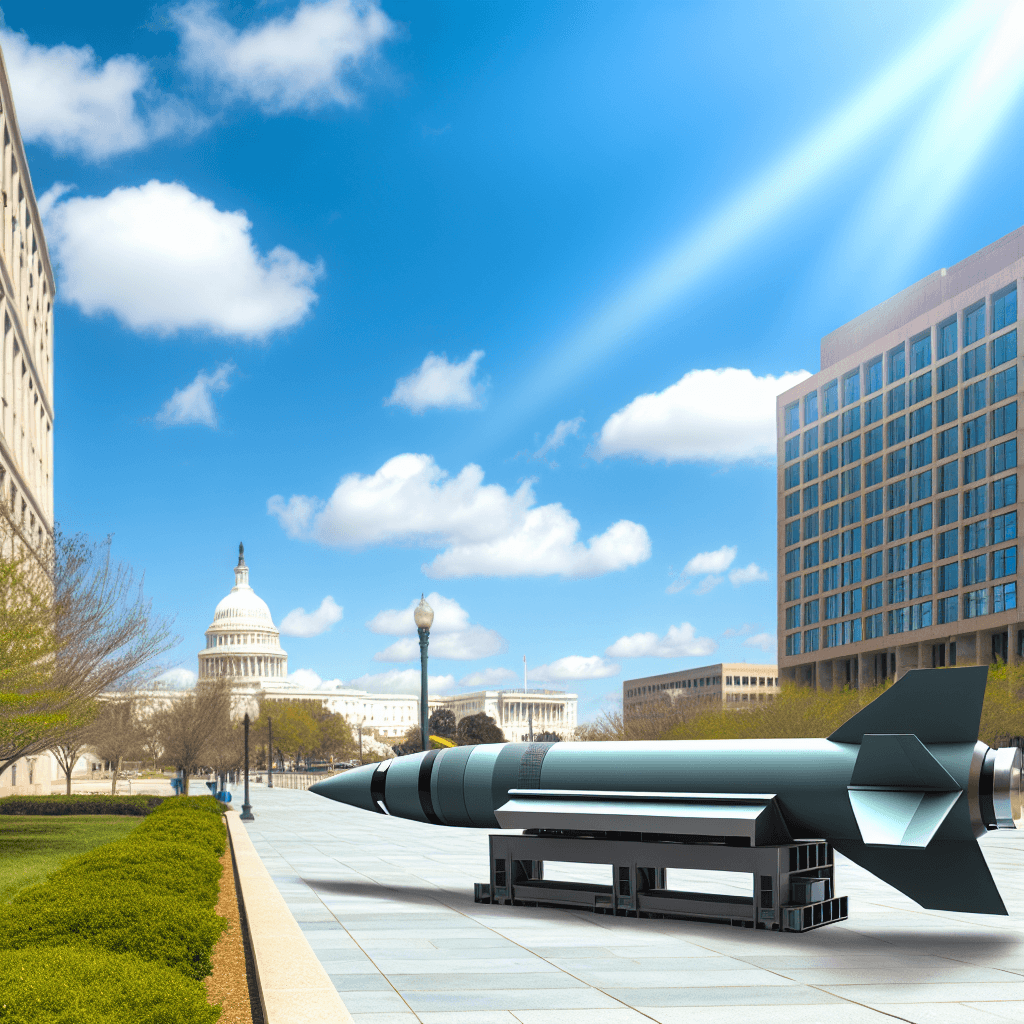
How 3D-Printed Cruise Missiles Are Reshaping American Defense Manufacturing
Learn more about antares autotune access 9: $4 deal worth your money?
The future of American defense manufacturing is taking shape in a white-floored factory just outside Los Angeles. At Divergent Technologies in Torrance, California, cruise missile airframes emerge from 3D printers the size of shipping containers, layer by aluminum layer.
This is not science fiction. It is the Pentagon's answer to a critical question: How can America produce weapons at the speed and scale needed for modern warfare?
The technology represents a fundamental shift in how the United States builds its military arsenal. Each printer can produce hundreds of missile airframes annually at a fraction of traditional costs. These "low-cost" missiles run between $200,000 and $500,000 per unit, compared to legacy systems that cost $2 million to $6 million each.
What Makes 3D-Printed Defense Manufacturing Revolutionary?
Divergent Technologies has pioneered what it calls "one-factory, any-product manufacturing." The same 3D-printing bay that produces cruise missile components can switch instantly to manufacturing suspension parts for McLaren supercars.
No retooling. No downtime. Just pure manufacturing flexibility.
Lukas Czinger, the company's 31-year-old co-founder, president, and CEO, sees this as America's opportunity to reclaim global manufacturing leadership. "America has the opportunity today to create the world's leading manufacturing base by adopting leapfrog technology," he told reporters during a recent facility tour.
The printers themselves are engineered and manufactured entirely in the United States. They stack layers of aluminum and proprietary advanced metals using AI-driven systems that optimize every aspect of production. The result is weapons-grade components produced with unprecedented speed and efficiency.
How Are Recent Conflicts Accelerating Defense Innovation?
The Iran war that began three weeks ago has triggered a surge of interest in companies like Divergent. Defense contractors across the board are fielding increased inquiries from Pentagon officials and prime contractors.
"Everyone has woken up to what some people knew," Czinger explained. "There's consensus in the [Pentagon] now that munitions at scale are required today, not tomorrow. And that is what has accelerated our business here."
The urgency reflects a stark reality facing military planners. Modern conflicts consume munitions at rates that traditional manufacturing simply cannot sustain.
The ability to rapidly scale production without massive capital investment in new facilities has become a strategic imperative. Divergent recently demonstrated this capability by taking a missile design from whiteboard concept to first flight in just 71 days. That timeline would have been impossible using conventional manufacturing methods, which require extensive tooling, testing, and production setup.
What Is the Arsenal of Freedom Initiative?
The Pentagon has branded companies like Divergent as part of the "Arsenal of Freedom," a Trump administration effort to revitalize American manufacturing through defense innovation. The name deliberately echoes President Franklin Roosevelt's "Arsenal of Democracy" mobilization during World War II.
For a deep dive on apple's biggest iphone revamps ever: foldable & edge display, see our full guide
Defense Secretary Pete Hegseth has made this initiative a cornerstone of his tenure. In January and February, he toured Divergent and other emerging defense companies across nine states. His message focused on reducing "bloat and lethargy" among traditional contractors.
"Either you succeed right here as patriots in this country, or our warriors will not," Hegseth told Divergent employees during his visit. "Innovation, competition, scale, speed, cost-effective -- all the attributes that we need in order to win on the modern battlefield."
For a deep dive on trump 'taco' wall street phenomenon: what investors need, see our full guide
The initiative represents a philosophical shift in Pentagon procurement. Rather than relying exclusively on established defense giants, military planners are actively cultivating relationships with smaller, more agile companies that can deliver innovation faster.
What Are the Key Advantages of 3D-Printed Defense Systems?
The benefits of additive manufacturing for defense applications extend beyond simple cost savings:
- Rapid prototyping: Design iterations that once took months now happen in weeks
- Supply chain resilience: Reduced dependence on complex global supply networks
- Design flexibility: Engineers can optimize for performance without manufacturing constraints
- Scalability: Production can ramp up or down based on demand without retooling
- Material efficiency: Additive manufacturing wastes far less material than subtractive methods
Why Is the South Bay Becoming a Defense Innovation Hub?
A concentration of frontier defense firms has emerged in the South Bay area of Los Angeles, spanning Torrance, El Segundo, and Hawthorne. This patriotic, capitalist enclave thrives in one of America's bluest states.
Many of these factory floors feature 15-foot American flags hanging prominently. The symbolism reflects a culture that blends startup agility with defense industry seriousness.
Companies like Epirus, which manufactures advanced counter-drone systems, share this geographic and cultural space with Divergent. The clustering creates natural synergies.
Engineers move between companies, sharing knowledge and best practices. Suppliers and partners locate nearby to serve multiple clients. The result is an ecosystem that accelerates innovation across the entire defense technology sector.
This geographic concentration also sends a political message. While California's state government often clashes with federal defense priorities, the South Bay defense cluster demonstrates that innovation and patriotism can flourish anywhere entrepreneurs find opportunity.
How Did a Hypercar Company Start Making Missiles?
Divergent began in 2014 with an unlikely mission: building the world's fastest street-legal hypercar. Kevin Czinger, now 66 and serving as executive chairman, founded the company as a software-driven race car manufacturer.
The company's 21C hypercar still holds performance records. But the technology developed for extreme automotive applications proved perfectly suited for defense manufacturing.
The same precision, material science, and manufacturing flexibility that creates record-breaking cars now produces cruise missiles. Kevin Czinger sees his company as part of a larger movement.
"We're driven by national security needs, that will allow America to lead in the engineering and making of things for the next 100+ years," he explained. "We can, within a few years, completely reposition America to be the leading maker of things in the world again."
This dual-use approach, where commercial and defense applications share underlying technology, has become increasingly common among new defense contractors. It allows companies to maintain commercial revenue streams while pursuing defense contracts, reducing dependence on any single customer.
How Does 3D Printing Compare to Traditional Missile Manufacturing?
Traditional missile manufacturing relies on complex supply chains and specialized tooling. Components come from dozens of suppliers, each requiring its own quality control and logistics management.
Assembly happens in dedicated facilities designed for specific product lines. Changing designs or scaling production requires significant capital investment.
New tooling must be manufactured, tested, and validated. Workers need retraining. Supply contracts must be renegotiated. The entire process can take years and cost hundreds of millions of dollars.
Additive manufacturing eliminates most of these barriers. Design changes happen in software, not on factory floors. The same equipment produces different components simply by loading new instructions.
Quality control becomes more consistent because human variability decreases. The cost advantages compound over time.
A traditional missile production line might require $500 million in capital investment before producing a single unit. A 3D printing facility can begin production with a fraction of that investment and scale gradually as demand increases.
How Fast Can 3D Printing Produce Missiles Compared to Traditional Methods?
The speed difference between traditional and additive manufacturing proves decisive in crisis situations:
- Traditional approach: 18-36 months from design approval to production
- Divergent's method: 71 days from whiteboard to first flight test
- Scaling traditional production: 12-24 months to double output
- Scaling 3D printing: Add printers as needed, operational in weeks
What Does Low-Cost Manufacturing Mean for Defense Strategy?
The emergence of low-cost, rapidly producible munitions fundamentally changes military planning calculus. Commanders can consider operational approaches that would have been prohibitively expensive with legacy systems.
A $5 million missile represents a significant investment that must be carefully allocated. A $300,000 missile opens different tactical possibilities.
The willingness to expend munitions increases when replacement costs drop by 90%. This shift also affects deterrence calculations.
Adversaries must account for America's ability to rapidly scale munitions production in response to threats. The traditional assumption that prolonged conflicts would deplete American stockpiles no longer holds when production can ramp up quickly.
Congress faces important decisions about how to fund this transition. Traditional defense contractors employ thousands of workers in congressional districts across the country. Shifting procurement toward newer, smaller companies creates political challenges even when the strategic logic is compelling.
What Challenges Does 3D-Printed Defense Manufacturing Face?
Despite impressive capabilities, additive manufacturing for defense faces significant hurdles. Quality assurance remains more complex than with traditional methods.
Each printed component requires extensive testing to ensure it meets military specifications. Material science continues to evolve.
While current systems work with aluminum and advanced metal alloys, some applications require materials that additive manufacturing cannot yet handle effectively. Research continues, but gaps remain.
Integration with existing supply chains presents practical challenges. Prime contractors accustomed to traditional suppliers must validate new manufacturing methods. Military logistics systems must adapt to different maintenance and replacement cycles.
Regulatory frameworks designed for traditional manufacturing do not always fit additive approaches. The Pentagon is working to update specifications and testing requirements, but bureaucratic processes move slowly.
How Are Other Nations Responding to 3D-Printed Defense Technology?
China has invested heavily in additive manufacturing for defense applications. State-owned enterprises have deployed 3D printing for aircraft components, naval systems, and missile production.
The scale of Chinese investment dwarfs American efforts when measured by direct government spending. Russia has pursued similar capabilities, though with less success due to sanctions limiting access to advanced materials and equipment.
European allies are developing their own additive manufacturing capabilities, sometimes in partnership with American firms. The competition extends beyond pure technology.
Manufacturing flexibility translates directly into strategic flexibility. Nations that can rapidly adapt their arsenals to emerging threats gain significant advantages in crisis situations.
American leadership in this domain is not guaranteed. It requires sustained investment, regulatory adaptation, and willingness to challenge established procurement practices. The Arsenal of Freedom initiative represents one approach, but long-term success depends on consistent policy support.
Why Manufacturing Speed Now Defines Strategic Advantage
Divergent Technologies and similar companies represent more than incremental improvement in defense manufacturing. They embody a fundamental reimagining of how America builds its military capabilities.
The ability to produce cruise missiles at one-tenth traditional costs while maintaining quality and performance changes the strategic equation. The convergence of immediate need, driven by current conflicts, and long-term strategic vision creates unusual momentum for change.
Defense Secretary Hegseth's Arsenal of Freedom initiative provides political backing for procurement reforms that might otherwise languish in bureaucratic processes. Yet success is not inevitable.
Traditional contractors retain enormous advantages in relationships, experience, and political connections. The transition from legacy systems to additive manufacturing will require sustained commitment from Pentagon leadership, congressional appropriators, and military end-users.
The stakes extend beyond individual weapons systems. Kevin Czinger's vision of repositioning America as the world's leading manufacturer depends on successfully scaling these technologies beyond defense applications. The same 3D printers producing missiles today could transform civilian manufacturing tomorrow, creating economic benefits that reinforce national security gains.
Continue learning: Next, explore fed's goolsbee warns on inflation in fraught climate
As geopolitical tensions
Related Articles
Navigating the Future: Innovations in Tech
Dive into the latest in technology, covering AI, digital trends, cybersecurity, and emerging technologies shaping our world.
Sep 6, 2025

Exploring the Future of Tech: Innovations & Trends
Dive into the latest tech innovations and digital trends, from AI and machine learning to cybersecurity and beyond.
Sep 6, 2025

Unpacking The Bitter Lesson in AI Evolution
Delving into the Bitter Lesson in AI: Unraveling its true meaning and impact on future technological innovations and trends.
Sep 4, 2025