Directable AI Set to Disrupt Film and TV Production
Directable AI is revolutionizing film and TV production, particularly for smaller Asian markets. Discover how this technology levels the playing field and what it means for global entertainment.

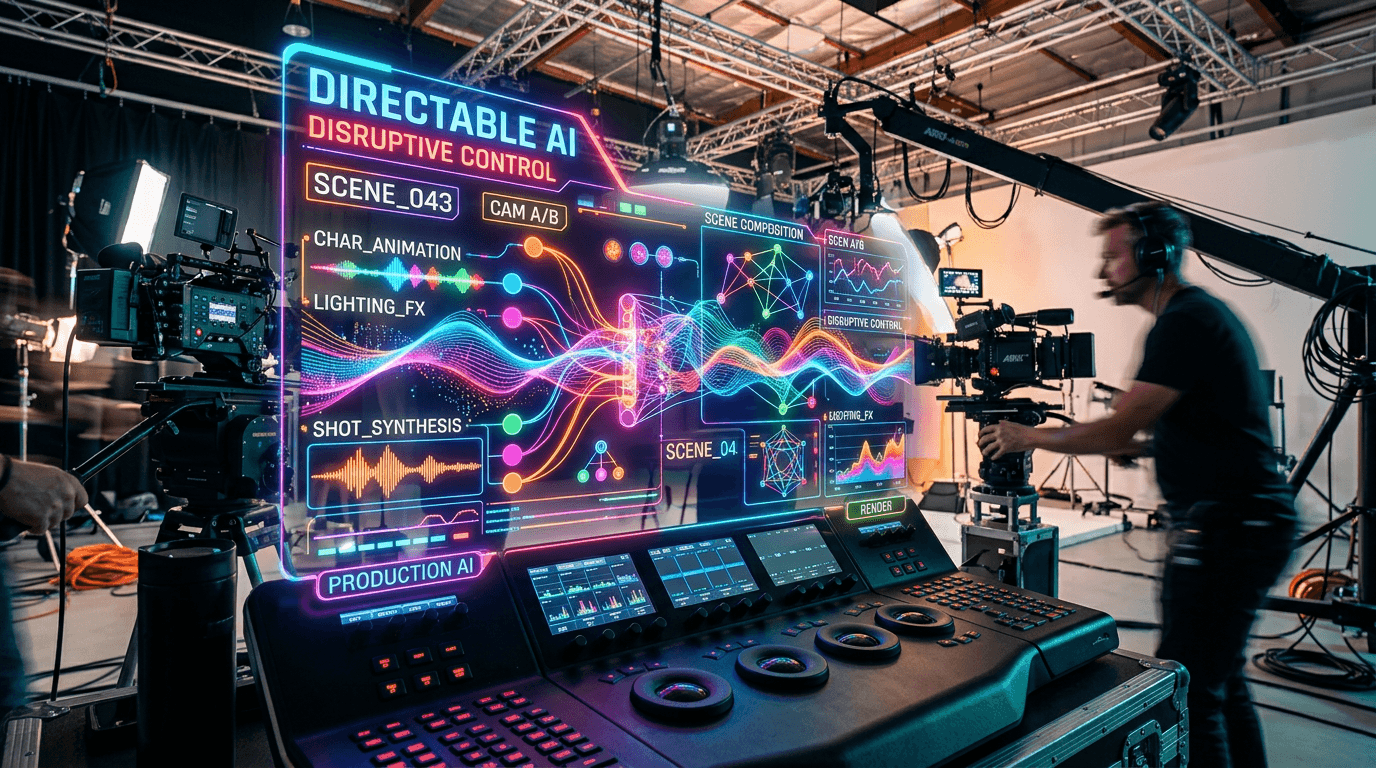
Directable AI Set to Disrupt Film and TV Biz: "It's Going to Help Small Film Industries in Asia Compete"
Learn more about google photos app changes: business lessons in user feedback
The film and television industry stands at a technological crossroads. Directable AI transforms how content gets made, from pre-production planning to final post-production touches.
Filmmakers and technologists at FilMart reveal that this technology levels the playing field for smaller production houses, particularly across Asian markets where budget constraints have traditionally limited creative ambitions. Generative AI has moved beyond experimental phase into practical application.
How Does Directable AI Transform Film Production?
Directable AI represents a significant evolution beyond basic generative tools. Unlike earlier AI systems that produced random outputs, these platforms allow filmmakers to maintain creative control while automating labor-intensive processes.
Directors now guide AI systems through specific visual styles, camera movements, and editing choices. The technology addresses one of production's most persistent challenges: translating vision into reality within budget constraints.
Small production companies in markets like Thailand, Vietnam, and the Philippines achieve visual effects and production values previously reserved for Hollywood blockbusters. Commercial advertising has already undergone this transformation. Brands create multiple ad variations in hours rather than weeks, testing different approaches without additional shooting days.
What Production Processes Can AI Replace?
The scope of AI integration extends across nearly every production phase. Industry professionals at FilMart identified several key areas where the technology delivers immediate value:
- Pre-visualization and storyboarding: AI generates detailed scene mockups from script descriptions
- Background replacement and set extension: Virtual environments replace expensive location shoots
- Crowd simulation: Digital extras populate scenes without hiring hundreds of performers
- Color grading and post-production: Automated processes match visual styles across footage
- Dialogue dubbing and localization: AI voice cloning enables rapid multi-language versions
These capabilities compress production timelines dramatically. A commercial that once required three weeks of post-production work now completes in three days. Feature films benefit from similar acceleration, particularly in visual effects-heavy sequences.
For a deep dive on dolls beat tablets at building social skills, study finds, see our full guide
Will Virtual Production Technology Become Obsolete?
Virtual production stages, popularized by shows like "The Mandalorian," represent massive infrastructure investments. These LED volume stages cost millions to build and operate.
For a deep dive on nightingale: open-source karaoke app for any song, see our full guide
Directable AI threatens to make some of this technology redundant before studios recoup their investments. Filmmakers now generate photorealistic backgrounds entirely through AI, eliminating the need for physical LED walls. The technology creates environments that respond to lighting changes and camera movements, matching what virtual production stages provide at a fraction of the cost.
Hybrid approaches are emerging. Some productions use AI to pre-visualize virtual production setups, optimizing stage time and reducing expensive experimentation. Others combine AI-generated elements with traditional filming techniques, selecting the most cost-effective approach for each scene.
How Will Smaller Asian Markets Compete with Hollywood?
Asian film industries have long produced compelling stories hampered by budget limitations. Visual effects, elaborate sets, and complex action sequences remained largely out of reach for productions outside major markets like China, Japan, and South Korea.
Directable AI removes these barriers. A Filipino production company now creates science fiction spectacles rivaling international standards. Vietnamese filmmakers access the same tools as their Hollywood counterparts, competing purely on storytelling merit rather than budget size.
The democratization extends beyond visual effects. AI-powered tools handle script analysis, suggesting pacing improvements and identifying potential audience engagement issues.
Distribution becomes easier as AI rapidly creates localized versions for different markets. Foundational model builders have established significant presence at events like FilMart, recognizing Asia's potential as both market and innovation hub.
What Challenges Does AI Integration Present?
The transition brings complications. Industry professionals identify several concerns that require careful navigation:
- Copyright and ownership: Who owns AI-generated content remains legally ambiguous
- Job displacement: Traditional VFX artists and post-production specialists face uncertain futures
- Quality control: AI outputs require careful oversight to maintain creative standards
- Training requirements: Crews must learn new skills to effectively direct AI tools
Unions and industry organizations are scrambling to establish guidelines. Questions about crediting AI contributions and protecting human workers' livelihoods dominate industry discussions.
Some productions have faced backlash for using AI without proper disclosure. Audiences increasingly question whether they watch human creativity or algorithm outputs. Filmmakers must balance efficiency gains against maintaining the human touch that makes stories resonate emotionally.
What Does Commercial Advertising Reveal About AI's Future?
Commercial production offers a preview of film and TV's AI-integrated future. Advertising agencies adopted generative AI quickly, driven by tight deadlines and demanding clients.
Brands now produce personalized ad variations for different demographics, something previously cost-prohibitive. A single shooting day generates footage that AI transforms into dozens of unique commercials, each optimized for specific audience segments.
Early AI-heavy campaigns sometimes felt sterile or uncanny. Successful implementations maintain human creative direction, using AI as enhancement rather than replacement. This lesson applies directly to narrative filmmaking, where emotional authenticity matters even more.
Can AI Enhance Rather Than Replace Creativity?
The most successful AI integrations treat the technology as collaborative tool rather than autonomous creator. Directors describe AI as an incredibly fast, tireless assistant that handles technical execution while humans maintain creative vision.
This partnership model preserves filmmaking's artistic soul while accessing AI's efficiency. A director might spend hours perfecting a single AI-generated background, adjusting parameters until the result matches their vision.
The AI handles the computational heavy lifting, but human judgment guides every decision. Some filmmakers experiment with AI as creative partner, using unexpected AI suggestions to spark new ideas.
How Will AI Reshape Global Entertainment?
The entertainment industry's power dynamics are shifting. Geographic location and access to capital matter less when AI tools provide production capabilities previously requiring massive infrastructure.
Stories from previously underrepresented regions compete on visual and technical merit. Streaming platforms benefit from increased content diversity as production costs decrease. More stories from more cultures reach global audiences, enriching the entertainment landscape.
Asian narratives stand to gain significant visibility as production quality barriers fall. Traditional studios face new competition from agile independents who adopt AI faster. Established production pipelines, once competitive advantages, become liabilities when newer companies build workflows around AI capabilities from the ground up.
How Should Filmmakers Prepare for AI Integration?
Industry professionals recommend proactive engagement with AI tools. Waiting for the technology to mature means falling behind competitors who are learning through experimentation.
Key preparation steps include:
- Experiment with available tools: Free and low-cost AI platforms let filmmakers explore capabilities
- Develop AI literacy: Understanding what AI can and cannot do informs better creative decisions
- Maintain human-centric storytelling: Technology serves the story, never the reverse
- Build flexible workflows: Production pipelines must adapt as AI capabilities evolve
- Engage with ethical considerations: Proactive policies on AI use build audience trust
Film schools are integrating AI training into curricula, recognizing that tomorrow's filmmakers must understand these tools as thoroughly as they understand cameras and editing software. Professional development programs help established creators transition their skills.
What Does This Mean for the Future of Filmmaking?
Directable AI represents more than incremental improvement. This technology fundamentally restructures film and television production economics, making high-quality content creation accessible to creators regardless of budget or location.
Asian film industries, particularly smaller markets, stand to benefit enormously as technical barriers disappear. The transition requires careful navigation of copyright issues, job displacement concerns, and quality control challenges.
The potential for democratized filmmaking and increased story diversity makes this disruption positive for global entertainment. Success belongs to filmmakers who embrace AI as collaborative tool while maintaining the human creativity that makes stories resonate.
Continue learning: Next, explore turing award goes to quantum cryptography pioneers
The future of film isn't human versus machine. It's human and machine working together to tell stories that were previously impossible to realize.
Related Articles

AI Tools Reveal Identities of ICE Officers Online
AI's emerging role in unmasking ICE officers spotlights the intersection of technology, privacy, and ethics, sparking a crucial societal debate.
Sep 2, 2025

Maduro's Alarm Over US Naval Deployment Near Venezuela
Maduro labels US naval deployment near Venezuela as a "bloody threat," spotlighting the role of tech and cybersecurity in modern geopolitics.
Sep 2, 2025

Robin Wright's Bold Move: From Hollywood to England
Robin Wright's relocation to England is a bold statement on her search for liberation and a commentary on America's current state.
Sep 6, 2025
Comments
Loading comments...