Dolls Beat Tablets at Building Social Skills, Study Finds
New research shows playing with dolls develops empathy and social understanding more effectively than digital devices, benefiting both boys and girls during critical childhood development.

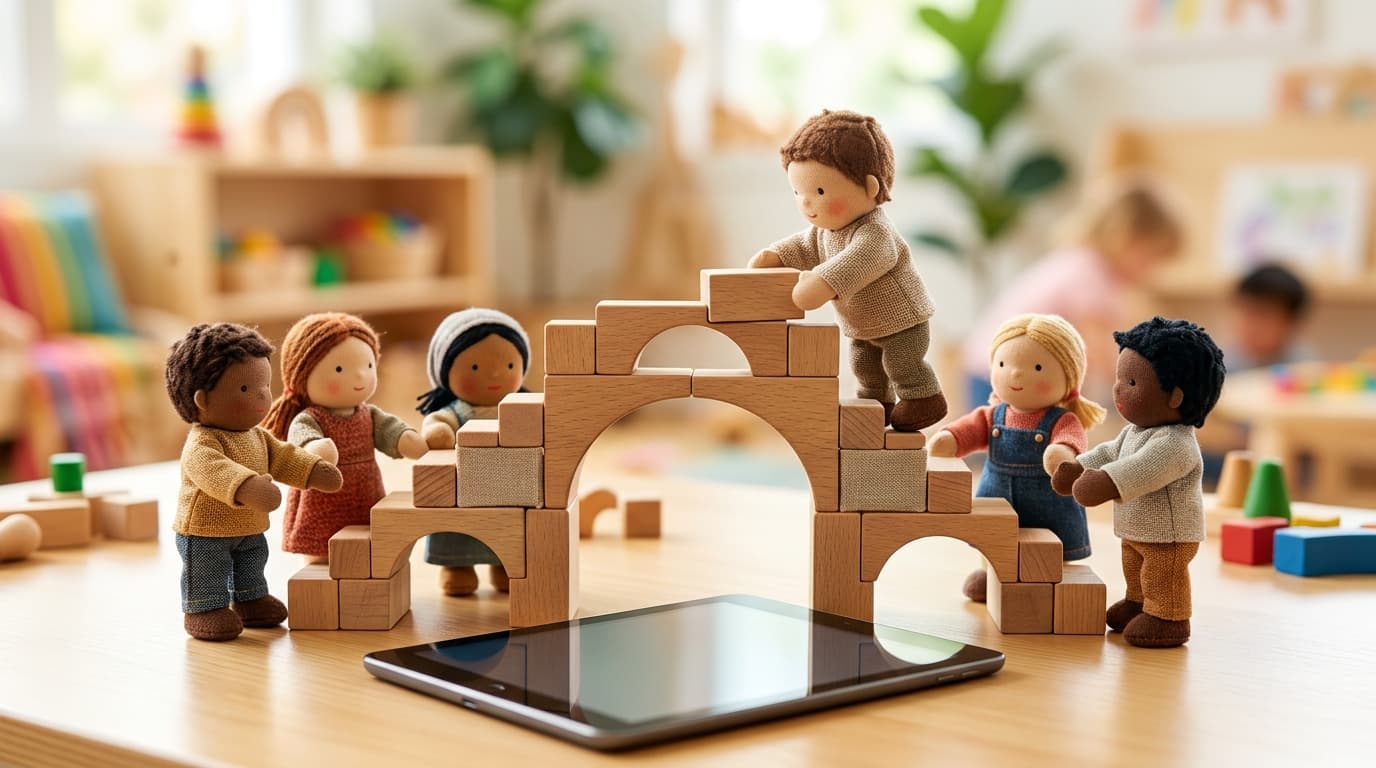
Dolls Beat Tablets at Building Social Understanding in Children
Learn more about death to scroll fade: why this web design trend must end
Parents face constant pressure to keep up with the latest educational apps and digital learning tools. Yet groundbreaking research from Cardiff University suggests that old-fashioned doll play might be the superior choice for developing crucial social skills.
The six-week study published in PLOS One reveals that playing with dolls activates brain regions associated with empathy and social processing more effectively than tablet-based activities. This finding challenges the growing trend of screen-based learning during early childhood.
As children spend increasing amounts of time with digital devices, scientists are uncovering what we might be losing in the transition from physical to virtual play.
How Does Doll Play Affect Children's Brain Development?
Researchers at Cardiff University conducted a comprehensive study examining how different play activities affect children's developing brains. The team used neuroimaging technology to observe brain activity while children engaged in various forms of play. Their findings revealed distinct patterns of neural activation during doll play compared to tablet use.
Doll play consistently activated the posterior superior temporal sulcus (pSTS), a brain region critical for social information processing. This area helps children understand others' thoughts, feelings, and intentions. The activation occurred regardless of whether children played alone or with others, suggesting that dolls themselves prompt social thinking.
Tablet play, by contrast, showed significantly less activation in these social processing regions. Even educational apps designed to teach social skills failed to engage the brain's empathy networks as effectively as physical dolls.
Why Do Physical Dolls Outperform Digital Alternatives?
The superiority of doll play stems from several key factors that digital devices cannot replicate. Physical dolls provide tangible, three-dimensional representations of people that children can manipulate and interact with directly.
For a deep dive on turing award goes to quantum cryptography pioneers, see our full guide
This hands-on engagement creates richer imaginative scenarios. Dolls encourage children to practice real-world social interactions through role-play. When a child feeds a doll, puts it to bed, or resolves conflicts between dolls, they rehearse caregiving behaviors and social problem-solving.
The open-ended nature of doll play also matters significantly. Unlike apps with predetermined outcomes, dolls allow unlimited creative possibilities. Children must generate their own narratives, dialogue, and emotional responses, exercising their social imagination continuously.
For a deep dive on nexus 5 library on macos: setup & optimization guide, see our full guide
Do Boys and Girls Benefit Equally From Doll Play?
The Cardiff University research demolished persistent gender stereotypes about toy preferences and their benefits. The study found that doll play develops empathy and social understanding equally well in boys and girls.
Brain activation patterns showed no significant differences between genders during doll play activities. This finding carries important implications for parents and educators who might discourage boys from playing with dolls.
The research suggests that all children benefit from opportunities to engage in nurturing, social role-play. Limiting these experiences based on gender potentially hinders social development. Traditional marketing has long positioned dolls primarily toward girls, but the neuroscience tells a different story.
Can Doll Play Help Children With Social Difficulties?
The research identified particularly strong benefits for children experiencing peer relationship problems. These children showed enhanced social processing during doll play, suggesting therapeutic potential.
Doll play may provide a safe, low-pressure environment for practicing social skills. Children struggling with social interactions often feel anxious in real peer situations. Dolls offer a controlled setting where mistakes carry no social consequences.
The findings suggest several practical applications:
- Therapeutic interventions: Mental health professionals can incorporate structured doll play into treatment for social anxiety or autism spectrum disorders
- Classroom activities: Teachers can use guided doll play to help isolated children practice friendship skills
- Home support: Parents can engage in co-play with dolls to model and discuss social problem-solving
- Social skills groups: Group doll play sessions provide scaffolded peer interaction opportunities
What Did the Six-Week Study Reveal About Social Development?
The research team followed children over six weeks, tracking changes in social understanding and empathy measures. Participants engaged in regular doll play sessions while researchers monitored their social development progress.
Children who played with dolls showed measurable improvements in perspective-taking abilities. They became better at understanding that others might have different thoughts, feelings, or knowledge than themselves. This theory of mind development represents a crucial childhood milestone.
The improvements persisted beyond the study period, suggesting lasting effects. Children retained their enhanced social processing abilities weeks after the structured play sessions ended.
How Should Parents Balance Screen Time With Traditional Play?
The research does not suggest eliminating tablets entirely from children's lives. Digital devices offer valuable educational content and skill development in other areas.
However, the findings highlight the importance of maintaining balance in play activities. Experts recommend that parents consciously preserve time for physical, imaginative play. The American Academy of Pediatrics suggests limiting recreational screen time for young children while encouraging diverse play experiences.
Parents can integrate both types of play thoughtfully. After tablet time, transitioning to doll play helps activate different brain regions and skill sets. This variety supports more comprehensive cognitive and social development than either activity alone.
What Are the Best Ways to Encourage Beneficial Doll Play?
Maximizing the social development benefits of doll play requires some intentionality. Simply providing dolls is not enough; the quality and context of play matter significantly.
Choose diverse dolls that represent different ages, abilities, and backgrounds. This variety prompts richer social scenarios and helps children develop inclusive thinking. Dolls representing families, community helpers, and various professions expand imaginative possibilities.
Engage in co-play when possible, especially with younger children. Adults can model empathetic dialogue, emotional labeling, and problem-solving during play. These demonstrations teach children how to use dolls for social rehearsal effectively.
Avoid over-structuring play sessions. While some guidance helps, children need freedom to direct their own narratives.
What Do These Findings Mean for Modern Childhood Development?
This research connects to larger questions about how modern childhood experiences shape developing brains. As digital devices become ubiquitous, understanding their trade-offs becomes increasingly critical.
The Cardiff study provides concrete evidence that some traditional activities offer irreplaceable developmental benefits. The findings also validate parental instincts that sometimes conflict with cultural pressure toward constant technological engagement.
Many parents sense that physical play offers something valuable, and neuroscience now confirms this intuition. Traditional toys activate social brain networks in ways that screens cannot replicate. Educators and policymakers should consider these results when designing early childhood programs.
What Future Research Is Needed on Doll Play Benefits?
The Cardiff University study opens numerous avenues for further investigation. Researchers plan to examine how different types of dolls and play scenarios affect social development.
They also want to explore optimal play duration and frequency for maximizing benefits. Longitudinal studies tracking children into adolescence and adulthood would reveal whether early doll play correlates with later social competence.
Scientists also hope to investigate whether doll play interventions can help children with diagnosed social processing disorders. Controlled trials could determine if structured doll play programs improve outcomes for children with autism or social anxiety.
Choosing Toys That Build Social Brains
The Cardiff University research provides compelling evidence that dolls outperform tablets for developing empathy and social understanding. This six-week study revealed specific brain activation patterns during doll play that support crucial social skills.
Both boys and girls benefit equally, with particularly strong effects for children experiencing peer difficulties. Parents need not abandon digital devices entirely, but this research emphasizes the irreplaceable value of traditional play.
Continue learning: Next, explore nvidia dlss 5 ai gaming tech faces 'ai slop' backlash
Dolls offer unique opportunities for social rehearsal that screens cannot replicate. By maintaining balance and intentionally preserving time for physical, imaginative play, families can support optimal social-emotional development during critical childhood years.
Related Articles

Smartphones Before 13: A Risk to Lifelong Mental Health?
Early smartphone use linked to mental health issues later in life, urging action to protect young minds from social media, cyberbullying, and sleep loss.
Sep 6, 2025

16 Vanishing Societal Elements: A Scientific Insight
Discover the societal shifts driven by science, from the rise of digital media to the decline of manual cars and privacy, and what lies ahead.
Sep 3, 2025

Beyond Bitcoin: Blockchain's Impact on Various Industries
Explore the revolutionary applications of blockchain technology beyond cryptocurrency in healthcare, supply chain management, and identity verification.
Sep 7, 2025
Comments
Loading comments...