Dav1d: The Fastest AV1 Decoder Revolutionizing Video
Dav1d has emerged as the industry's fastest AV1 video decoder, transforming how we consume high-quality video content across devices with exceptional performance and efficiency.

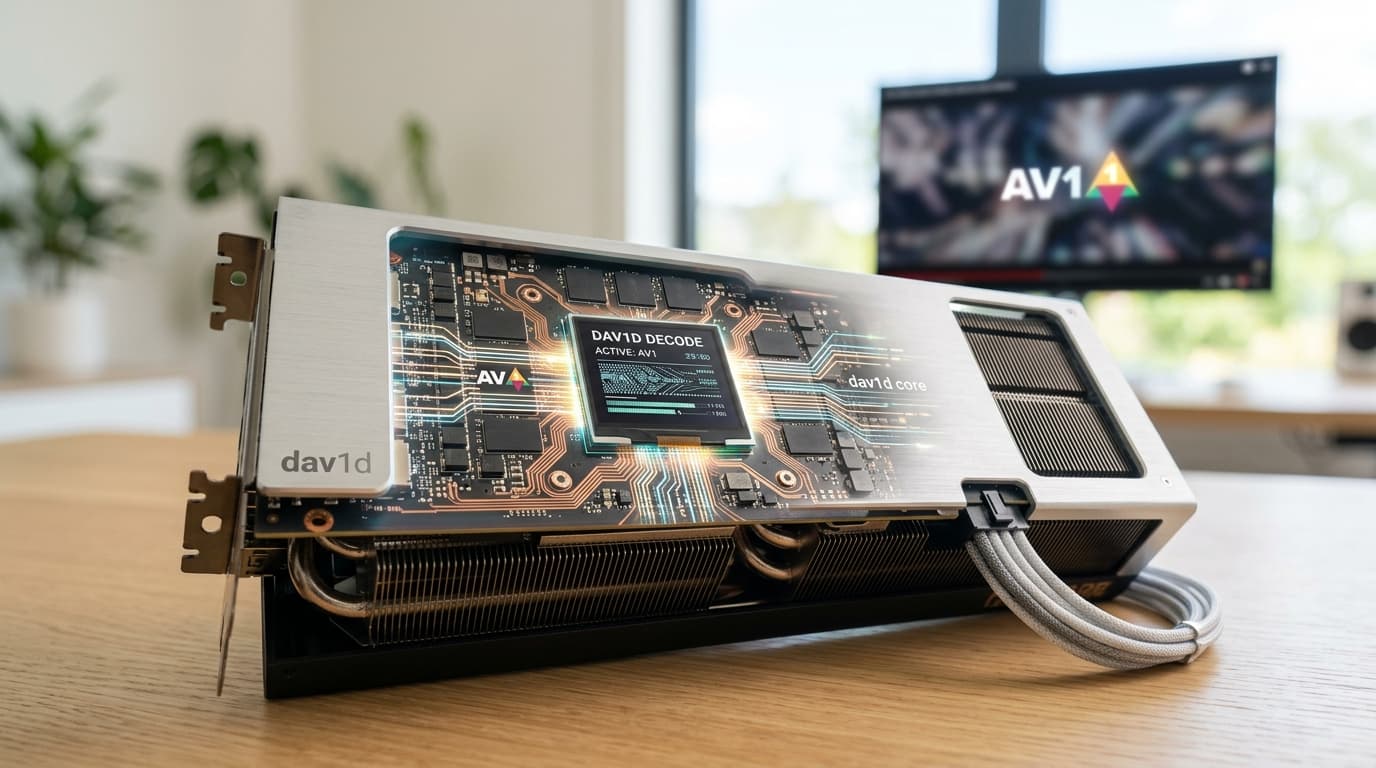
Dav1d AV1 Decoder: The Fastest Way to Stream High-Quality Video
Learn more about ios 27 new features coming to your iphone in 2026
Video streaming dominates internet traffic, and efficient decoding makes or breaks the user experience. Dav1d has emerged as the industry's fastest AV1 video decoder, transforming how we consume high-quality video content across devices. This open-source powerhouse delivers exceptional performance while maintaining the superior compression that makes AV1 the codec of choice for modern streaming platforms.
What Is Dav1d and Why Does It Matter?
Dav1d is an open-source AV1 video decoder developed by the VideoLAN team, the same organization behind VLC media player. The name cleverly plays on "David" while incorporating "AV1" and "decoder" into its spelling.
Released in 2018, this decoder addresses a critical challenge: AV1's computational intensity. The AV1 codec offers 30% better compression than VP9 and 50% better than H.264, but decoding this advanced format requires significant processing power. Dav1d solves this problem by delivering speeds 2-3 times faster than other AV1 decoders, making high-quality streaming accessible on everything from smartphones to desktop computers.
How Does Dav1d Achieve Superior Performance?
Optimized Architecture and Assembly Code
Dav1d's speed advantage comes from meticulous optimization at the assembly level. The development team wrote critical decoding functions in hand-optimized assembly language for various processor architectures including x86, ARM, and POWER. This low-level approach extracts maximum performance from modern CPUs.
The decoder utilizes SIMD (Single Instruction, Multiple Data) instructions extensively. These specialized processor instructions handle multiple data points simultaneously, dramatically accelerating the parallel operations common in video decoding. Different SIMD instruction sets like AVX2, NEON, and SSE are supported depending on the processor architecture.
Multi-Threading and Parallel Processing
Modern processors feature multiple cores, and Dav1d leverages this parallelism effectively. The decoder implements tile-based and frame-based threading models that distribute decoding work across available CPU cores.
The threading implementation focuses on minimizing synchronization overhead. By carefully managing dependencies between decoding tasks, Dav1d keeps CPU cores busy without wasting cycles on coordination. This efficiency translates to smoother playback and lower power consumption.
For a deep dive on dav1d: the fast open-source av1 decoder explained, see our full guide
What Features Set Dav1d Apart from Other Decoders?
Several characteristics distinguish Dav1d from competing decoders:
For a deep dive on motorola razr ultra 2026: new battery tech beats apple, see our full guide
- Cross-platform compatibility: Runs on Windows, macOS, Linux, Android, iOS, and embedded systems
- Minimal dependencies: Requires only a C compiler and basic build tools, simplifying integration
- Permissive licensing: BSD 2-clause license allows commercial use without restrictions
- Active development: Regular updates add optimizations and support new processor features
- Industry adoption: Integrated into Firefox, Chrome, VLC, and major streaming platforms
Which Devices Benefit Most from Dav1d?
Mobile devices gain the most significant advantages from Dav1d's efficiency. Smartphones and tablets often lack hardware AV1 decoding support, making software decoder performance critical. Dav1d enables these devices to play 4K AV1 video without excessive battery drain or thermal throttling.
Older desktop computers also benefit substantially. Systems without dedicated AV1 hardware decoders can still enjoy high-quality streaming thanks to Dav1d's optimized software implementation.
Real-World Applications and Industry Impact
Streaming Services and Content Delivery
Major streaming platforms have embraced AV1 with Dav1d as the decoder of choice. Netflix uses AV1 encoding for its content library, reducing bandwidth costs while improving video quality. YouTube streams AV1 video to supported browsers, with Dav1d handling playback in Firefox and other applications.
The bandwidth savings prove substantial at scale. A streaming service delivering millions of hours of content daily can reduce infrastructure costs by 30% or more through AV1 adoption.
Web Browsers and Media Players
Firefox integrated Dav1d as its default AV1 decoder in 2019, becoming the first major browser to ship with full AV1 support. Chrome and Edge followed suit, though they also leverage hardware decoding when available.
This widespread integration creates a positive feedback loop. As more playback software supports AV1 through Dav1d, content creators feel confident encoding in this format. Increased AV1 content then drives further decoder optimization and hardware support.
How Does Dav1d Compare to Hardware Decoders?
Hardware AV1 decoders built into modern GPUs and mobile processors offer lower power consumption than any software solution. However, Dav1d remains relevant for several reasons.
Many devices lack hardware AV1 support, creating a large market for efficient software decoding. Performance gaps have narrowed considerably. On high-end CPUs, Dav1d can decode 4K AV1 video in real-time while using only 30-40% of processor capacity.
Future Development and Optimization
The Dav1d team continues pushing performance boundaries. Recent updates added support for newer SIMD instruction sets like AVX-512 and ARM's SVE. These optimizations deliver 10-20% speed improvements on compatible processors.
Upcoming releases will focus on mobile power efficiency. Targeted optimizations can reduce energy consumption further, proving particularly important as mobile video consumption continues growing exponentially.
How Can Developers Integrate Dav1d?
Integration for Developers
Developers can integrate Dav1d into applications through its C API. The library provides straightforward functions for initializing the decoder, feeding compressed video data, and retrieving decoded frames.
Most developers access Dav1d through multimedia frameworks like FFmpeg or GStreamer rather than directly. These frameworks handle the complexity of container formats, audio synchronization, and display rendering. Dav1d focuses exclusively on the decoding task, following Unix philosophy of doing one thing exceptionally well.
For End Users
End users typically interact with Dav1d indirectly through their web browser or media player. No configuration is necessary in most cases. Simply updating to recent browser versions ensures access to Dav1d's performance benefits when streaming AV1 content.
Users seeking to play local AV1 files should install VLC media player or another application that includes Dav1d support. These applications handle AV1 playback seamlessly, with Dav1d working behind the scenes to deliver smooth performance.
What Technical Challenges Does Dav1d Solve?
Memory Bandwidth Optimization
Video decoding moves massive amounts of data between memory and processor. Dav1d minimizes these transfers through careful memory layout and caching strategies.
These optimizations prove especially important on mobile devices where memory bandwidth is limited. By reducing memory traffic, Dav1d decreases both latency and power consumption. The result is smoother playback with longer battery life.
Handling Edge Cases and Compliance
AV1 specification includes numerous corner cases and optional features. Dav1d implements the complete specification, ensuring compatibility with all valid AV1 bitstreams. Rigorous testing against the official AV1 test suite validates this compliance.
The decoder also handles corrupted or non-compliant streams gracefully. Rather than crashing or displaying artifacts, Dav1d attempts to decode what it can while skipping problematic sections.
The Broader Impact on Video Technology
Dav1d's success demonstrates the continued relevance of open-source software in multimedia technology. By providing a high-performance, freely available decoder, the project accelerated AV1 adoption industry-wide.
Hardware manufacturers gained a reference implementation for testing their chips, while software developers obtained a ready-made solution for their applications. The decoder also influences codec development. The AV1 successor, currently in development, considers the lessons learned from Dav1d's optimization work.
Why Dav1d Matters for Modern Video Delivery
Dav1d stands as a testament to expert optimization and open-source collaboration. This decoder makes AV1's superior compression accessible across devices, from flagship smartphones to aging desktop computers.
Its performance advantages reduce bandwidth costs, extend hardware lifespans, and improve user experiences across the streaming ecosystem. As video quality demands increase and network efficiency becomes more critical, Dav1d's importance will only grow.
Continue learning: Next, explore musk v. altman trial: 'you can't just steal a charity'
The decoder represents not just technical achievement but a practical solution to real-world challenges in video delivery. Whether you stream content, develop applications, or simply enjoy high-quality video, Dav1d works behind the scenes to make it all possible.
Related Articles

Transforming Gaza: From Conflict Zone to Tech Hub
A leaked plan from the Trump administration reveals a bold strategy to turn Gaza into a thriving high-tech hub. Discover the potential.
Sep 3, 2025

Gaza's Tech Revolution: Trump's Bold High-Tech Vision
A leaked plan from the Trump administration unveils a vision to make Gaza a high-tech hub, focusing on AI, cybersecurity, and digital innovation.
Sep 3, 2025

AI's Role in Unveiling ICE Officers' Identities
AI unmasking ICE officers underscores a shift towards transparent law enforcement, raising questions about privacy and ethics in the digital age.
Sep 2, 2025
Comments
Loading comments...