Dav1d: The Fast Open-Source AV1 Decoder Explained
Dav1d is the leading open-source AV1 video decoder, delivering exceptional performance and efficiency. Learn how this technology powers modern video streaming and why it matters.

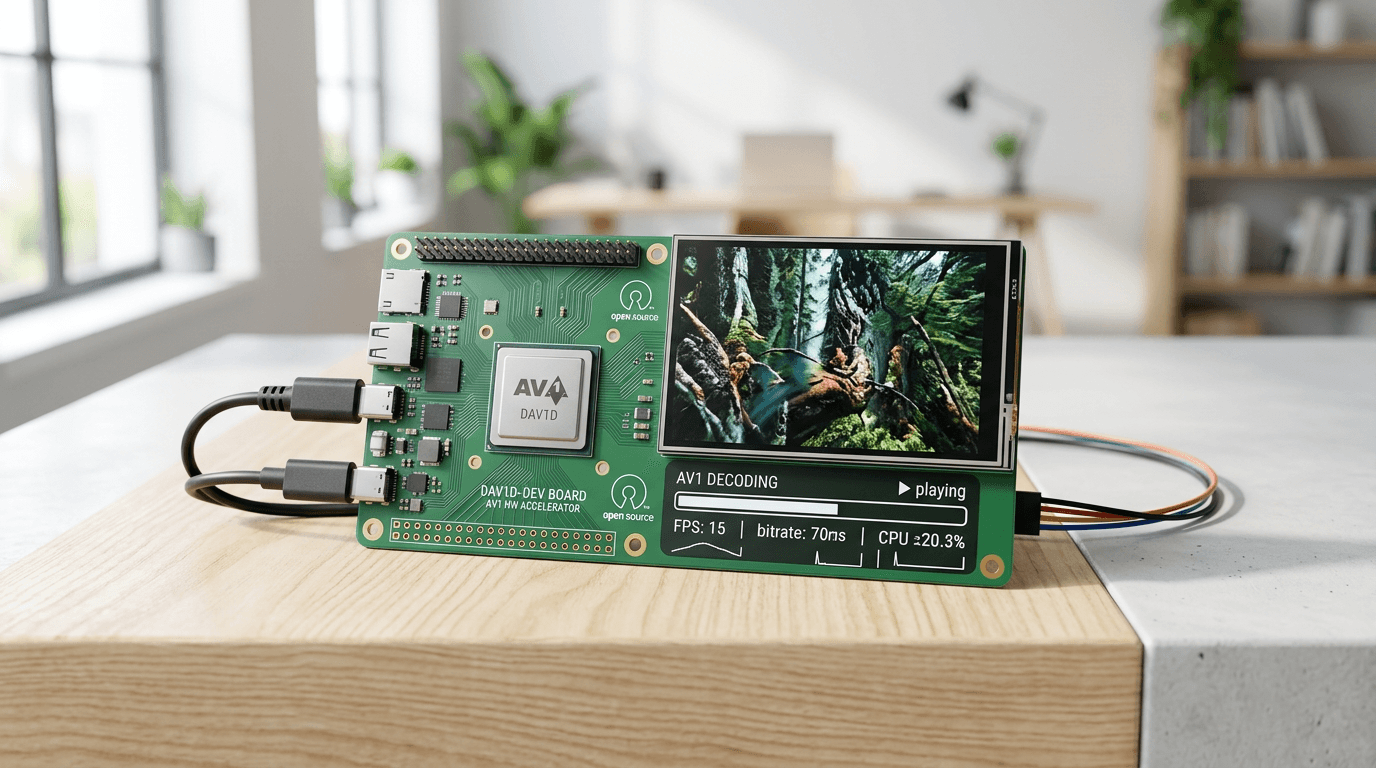
Dav1d Decoder: The Fastest Open-Source AV1 Video Decoder Explained
Learn more about motorola razr ultra 2026: new battery tech beats apple
Video streaming dominates internet bandwidth, and efficient video decoding determines whether your device can play high-quality content smoothly. Dav1d has emerged as the fastest open-source decoder for AV1, the royalty-free video codec that promises better compression than its predecessors. This decoder technology affects everyone who watches videos online, from casual viewers to professional content creators.
What Is Dav1d and Why Does It Matter for Video Streaming?
Dav1d is an open-source AV1 video decoder developed by VideoLAN, the organization behind VLC media player. The project launched in 2018 with a clear mission: create the fastest, most efficient AV1 decoder available. Unlike proprietary solutions, Dav1d provides free access to cutting-edge video decoding technology.
The decoder's name plays on "David versus Goliath," representing the open-source community's challenge against proprietary video codecs. AV1 itself represents a significant leap forward in video compression technology. It delivers 30% better compression than VP9 and H.265 while remaining completely royalty-free.
How Does Dav1d Achieve Superior Performance?
Dav1d achieves its impressive performance through meticulous optimization and smart architectural choices. The codebase uses primarily C and assembly language, allowing direct hardware control. This low-level approach enables the decoder to squeeze maximum performance from modern processors.
The development team focused on SIMD (Single Instruction, Multiple Data) optimization from day one. Modern CPUs process multiple data points simultaneously through SIMD instructions. Dav1d leverages these capabilities across x86, ARM, and PowerPC architectures.
Thread scalability represents another crucial design element. The decoder efficiently distributes workload across multiple CPU cores, enabling smooth 4K and 8K video playback.
How Does Dav1d Compare to Other AV1 Decoders?
For a deep dive on musk v. altman trial: 'you can't just steal a charity', see our full guide
Performance benchmarks consistently show Dav1d outpacing competing AV1 decoders. The decoder handles 1080p video playback with minimal CPU usage on modern hardware. Even older systems benefit from its efficient design.
Key performance advantages include:
For a deep dive on how fast is a macos vm? performance & size guide 2024, see our full guide
- Speed: 2-3x faster than libaom reference decoder
- Efficiency: Lower CPU usage means better battery life on mobile devices
- Compatibility: Works across Windows, macOS, Linux, iOS, and Android
- Memory footprint: Optimized to use minimal RAM during operation
- Scalability: Handles everything from 480p to 8K resolution
The decoder's cross-platform nature makes it invaluable for software developers. Applications can integrate Dav1d knowing it will perform consistently across different operating systems.
Where Is Dav1d Used in Real-World Applications?
Major platforms have adopted Dav1d for AV1 video playback. Mozilla Firefox integrated the decoder to support AV1 video on websites. VLC media player naturally includes Dav1d, given their shared VideoLAN heritage.
Google Chrome uses Dav1d on certain platforms where hardware acceleration is not available. Streaming services benefit enormously from AV1 adoption. Netflix, YouTube, and other platforms encode content in AV1 to reduce bandwidth costs while Dav1d enables smooth playback for users without dedicated AV1 hardware decoders.
Why Do Developers Choose Dav1d for Video Projects?
Developers appreciate Dav1d's clean API and comprehensive documentation. The decoder integrates easily into multimedia frameworks and applications. FFmpeg, the ubiquitous multimedia processing tool, supports Dav1d as its primary AV1 decoder.
The BSD 2-clause license permits both commercial and non-commercial use. Companies can incorporate Dav1d without licensing fees or legal complications. This openness accelerates AV1 adoption across the industry.
Continuous updates ensure compatibility with evolving AV1 specifications. The VideoLAN team actively maintains the codebase, fixing bugs and improving performance.
What Makes AV1 Video Codec Technology Different?
AV1 emerged from the Alliance for Open Media, a consortium including Google, Mozilla, Cisco, and others. The codec addresses the royalty problems plaguing H.265/HEVC. Patent licensing fees made H.265 adoption problematic for many companies.
The technical improvements in AV1 come from sophisticated compression techniques. The codec uses larger block sizes, improved motion prediction, and better entropy coding. These advances require more computational power for encoding but deliver superior compression ratios.
Dav1d makes the decoding side practical for everyday devices. Without efficient decoders, even the best codec remains theoretical.
Does Hardware Acceleration Replace Dav1d?
Modern processors increasingly include dedicated AV1 decoding hardware. Intel's 11th generation processors and newer AMD chips support hardware AV1 decoding. ARM-based processors in smartphones also add this capability.
Dav1d remains relevant even with hardware acceleration. The decoder provides a software fallback when hardware support is unavailable. It also handles edge cases where hardware decoders encounter limitations.
Future development focuses on further optimization and feature completeness. The team explores new SIMD instruction sets as processors evolve.
How Can You Optimize Dav1d Performance?
Users can maximize Dav1d performance through several approaches. Ensuring your software uses the latest Dav1d version provides immediate benefits. Updates regularly include performance improvements and bug fixes.
System configuration affects decoder performance significantly. Adequate RAM prevents bottlenecks during high-resolution playback.
For developers integrating Dav1d:
- Enable multi-threading to utilize all available CPU cores
- Configure frame threading based on content resolution
- Adjust tile threading parameters for optimal performance
- Profile your specific use case to identify bottlenecks
- Consider hardware acceleration APIs as a complement
What Impact Does Dav1d Have on Video Streaming Costs?
Dav1d's efficiency directly impacts streaming infrastructure costs. Better compression means less bandwidth consumption per stream. Streaming platforms save millions in bandwidth expenses while delivering higher quality.
Content creators benefit from smaller file sizes without quality loss. A 4K video encoded in AV1 might be 30-40% smaller than the H.264 equivalent. This reduction accelerates uploads and reduces storage costs.
End users experience faster loading times and less buffering. Mobile users particularly benefit from reduced data consumption.
Can Efficient Video Decoding Help the Environment?
Efficient video codecs and decoders have environmental implications. Reduced bandwidth requirements mean less energy consumption in data centers. Lower CPU usage during playback extends device battery life and reduces power consumption.
Video traffic constitutes over 80% of internet bandwidth, making these efficiencies matter at scale. Widespread AV1 adoption could significantly reduce the internet's carbon footprint.
Conclusion: Why Dav1d Matters for the Future of Video
Dav1d represents a crucial piece of modern video infrastructure, enabling efficient AV1 decoding across devices and platforms. Its open-source nature, exceptional performance, and broad compatibility make it the decoder of choice for applications requiring AV1 support.
Continue learning: Next, explore plugin alliance, addictive drums & more: huge audio sale
As AV1 adoption accelerates, Dav1d's role becomes increasingly vital in delivering high-quality video experiences while minimizing bandwidth and computational requirements. The decoder exemplifies how open-source collaboration can produce world-class technology that benefits the entire internet ecosystem.
Related Articles

Transforming Gaza: From Conflict Zone to Tech Hub
A leaked plan from the Trump administration reveals a bold strategy to turn Gaza into a thriving high-tech hub. Discover the potential.
Sep 3, 2025

Gaza's Tech Revolution: Trump's Bold High-Tech Vision
A leaked plan from the Trump administration unveils a vision to make Gaza a high-tech hub, focusing on AI, cybersecurity, and digital innovation.
Sep 3, 2025

Trump's Bold Move: Patent Ownership for University Funding
Trump's administration proposes a bold initiative: patents for new inventions in exchange for university funding. How could this reshape technology?
Sep 2, 2025
Comments
Loading comments...