Chris Huggett: The History of a British Synth Giant
Chris Huggett pioneered hybrid analog-digital synthesis that changed music production forever. His innovative designs for EDP, OSC, and Novation shaped modern electronic music.

Chris Huggett: The History of a British Synth Giant
Learn more about channel surfer: watch youtube like cable tv again
The synthesizers sitting in your studio today owe a significant debt to one British engineer who dared to blend analog warmth with digital precision. Chris Huggett revolutionized electronic music instruments by pioneering hybrid analog-digital synthesis decades before it became industry standard. His work spans from affordable DIY synths in the 1970s to the bass music powerhouses that define modern electronic production.
Huggett's genius lies not in following trends but in creating accessible, sonically distinctive instruments that producers actually want to use. His designs have appeared on countless hit records, from acid house classics to contemporary EDM bangers.
What Made the EDP Wasp Revolutionary?
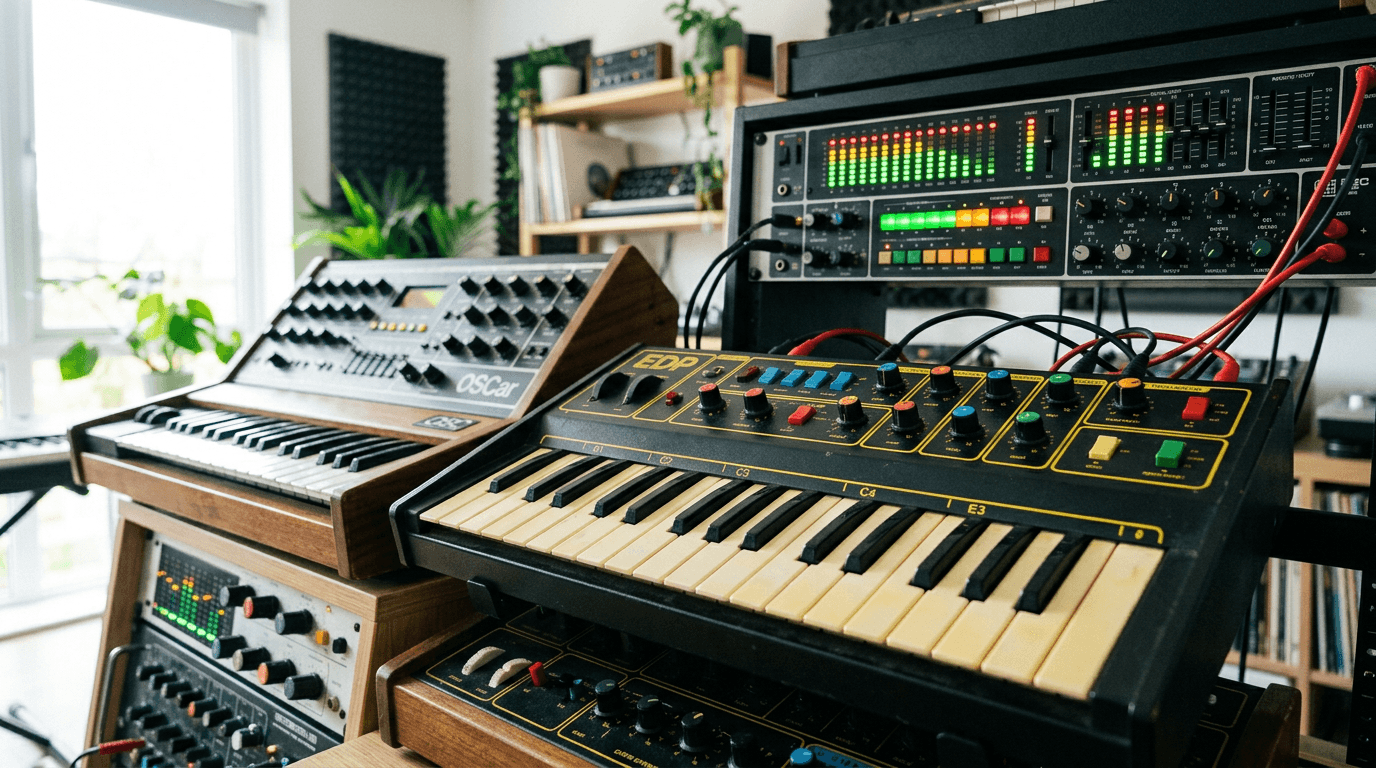
Chris Huggett burst onto the synthesizer scene in 1978 with the EDP Wasp, a compact monophonic synthesizer that challenged everything the industry believed about instrument design. Electronic Dream Plant (EDP) released this peculiar yellow and black synth with a radical flat keyboard made from conductive rubber pads rather than traditional keys.
The Wasp sold for just £199 in the UK, making it one of the most affordable synthesizers available at the time. This pricing strategy opened synthesis to bedroom producers and students who couldn't afford a Minimoog or ARP Odyssey. The sound, however, punched well above its price point.
How Did the Wasp Filter Create Its Signature Sound?
Huggett designed a unique filter circuit that gave the Wasp its distinctive, aggressive character. The filter could self-oscillate and produce screaming resonance that cut through any mix. This wasn't the smooth, buttery Moog sound. It was raw, digital-edged, and perfect for the emerging punk and new wave movements.
Producers quickly discovered the Wasp excelled at:
For a deep dive on macbook neo first impressions: a18 pro chip review, see our full guide
- Piercing lead lines that dominated mixes
- Aggressive bass sounds with digital grit
- Experimental sound effects and noise textures
- Portable performance synthesis on a budget
Vince Clarke (Depeche Mode, Yazoo, Erasure) embraced the Wasp for its unique sonic signature. The synth appeared on numerous hit records throughout the early 1980s, cementing Huggett's reputation as an innovator.
For a deep dive on global music revenue grew 9.4% in 2025: midia report, see our full guide
How Did OSC Pioneer Hybrid Synthesis?
After EDP, Chris Huggett founded Oxford Synthesizer Company (OSC) in 1982, where he would perfect his vision of hybrid analog-digital synthesis. The OScar synthesizer represented a quantum leap in affordable synthesis technology, combining analog oscillators and filters with digital control and modulation.
The OScar featured two analog oscillators, a distinctive multimode filter, and digital envelopes and LFOs controlled by a microprocessor. This hybrid architecture gave producers analog warmth with digital precision and repeatability. You could save patches reliably, something many purely analog synths struggled with.
What Production Features Made the OScar Stand Out?
The OScar introduced production features that seem obvious today but were revolutionary in 1983. Its additive synthesis capabilities allowed 24 harmonics per oscillator, creating complex timbres impossible on traditional subtractive synths. The duophonic mode let you play two notes simultaneously, expanding creative possibilities beyond standard monophonic designs.
Producers valued the OScar's deep modulation matrix, which allowed almost any parameter to modulate any other. This flexibility enabled evolving, animated sounds that brought tracks to life. The sequencer, though basic by modern standards, integrated directly with the synthesis engine for pattern-based composition.
Only about 2,000 OScar units were manufactured before OSC ceased production in 1986. Today, these synths command premium prices on the vintage market, with working units selling for several thousand pounds.
How Did Huggett Transform Novation?
Chris Huggett joined Novation in the early 1990s, bringing his hybrid synthesis expertise to a company that would become synonymous with bass music production. His work at Novation produced some of the most influential synthesizers and grooveboxes of the digital age.
The Bass Station, released in 1993, distilled Huggett's synthesis philosophy into an affordable, focused instrument. This monophonic analog synth targeted the exploding rave and jungle scenes, delivering the fat, resonant bass sounds these genres demanded. Priced under £400, it became ubiquitous in UK dance music studios.
Why Did the Bass Station Dominate 1990s Dance Music?
The Bass Station's two oscillators, resonant filter, and simple interface made programming massive sub-bass and aggressive leads intuitive and fast. Producers could dial in usable sounds in seconds, crucial for the rapid-fire creativity of 1990s dance music production. The sync function between oscillators created the harmonically rich tones that defined jungle and drum and bass.
Novation followed with the Bass Station Rack, SuperNova, and the A-Station, each incorporating Huggett's hybrid philosophy. The SuperNova series particularly showcased his vision, combining virtual analog synthesis with extensive modulation and effects in a polyphonic package.
What Makes the Circuit Series Accessible?
Chris Huggett's influence extends to Novation's Circuit grooveboxes, which democratize music production for the iPad generation. These compact devices combine synthesis, drum machines, and sequencing in intuitive, performance-oriented packages. The design philosophy echoes the original Wasp: make powerful synthesis accessible and affordable.
The Circuit uses virtual analog synthesis based on Novation's Nova engine, itself descended from Huggett's earlier work. Two polyphonic synth tracks plus four drum tracks provide complete production capability in a battery-powered device smaller than most MIDI controllers.
What Can Modern Producers Learn from Huggett's Design Philosophy?
Huggett's career demonstrates that innovation doesn't require complexity. His best designs focus on musical utility over feature bloat. The Wasp had one oscillator and a simple architecture, yet its sound remains distinctive 45 years later.
The Bass Station stripped synthesis to essentials, becoming more influential than many complex polysynths. Modern producers can apply these principles by prioritizing sound quality over feature count and designing instruments that inspire creativity rather than overwhelm.
Key lessons from Huggett's approach:
- Focus on the needs of actual music makers, not spec sheets
- Embrace limitations as creative opportunities
- Make powerful tools accessible to emerging artists
- Prioritize distinctive character over versatility
- Design for immediate musical results
How Did British Synthesis Differ from American Designs?
Chris Huggett stands among the pantheon of British synthesizer pioneers alongside Peter Zinovieff (EMS) and Adrian Wagner. His contribution differs from American designers who often prioritized versatility and programmability. Huggett's instruments have personality. They impose their sonic character on your music rather than disappearing into it.
This British approach to synthesis, characterized by aggressive filters, distinctive oscillators, and musical immediacy, influenced entire genres. Acid house, jungle, drum and bass, dubstep, and grime all bear the sonic fingerprints of Huggett's designs. The squelchy, resonant bass sounds that define UK electronic music trace directly to his filter designs.
Why Did Hybrid Synthesis Become Industry Standard?
The hybrid analog-digital architecture Chris Huggett pioneered in the 1980s has become the dominant paradigm in modern synthesizer design. Nearly every contemporary analog synth uses digital control, patch storage, and modulation alongside analog signal paths. Companies like Moog, Sequential, and Arturia all employ this approach in their current instruments.
Huggett proved that combining analog and digital technologies creates instruments greater than the sum of their parts. Analog circuits provide warmth, character, and organic response. Digital control adds reliability, recallability, and modulation complexity. This balance defines professional synthesis today.
What Is Chris Huggett's Lasting Impact?
Chris Huggett's six-decade career in synthesizer design demonstrates how focused innovation shapes entire industries. From the affordable Wasp to the sophisticated OScar to Novation's modern instruments, his hybrid synthesis approach prioritized musical utility and sonic character.
Producers worldwide continue using his designs to create cutting-edge music, testament to timeless engineering focused on creative needs rather than temporary trends. The next time you dial in a fat bass sound or create a screaming lead, remember the British engineer who made those sounds possible for generations of electronic musicians.
Continue learning: Next, explore who needs tube amps in 2026? i say: no one.
His legacy lives in every hybrid synthesizer, every accessible groovebox, and every bass-heavy track that shakes club speakers. Chris Huggett didn't just design synthesizers. He shaped the sound of modern electronic music.
Related Articles

AI's Role in Unveiling ICE Officers' Identities
AI unmasking ICE officers underscores a shift towards transparent law enforcement, raising questions about privacy and ethics in the digital age.
Sep 2, 2025

Age Verification Laws: Impact on Web Traffic Trends
Discover the paradox of age verification laws: How compliance impacts web traffic and the tech innovations shaping the future of digital content access.
Sep 2, 2025

Merz Tags Putin as Top War Criminal in Modern Era
Merz's assertion that Putin could be this era's gravest war criminal triggers a global debate on cybersecurity, AI, and warfare ethics.
Sep 3, 2025
Comments
Loading comments...