Average iPad Sold for $583 Last Quarter: Market Report
Apple's iPad commanded an average selling price of $583 last quarter, marking a 10% increase while the broader tablet market struggled. Here's what the numbers reveal about Apple's strategy.

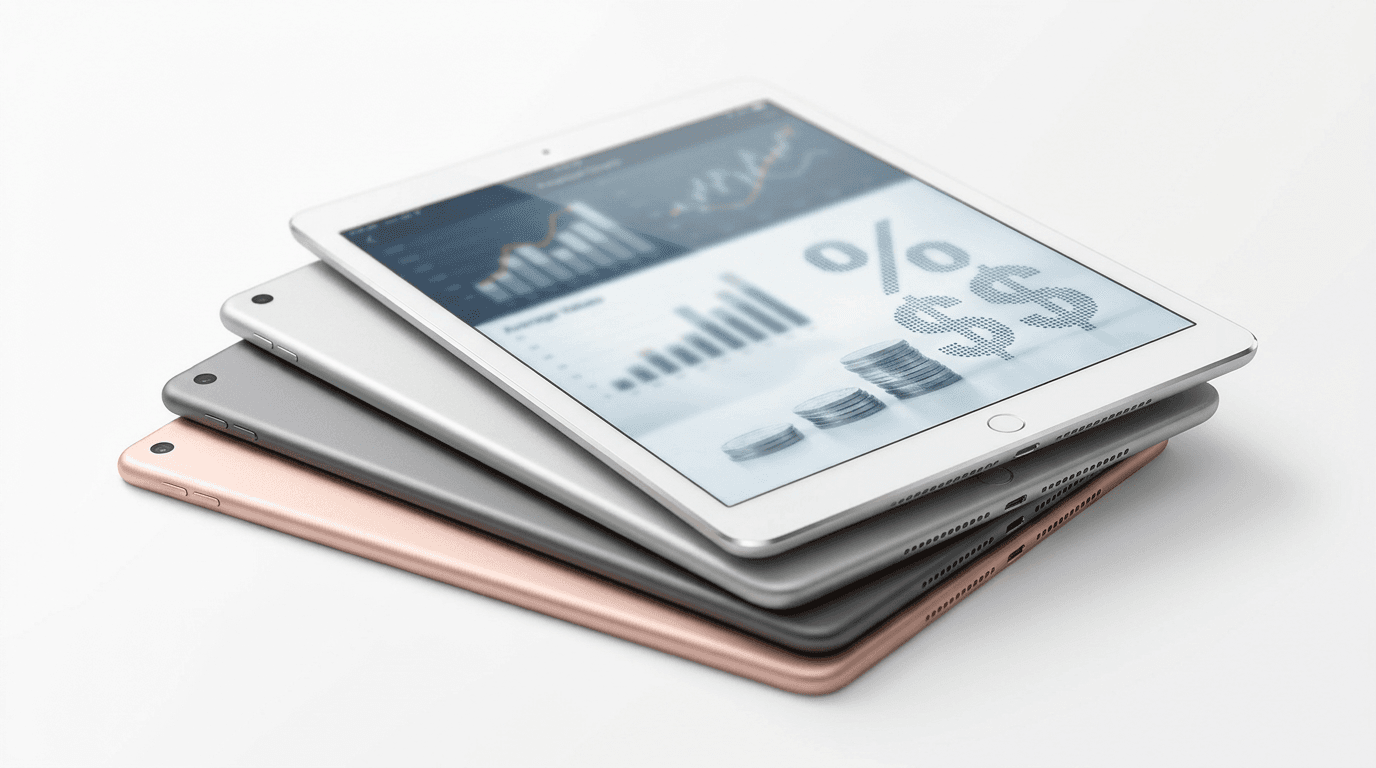
Apple's iPad Average Selling Price Hits $583: What's Behind the Premium Pricing?
Learn more about hammerspoon: automate your mac like a power user
Apple's iPad lineup commanded an average selling price of $583 last quarter, according to fresh data from Counterpoint Research. This 10% price increase comes at a time when the broader tablet market faces declining shipments, highlighting Apple's unique position in the premium tablet space.
The numbers tell a compelling story about consumer behavior and Apple's pricing power. While competitors struggle to maintain market share, Apple continues to push prices higher without sacrificing demand.
How Does iPad Pricing Reflect Apple's Market Dominance?
The $583 average selling price represents a significant milestone for Apple's tablet business. This figure encompasses the entire iPad lineup, from the entry-level 10th generation iPad starting at $349 to the premium iPad Pro models that can exceed $2,000 with maximum configurations.
Counterpoint Research's data reveals that Apple defied broader market trends during the quarter. The tablet industry overall experienced declining shipments, yet iPad prices climbed substantially. This divergence demonstrates Apple's ability to maintain premium positioning even during challenging market conditions.
The 10% year-over-year increase suggests consumers gravitate toward higher-end iPad models. Apple's strategic product lineup refresh likely contributed to this average price jump, with newer models featuring enhanced capabilities that justify premium pricing.
What Factors Drive the Higher iPad Average Selling Price?
Several factors contribute to the elevated average selling price across iPad sales:
Product Mix Shift: More consumers purchased iPad Air and iPad Pro models rather than base configurations.
For a deep dive on wnba cba deadline: why monday matters for 2025 season, see our full guide
Storage Upgrades: Higher storage tiers drove up transaction values as users opted for 256GB and 512GB models.
Apple Pencil and Accessories: Bundled purchases increased overall transaction amounts.
For a deep dive on qatar helium shutdown: chip supply chain crisis looms, see our full guide
M-Series Chip Appeal: Professional users invested in M2 and M4 iPad Pro models for enhanced performance.
Education and Enterprise Demand: Bulk purchases from institutions typically favor mid-tier to premium models.
The pricing strategy reflects Apple's focus on value rather than volume. Unlike Android tablet manufacturers competing primarily on price, Apple emphasizes ecosystem integration and premium features that command higher margins.
How Does iPad Pricing Compare to the Broader Tablet Market?
The tablet market faced headwinds during the same period that saw iPad prices rise. Overall tablet shipments declined as consumers delayed purchases amid economic uncertainty and lengthened device replacement cycles.
Android tablets from Samsung, Lenovo, and Amazon typically sell at lower price points, averaging between $200 and $400. This creates a stark contrast with iPad's $583 average, nearly double the industry norm.
Market analysts note that Apple captures the majority of tablet industry profits despite holding roughly one-third of unit shipments. The high average selling price directly contributes to this profit concentration, allowing Apple to invest heavily in research and development for future iPad innovations.
Which iPad Models Influenced This Pricing Average?
Apple's current iPad lineup spans a wide price spectrum. Understanding which models drove the $583 average provides valuable market insights.
The iPad Pro lineup, refreshed with M4 chips, starts at $999 for the 11-inch model and $1,299 for the 13-inch version. These premium tablets feature OLED displays, advanced camera systems, and desktop-class performance. Strong iPad Pro sales significantly elevated the overall average.
The iPad Air, positioned as the mid-tier option, starts at $599 and offers compelling value with M2 chip performance. This model likely represented a substantial portion of sales, sitting precisely near the reported average price point.
Even the standard iPad, Apple's most affordable tablet at $349, contributes to the average. However, the data suggests fewer consumers chose this entry-level option compared to previous quarters, indicating a shift toward premium purchases.
How Do Storage Configurations Impact iPad Pricing?
Storage choices dramatically affect final purchase prices. Base models typically include 64GB or 128GB, but many users upgrade to 256GB or 512GB configurations.
These storage jumps add $100 to $200 per device, directly inflating the average selling price. Apple's storage pricing strategy encourages upgrades by making base storage feel limiting for power users. This psychological pricing tactic successfully drives customers toward higher-margin configurations.
Why Do Consumers Pay Premium Prices for iPads?
The willingness to pay premium prices for iPads stems from several compelling factors that differentiate Apple's tablets from competitors.
iPadOS continues evolving with desktop-class features, making tablets viable laptop replacements for many users. Stage Manager, external display support, and professional apps like Final Cut Pro justify higher investments for creative professionals and knowledge workers.
The Apple ecosystem creates powerful lock-in effects. Users with iPhones, Macs, and other Apple devices find iPads integrate seamlessly through features like Handoff, Universal Control, and iCloud synchronization.
Build quality and longevity factor into purchase decisions. iPads typically receive software updates for five to six years, far exceeding most Android tablets. This extended support period amortizes the higher upfront cost over a longer ownership period.
What Does the $583 Average Mean for Apple's Tablet Strategy?
The strong average selling price validates Apple's premium positioning strategy. Rather than competing on price with budget Android tablets, Apple focuses on delivering superior experiences that command higher prices.
This approach generates substantial profit margins that fund continued innovation. Apple can invest in custom silicon development, display technology, and software features that maintain competitive advantages.
The data also suggests Apple successfully segmented its product line. By offering options from $349 to over $2,000, Apple captures diverse customer segments while maintaining brand prestige. The high average indicates the strategy works, with many customers choosing mid-tier or premium models.
What iPad Pricing Trends Should We Expect?
Several factors will influence iPad pricing in coming quarters. Component costs, particularly for advanced displays and processors, affect manufacturing expenses. However, Apple's scale and vertical integration provide cost advantages that support stable or increasing prices.
The introduction of new technologies like OLED displays across more models could push average prices higher. Conversely, if economic pressures intensify, Apple might adjust its product mix to emphasize more affordable options.
Competition from versatile devices like foldable phones and lightweight laptops creates pricing pressure. Apple must balance premium positioning with delivering clear value propositions that justify iPad purchases over alternative devices.
What Can We Learn from iPad's $583 Average Selling Price?
The Counterpoint Research data reveals Apple's remarkable ability to maintain pricing power in a declining market. The $583 average selling price demonstrates consumer preference for premium tablets with advanced features and ecosystem integration.
This pricing trend benefits Apple's bottom line while validating its product strategy. By focusing on value rather than competing on price alone, Apple captures the majority of tablet industry profits despite modest unit share.
For consumers, the data suggests iPad purchases increasingly represent significant investments in productivity and creativity tools rather than casual media consumption devices. This shift toward professional use cases supports premium pricing and positions iPads as essential computing devices for many users.
Continue learning: Next, explore channel surfer: watch youtube like cable tv again
The tablet market's evolution continues, but Apple's pricing strength indicates it remains the category leader in both innovation and financial performance.
Related Articles

AI's Role in Unveiling ICE Officers' Identities
AI unmasking ICE officers underscores a shift towards transparent law enforcement, raising questions about privacy and ethics in the digital age.
Sep 2, 2025

Gaza's Tech Revolution: Trump's Bold High-Tech Vision
A leaked plan from the Trump administration unveils a vision to make Gaza a high-tech hub, focusing on AI, cybersecurity, and digital innovation.
Sep 3, 2025

Tech's Role in Tracking Indonesian Protest Dynamics
A deep dive into the technological aspects of Indonesian protests, highlighting the role of social media, AI, and cybersecurity in modern civil unrest.
Sep 2, 2025
Comments
Loading comments...