Artificial Hearts Grow Better in Space Than on Earth
While spaceflight weakens astronauts' hearts, mini-hearts grown from stem cells thrive in microgravity, developing faster than on Earth. This paradox could transform medicine.

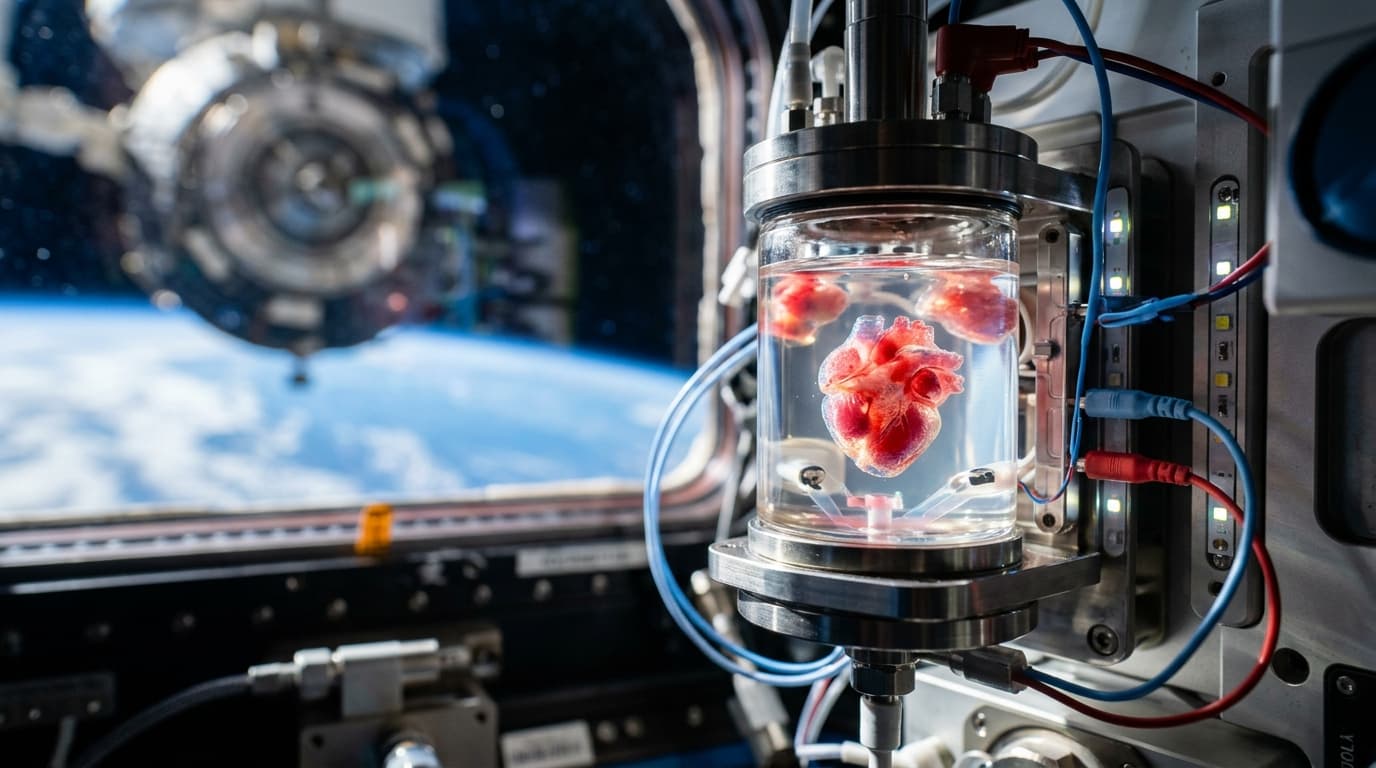
The Space Heart Paradox: Why Artificial Hearts Thrive While Real Hearts Weaken in Orbit
Learn more about apple may drop magsafe on future iphones: what we know
The human body faces extraordinary challenges in space. Astronauts lose bone density, their muscles atrophy, and their cardiovascular systems undergo dramatic changes. Yet researchers have discovered something remarkable: while spaceflight weakens real hearts, artificial ones grown from human stem cells actually thrive beyond Earth's atmosphere.
This paradox reveals critical insights about both space medicine and regenerative biology. Understanding why mini-hearts flourish in microgravity while natural hearts deteriorate could revolutionize tissue engineering and transform how we prepare for long-duration space missions.
What Happens to the Human Heart in Space?
The cardiovascular system evolved under constant gravitational pressure. When astronauts enter microgravity, their hearts immediately begin adapting to an environment where pumping blood requires significantly less effort.
Within weeks of spaceflight, the heart muscle loses mass and becomes weaker. Studies show that astronauts can lose up to 20% of their cardiac muscle volume during extended missions. The left ventricle, which pumps oxygenated blood throughout the body, shrinks considerably as it no longer needs to work against gravity's downward pull.
How Does Blood Distribution Change in Microgravity?
Blood distribution changes dramatically in space. On Earth, gravity pools blood in the lower extremities, forcing the heart to maintain pressure. In orbit, fluids shift toward the head and upper body, creating what astronauts call "puffy face syndrome."
This redistribution triggers the body to reduce overall blood volume by approximately 10-15%. The heart responds by downsizing, which creates serious problems when astronauts return to Earth.
Many experience orthostatic intolerance, struggling to stand without dizziness or fainting as their weakened hearts struggle to pump blood upward against gravity. This cardiovascular deconditioning poses one of the most significant barriers to long-duration spaceflight.
What Are the Long-Term Cardiac Risks for Astronauts?
Researchers have documented concerning trends in astronaut health data. Extended spaceflight appears to accelerate arterial stiffening and may increase cardiovascular disease risk. Some studies suggest that deep space radiation exposure compounds these effects, potentially damaging heart tissue at the cellular level.
For a deep dive on ai finds 100+ hidden planets in nasa data: rare worlds, see our full guide
The implications for Mars missions are profound. A round trip to Mars would take roughly three years, far longer than any current space station deployment. Scientists must solve the cardiac deconditioning problem before attempting such ambitious journeys.
Why Do Artificial Hearts Develop Better in Microgravity?
For a deep dive on elta music polivoks-8: soviet-inspired polyphonic synth, see our full guide
The breakthrough came from experiments aboard the International Space Station. Researchers sent cardiac organoids—tiny three-dimensional heart tissues grown from human induced pluripotent stem cells—to test how microgravity affects their development.
The results defied expectations. These mini-hearts matured faster and developed more organized tissue structures than identical samples grown on Earth.
The organoids showed improved cellular alignment, better-defined muscle fiber patterns, and enhanced functionality. Space-grown cardiac tissue displayed characteristics closer to mature human heart tissue than their Earth-grown counterparts.
What Gives Space-Grown Tissue Its Advantage?
Several factors explain this accelerated growth. In Earth-based laboratories, cells in three-dimensional cultures struggle with nutrient distribution and waste removal. Gravity causes cells to settle and compact, creating density gradients that limit growth.
Microgravity eliminates these constraints. Cells float freely, allowing nutrients and oxygen to reach every part of the developing tissue more efficiently. The organoids form more natural, spherical shapes without the compression forces present on Earth.
Key advantages of space-grown cardiac organoids include:
- Enhanced cellular differentiation into specialized heart muscle cells
- Improved formation of gap junctions that enable electrical signaling
- Better development of contractile machinery for pumping action
- More uniform tissue density throughout the organoid structure
- Reduced mechanical stress during critical early development stages
How Do These Mini-Hearts Compare to Real Hearts?
Cardiac organoids represent a revolutionary tool for medical research. These miniature hearts beat spontaneously, respond to drugs, and replicate many aspects of human cardiac function. Scientists use them to test medications, study heart disease, and develop regenerative therapies.
The space-grown versions develop more sophisticated electrical conduction systems and show gene expression patterns that more closely match adult hearts. This maturity happens in weeks rather than months, dramatically accelerating research timelines.
Can Space-Grown Hearts Transform Medicine?
The discovery opens exciting possibilities for regenerative medicine. Growing superior cardiac tissue in space could provide transplantable patches for heart attack victims or living models for drug testing that better predict human responses.
Pharmaceutical companies spend billions testing drugs on animal models that often fail to predict human reactions. Space-grown cardiac organoids could provide more accurate testing platforms, potentially accelerating drug development while reducing reliance on animal testing.
What Is the Future of Space-Based Biomanufacturing?
Several companies and research institutions now explore commercial opportunities in orbital tissue engineering. The concept involves growing organs and tissues in space, then returning them to Earth for medical applications.
Challenges remain substantial. Launch costs, limited space station access, and the difficulty of maintaining sterile cell cultures in orbit create significant barriers. However, as commercial spaceflight expands and costs decrease, space-based biomanufacturing becomes increasingly feasible.
How Could This Research Benefit Space Exploration?
The paradox of hearts in space presents both challenges and opportunities. Understanding why natural hearts weaken while artificial ones strengthen could reveal fundamental principles about cardiac biology that apply to both contexts.
Researchers investigate whether insights from space-grown organoids could help develop countermeasures for astronaut cardiac deconditioning. Perhaps mimicking aspects of the microgravity environment in specialized bioreactors could improve tissue engineering on Earth.
What Solutions Exist for Astronaut Heart Health?
Space agencies invest heavily in cardiovascular countermeasures. Astronauts spend approximately two hours daily exercising on specialized equipment designed to stress their cardiovascular systems. Resistance training, cycling, and running on treadmills with harness systems help maintain heart function.
Researchers also explore pharmaceutical interventions. Some drugs show promise in preventing cardiac atrophy during spaceflight.
Nutrition strategies, including specific protein intake patterns and antioxidant supplementation, may help protect heart tissue from space-related damage. These multi-pronged approaches aim to keep astronaut hearts healthy during extended missions.
What Emerging Technologies Show Promise?
New approaches include:
- Lower body negative pressure devices that simulate gravity's effect on blood distribution
- Artificial gravity through rotating spacecraft sections
- Electrical muscle stimulation to maintain cardiac tissue mass
- Advanced monitoring systems that track real-time cardiovascular changes
- Gene therapy approaches to prevent muscle loss
How Does Space Research Drive Medical Innovation?
This research demonstrates how space exploration drives medical innovation. The unique environment of microgravity serves as a laboratory for understanding fundamental biological processes impossible to study on Earth.
The cardiovascular challenges of spaceflight mirror problems faced by bedridden patients, elderly individuals, and those with certain heart conditions. Solutions developed for astronauts often translate into treatments for Earth-based medical conditions.
The relationship between space research and terrestrial medicine creates a virtuous cycle of discovery. Each breakthrough in orbit potentially benefits millions of patients on the ground.
What Questions Still Need Answers?
Scientists continue investigating why the dichotomy exists between natural and artificial hearts in space. Does the absence of mechanical stress trigger different responses in mature versus developing cardiac tissue? Could controlled exposure to microgravity at specific developmental stages improve heart regeneration therapies?
Long-term studies will determine whether space-grown cardiac organoids maintain their advantages after returning to Earth. Researchers must also establish whether these tissues remain stable enough for clinical applications and whether they integrate successfully when transplanted into living organisms.
The Future of Hearts in Space and Medicine
The story of hearts in space reveals the complexity of human biology and the unexpected benefits of space research. While astronauts' hearts shrink during missions, creating serious challenges for long-duration spaceflight, artificial hearts grown from stem cells flourish in microgravity, developing faster and better than their Earth-grown counterparts.
This paradox drives innovation in both space medicine and regenerative biology. As researchers unravel why these opposite effects occur, they gain insights that could revolutionize tissue engineering, improve treatments for heart disease, and enable humanity's expansion beyond Earth.
Continue learning: Next, explore byomesh lora mesh radio: 100x bandwidth revolution
The intersection of space exploration and medical science continues to yield discoveries that benefit life both in orbit and on the ground. Each mission brings us closer to solving the heart health challenges that stand between humanity and the stars.
Related Articles

Mars Colony Milestone: First Successful Human Landing
The first astronauts have successfully landed on Mars, marking a new chapter in human history and space exploration. Discover the science behind the mission.
Sep 6, 2025

Anthropic's $1.5B Settlement: A Turning Point for AI & Authors
Anthropic agrees to a $1.5B settlement with book authors, highlighting the complex relationship between AI development and copyright laws.
Sep 6, 2025

Unpacking The Bitter Lesson in AI Evolution
Delving into the Bitter Lesson in AI: Unraveling its true meaning and impact on future technological innovations and trends.
Sep 4, 2025
Comments
Loading comments...