Apple Left Claude.md Files in Support App: What Happened
Apple's latest mishap reveals hidden Claude.md files in the Apple Support app, offering a rare glimpse into the company's AI strategy and development process.

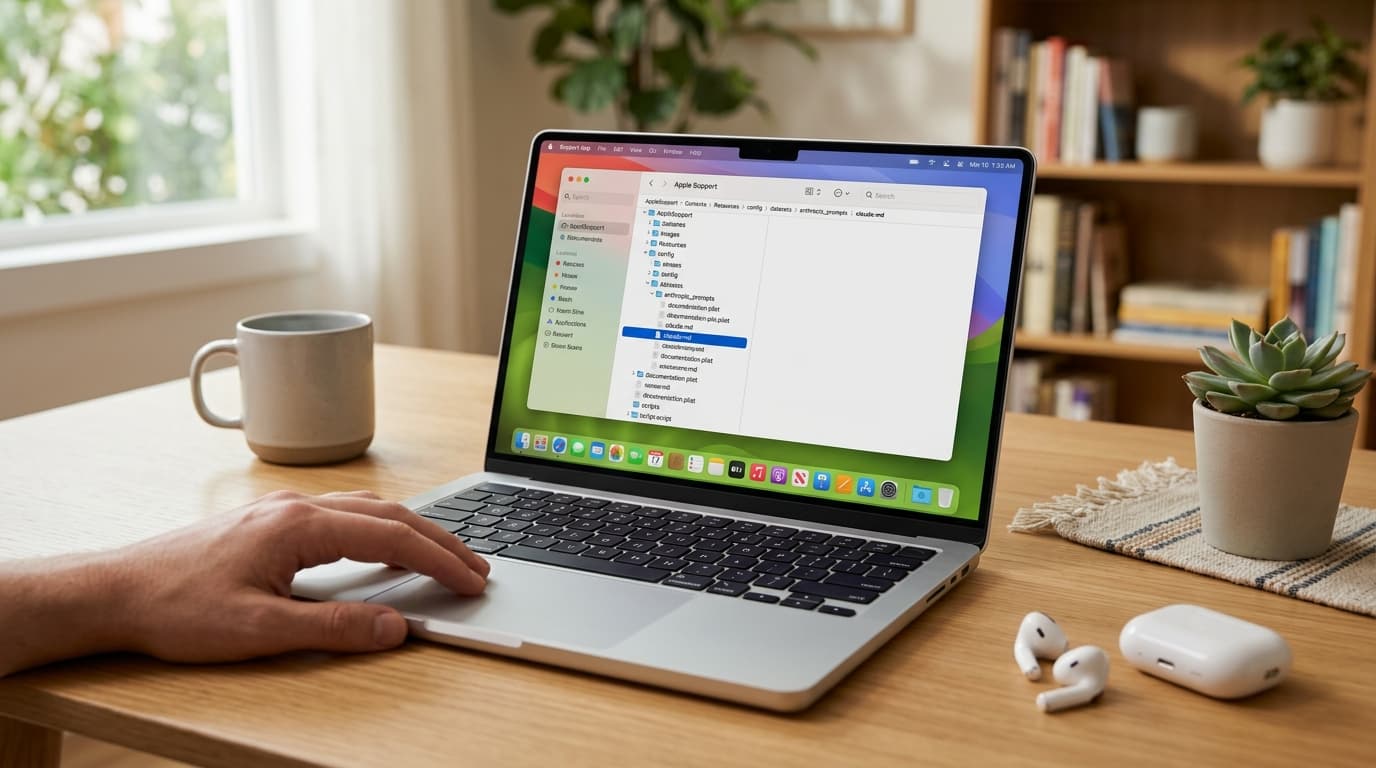
Apple Accidentally Leaked Claude.md Files in Support App: What This Reveals About Their AI Strategy
Learn more about linux kernel vulnerabilities: no advance warning system
Apple accidentally left Claude.md files in the Apple Support app, giving tech enthusiasts an unexpected peek behind the curtain of Cupertino's AI ambitions. This discovery sparked immediate speculation about Apple's partnership with Anthropic and how Claude AI might power future support features.
The leaked files represent more than a simple oversight. They reveal Apple's strategic approach to integrating advanced language models into its ecosystem.
What Are Claude.md Files and Why Do They Matter?
Claude.md files are markdown documents typically used for documentation, configuration, or integration instructions for Anthropic's Claude AI assistant. These files contain technical specifications, API guidelines, or implementation notes that developers use when incorporating Claude into applications.
The presence of these files in Apple's Support app suggests active development work involving Claude's language processing capabilities. Markdown files serve as lightweight documentation that developers reference during coding and integration processes. Finding them in a production app indicates they were inadvertently included in a public release.
This discovery provides concrete evidence of Apple's AI partnerships beyond its publicly announced collaborations. It demonstrates how Apple plans to enhance user support experiences with sophisticated natural language understanding.
How Did Researchers Discover the Claude.md Files?
Software researchers and app analysts routinely examine application packages for hidden features and upcoming functionality. These investigators use specialized tools to extract and analyze app bundles, looking for clues about future updates and integrations.
The Claude.md files were found embedded within the Apple Support app's resource directory. Someone with access to the app's internal structure noticed markdown files referencing Claude AI's capabilities and integration protocols.
Apple wasn't hiding the files. They weren't encrypted or obfuscated, making them easily readable once discovered.
Apple typically maintains strict control over its development secrets. This accidental inclusion suggests the files were part of an active development branch that mistakenly made it into the production build.
What Information Did the Claude.md Files Contain?
While specific contents haven't been fully disclosed publicly, the files likely included:
- API integration instructions for Claude's language model
- Configuration parameters for AI-powered support responses
- Documentation on query handling and response generation
- Guidelines for maintaining Apple's privacy standards while using Claude
- Technical specifications for on-device versus cloud-based processing
For a deep dive on mac mini supply shortage: what ai demand means for business, see our full guide
These documents would help Apple's engineering teams implement Claude's capabilities while maintaining the company's stringent privacy requirements. The files probably outlined how to structure queries, handle user data, and format responses within Apple's design language.
Why Is Apple Partnering with Anthropic's Claude AI?
For a deep dive on alibaba's metis agent slashes ai tool calls by 96%, see our full guide
Apple has been noticeably cautious about adopting generative AI compared to competitors like Google and Microsoft. The company prioritizes privacy and on-device processing, which complicates the integration of large language models that typically require cloud infrastructure.
Partnering with Anthropic makes strategic sense for Apple. Claude emphasizes safety, reliability, and constitutional AI principles that align with Apple's values.
Anthropic's focus on building helpful, harmless, and honest AI systems matches Apple's brand positioning around user trust. The Apple Support app represents an ideal testing ground for AI integration.
Why Did Apple Choose Claude Over ChatGPT or Gemini?
Apple's apparent selection of Claude over alternatives like ChatGPT or Google's Gemini reflects several considerations:
Privacy alignment: Anthropic's commitment to AI safety resonates with Apple's privacy stance. Claude's architecture allows for more controlled data handling.
Technical capabilities: Claude excels at following complex instructions and maintaining context. It handles nuanced conversations better than many competitors.
Partnership flexibility: Working with Anthropic may offer more customization than competing with Google or Microsoft. Apple gains more control over implementation.
Risk mitigation: Diversifying AI partnerships reduces dependence on any single provider.
Apple likely evaluated multiple AI platforms before settling on Claude for specific use cases. The company may still use different models for different purposes across its ecosystem.
What Does Claude AI Integration Mean for Apple Support Users?
The integration of Claude AI into Apple Support could transform how users get help with their devices. Current support experiences rely heavily on scripted responses and knowledge base searches.
AI-powered assistance would enable more natural conversations and contextual problem-solving. Users might soon interact with an AI assistant that understands complex technical issues without requiring precise keyword matches.
The system could ask clarifying questions, walk through troubleshooting steps conversationally, and even predict problems before users fully articulate them. This enhancement wouldn't replace human support staff but would handle routine queries more efficiently.
What Features Will Claude AI Bring to Apple Support?
Based on Claude's capabilities and the file discovery, expect these improvements:
Natural language troubleshooting that understands context and nuance. No more searching for exact keywords.
Intelligent article recommendations based on conversational input. The system learns what you need from how you describe your problem.
Multi-turn dialogues that remember previous exchanges. You won't repeat yourself constantly.
Proactive suggestions for device optimization and problem prevention. The AI anticipates issues before they become critical.
How Will Apple Protect User Privacy with Claude AI?
Apple faces a delicate balance between AI functionality and privacy protection. The company built its reputation on keeping user data secure and processing information on-device whenever possible.
Integrating cloud-based AI models challenges this philosophy. The Claude.md files likely addressed these concerns with specific implementation guidelines.
Apple probably requires that support queries be anonymized, encrypted, and processed according to strict data handling protocols. The company may also limit what information gets sent to Anthropic's servers.
What Privacy Safeguards Will Apple Implement?
Apple's AI implementation strategy typically includes:
On-device processing for sensitive information whenever technically feasible. Your data stays on your device.
Differential privacy techniques that prevent individual identification. Apple can't trace queries back to specific users.
Encrypted communication channels for any cloud-based AI interactions. Data travels securely.
Minimal data retention policies that delete queries after processing. Nothing lingers on servers.
These safeguards ensure AI enhancements don't compromise the privacy standards users expect from Apple products.
How Are Competitors Reacting to Apple's Claude AI Partnership?
The accidental file exposure generated immediate discussion among tech analysts and AI researchers. Many view it as confirmation that Apple is accelerating AI integration after appearing to lag behind competitors.
The discovery validates speculation about Apple's AI partnerships and development timeline. Competitors like Google and Microsoft have aggressively promoted their AI capabilities, putting pressure on Apple to demonstrate comparable innovation.
This leak suggests Apple has been working quietly on AI features rather than rushing to market with half-baked implementations. The revelation may also impact Anthropic's competitive position.
Association with Apple brings prestige and validates Claude's enterprise readiness. Other companies might now consider Claude more seriously for their own AI integration projects.
What Happens Next with Apple's Claude AI Integration?
Apple will likely remove the Claude.md files in the next app update and tighten its build processes to prevent similar leaks. The company rarely comments on unreleased features or partnerships, so official acknowledgment seems unlikely.
Developers and researchers will continue monitoring Apple apps for additional clues about AI integration timelines. The next major iOS update will be scrutinized for any Claude-powered features in Apple Support or other system apps.
Users should expect gradual rollout of AI enhancements rather than dramatic overnight changes. Apple typically tests features extensively before wide release, especially when third-party partnerships are involved.
What Can Developers Learn from Apple's Accidental File Leak?
This incident highlights the challenges of maintaining secrecy in modern software development. Even companies with Apple's resources and security consciousness can accidentally expose sensitive information.
The discovery demonstrates how thoroughly researchers examine app packages for hidden details. For developers, the leak serves as a reminder to carefully audit production builds and remove development artifacts before release.
Automated build processes should include checks for documentation files, test data, and other materials intended only for internal use. The episode also shows how much interest surrounds Apple's AI strategy.
Every hint about the company's plans generates significant attention and analysis. This reflects both Apple's influence and the current AI gold rush mentality.
Final Thoughts on Apple's Claude.md File Discovery
Apple's accidental inclusion of Claude.md files in the Support app provides valuable insight into the company's AI development efforts and partnership with Anthropic. The discovery confirms that Apple is actively integrating advanced language models into its ecosystem, starting with customer support applications.
While the leak represents an embarrassing oversight for a company known for secrecy, it reassures users that Apple is seriously investing in AI capabilities to compete with rivals. As these features roll out, users can expect more intelligent, conversational support experiences that maintain Apple's privacy standards.
Continue learning: Next, explore can i disable all data collection from my vehicle?
The incident reminds us that even tech giants make mistakes. Sometimes those mistakes reveal exciting developments on the horizon.
Related Articles

AI Tools Reveal Identities of ICE Officers Online
AI's emerging role in unmasking ICE officers spotlights the intersection of technology, privacy, and ethics, sparking a crucial societal debate.
Sep 2, 2025

AI's Role in Unveiling ICE Officers' Identities
AI unmasking ICE officers underscores a shift towards transparent law enforcement, raising questions about privacy and ethics in the digital age.
Sep 2, 2025

AI Unveils ICE Officers: A Tech Perspective
AI's role in unmasking ICE officers highlights debates on privacy, ethics, and the balance between transparency and security in law enforcement.
Sep 2, 2025
Comments
Loading comments...