AKAI MPC Sample Review: Back to the Roots of Beatmaking
The AKAI MPC Sample aims to recapture the golden era of beatmaking with modern convenience. Does this compact sampler deliver the legendary MPC workflow that defined hip-hop production?

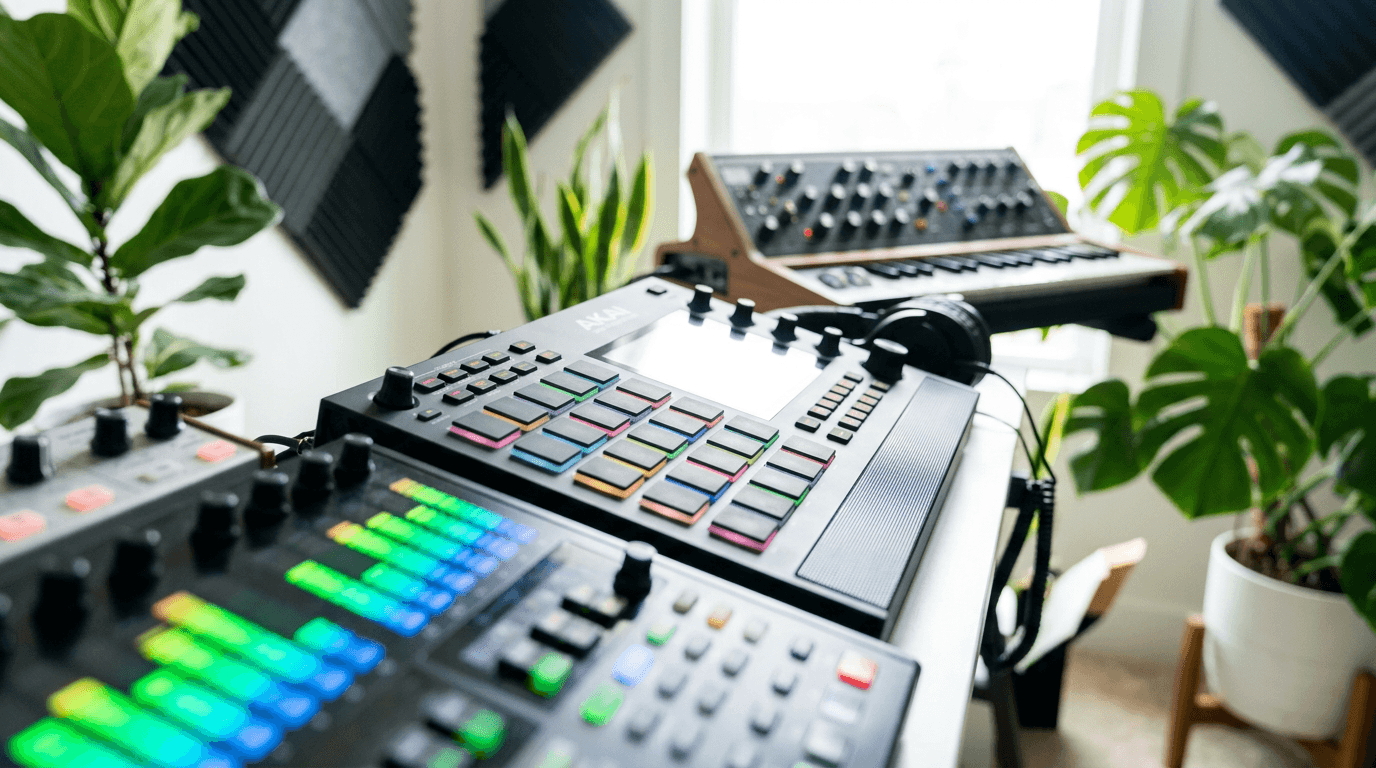
AKAI MPC Sample Review: Does It Recapture the Golden Era?
Learn more about insects fly with their legs: physics of crane flies
The AKAI MPC Sample arrives at a curious moment in music production history. Beatmakers have access to unlimited software options, yet hardware samplers continue to capture imaginations. AKAI's latest offering promises something specific: a return to the intuitive, hands-on workflow that made the MPC series legendary.
This isn't just another groovebox competing for desk space. The MPC Sample strips away complexity and focuses on what made producers fall in love with the platform decades ago.
What Makes the MPC Sample Different from Other Samplers?
The MPC Sample distinguishes itself through intentional simplicity. AKAI designed this unit for producers who want immediate results without navigating endless menus. The hardware features 16 velocity-sensitive pads, 8 Q-Link knobs, and a streamlined interface that prioritizes workflow over feature count.
The unit operates as a standalone sampler or integrates seamlessly with your DAW via USB. This dual functionality addresses a common pain point: producers want hardware flexibility without sacrificing modern production integration. The MPC Sample delivers both approaches without compromise.
Weight and portability factor heavily into the design philosophy. At just over 2 pounds, this sampler fits easily into backpacks and travel setups. Battery power support extends the portability advantage, letting you create beats anywhere inspiration strikes.
How Does the Build Quality Hold Up?
The chassis feels solid despite the lightweight construction. AKAI used durable plastics that withstand regular studio use without the premium price tag of metal enclosures. The pads respond consistently across the velocity range, a critical factor for expressive finger drumming.
The 4x4 pad layout mirrors classic MPC configurations. Each pad illuminates with RGB lighting that provides visual feedback during performance and programming. The lighting system improves workflow by indicating sample assignment and note repeat status.
Knob feel strikes a balance between smooth adjustment and tactile feedback. The Q-Link knobs handle filter sweeps, sample manipulation, and effect parameters with precision. They're not endless encoders, which some producers prefer for their definitive start and end points.
What Core Features Matter Most for Beatmaking?
For a deep dive on wine 11 rewrites linux gaming at kernel level for speed, see our full guide
The MPC Sample includes 4GB of internal storage for your sample library. This capacity holds thousands of one-shots and hundreds of longer samples depending on your organization. An SD card slot expands storage significantly for producers with extensive libraries.
Sampling capabilities include:
For a deep dive on apple releases new airpods pro 3, pro 2, airpods 4 firmware, see our full guide
- Direct sampling via 1/4" input with adjustable gain
- Sample editing with trim, normalize, and reverse functions
- Time-stretch and pitch-shift algorithms that maintain quality
- Slice-to-pad functionality for chopping breaks and loops
- Built-in effects including filters, delays, and bit crushing
The 8-track sequencer provides enough complexity for complete arrangements without overwhelming new users. Each track accommodates samples, drum programs, or melodic content. The step sequencer mode offers grid-based programming familiar to anyone who's used classic drum machines.
Does the Workflow Match Classic MPC Units?
This question matters most to longtime MPC users. The MPC Sample captures the essential workflow philosophy: pad drumming leads to immediate results, sampling feels intuitive, and sequencing doesn't interrupt creative flow.
Veterans will notice differences from vintage units. The screen is smaller, menu diving occasionally becomes necessary, and some advanced features from flagship models don't appear here. AKAI made deliberate tradeoffs to achieve the compact form factor and accessible price point.
The sampling process itself feels authentic. You press record, play your source, and the sample appears ready for chopping. The pad layout makes finger drumming natural, and the velocity sensitivity responds accurately to playing dynamics.
How Does the Sound Quality Perform?
The converters deliver clean audio with minimal noise floor. Your samples sound faithful to their source material without unwanted coloration. The 44.1kHz sample rate handles most production needs, though audiophiles might wish for higher resolution options.
Time-stretching algorithms perform admirably within reasonable ranges. Subtle tempo adjustments maintain sample integrity without artifacts. Extreme stretching introduces expected digital artifacts, but the algorithms compete well with software alternatives at this price point.
The built-in effects add character without sounding cheap. The filters provide musical resonance, the delay creates space effectively, and the bit crusher delivers convincing lo-fi textures. You won't mistake these for premium plugin suites, but they serve beatmaking purposes admirably.
What About Latency and Responsiveness?
Pad response feels immediate during finger drumming sessions. The unit processes hits without perceptible delay, crucial for maintaining groove and feel. Quantization options help tighten performances while preserving human timing variations when desired.
The sequencer playback remains stable even with all eight tracks active and effects engaged. Processor limitations don't become apparent during typical beatmaking workflows. Only extreme scenarios with heavy time-stretching across multiple tracks reveal performance boundaries.
How Does It Integrate with Modern Production Workflows?
USB connectivity transforms the MPC Sample into a capable MIDI controller. The pads trigger virtual instruments in your DAW with the same velocity sensitivity used for internal sounds. This dual functionality extends the unit's value beyond standalone operation.
The USB connection also enables easy sample transfer. Drag files from your computer directly to the MPC Sample's storage without card readers or convoluted procedures. This seamless integration respects modern production habits while maintaining hardware immediacy.
Sync capabilities include MIDI clock and USB sync. Your MPC Sample locks to external gear or DAW tempo automatically. This synchronization works reliably in testing, maintaining timing across extended sessions without drift.
Who Should Buy the MPC Sample?
This sampler targets specific producer profiles. Beginners seeking hardware without overwhelming complexity will appreciate the streamlined interface. The learning curve remains manageable while still teaching fundamental sampling and sequencing concepts.
Mobile producers and beat sketchers benefit enormously from the portability. The battery operation and compact size enable genuine anywhere production. Park benches, tour buses, and coffee shops all become viable beat labs.
Budget-conscious producers get legitimate MPC workflow without flagship pricing. The MPC Sample delivers essential features at roughly one-third the cost of premium models.
Does It Work for Experienced Producers?
Veterans might view the MPC Sample as a creative constraint rather than limitation. Reduced features force focus on core beatmaking rather than endless sound design possibilities. Some producers find this limitation liberating, channeling creativity through focused tools.
The unit also serves well as a secondary controller or sketch pad. Keep it near your main workstation for quick ideas or use it for live performance triggering. The compact footprint doesn't demand dedicated desk real estate.
What Limitations Should You Consider?
The small screen size frustrates detailed editing tasks. Waveform displays show limited information, making precise sample trimming challenging. You'll accomplish these tasks faster on larger screens or computer displays.
Internal effects, while functional, lack the depth of dedicated processors. Producers seeking extensive sound design will need external effects or DAW processing. The included effects handle basic needs but won't replace specialized gear.
The 8-track limitation constrains complex arrangements. Full song production requires bouncing tracks or external recording.
How Does It Compare to Alternatives?
Several competitors occupy similar market positions. The Teenage Engineering OP-1 Field offers more synthesis options but costs significantly more. The Korg Volca Sample provides cheaper entry but lacks velocity-sensitive pads and comprehensive sequencing.
The Roland SP-404 MKII presents the closest comparison. Both units target similar workflows with comparable pricing. The SP-404 offers more onboard effects and performance features, while the MPC Sample provides more intuitive sequencing and better pad response.
Native Instruments Maschine Mikro requires computer connection but offers deeper software integration. The MPC Sample's standalone operation provides independence that software-dependent controllers cannot match. Consider your production environment and portability needs when weighing these options.
Does the AKAI MPC Sample Deliver on Its Promise?
The AKAI MPC Sample succeeds at its stated mission. This sampler recaptures the joy of immediate, hands-on beatmaking without modern complexity. The workflow feels intuitive, the pads respond expressively, and the feature set covers essential production needs.
AKAI made smart compromises to achieve portability and affordability. The limitations present don't undermine core functionality. Instead, they create focus that benefits the creative process.
For producers seeking that classic MPC magic in a modern, portable package, the MPC Sample delivers genuine value. It won't replace full production workstations, but that was never the intention. This sampler makes beatmaking fun again.
Continue learning: Next, explore litellm pypi compromise: what happened & how to stay safe
The price-to-performance ratio impresses throughout. You get legitimate MPC workflow, solid build quality, and genuine portability without premium pricing. Whether you're starting your production journey or adding a creative constraint to your existing setup, this compact sampler deserves serious consideration.
Related Articles

AI's Role in Unveiling ICE Officers' Identities
AI unmasking ICE officers underscores a shift towards transparent law enforcement, raising questions about privacy and ethics in the digital age.
Sep 2, 2025

AI's Role in Unveiling ICE Officers' Identities
AI's application in unveiling ICE officers' identities sparks debate over privacy and accountability, highlighting a new era in technology.
Sep 2, 2025

AI Tools Reveal Identities of ICE Officers Online
AI's emerging role in unmasking ICE officers spotlights the intersection of technology, privacy, and ethics, sparking a crucial societal debate.
Sep 2, 2025