AI Uses Less Water Than the Public Thinks: The Truth
Contrary to popular belief, AI uses significantly less water than public perception suggests. Learn the surprising truth about data center water consumption and efficiency.

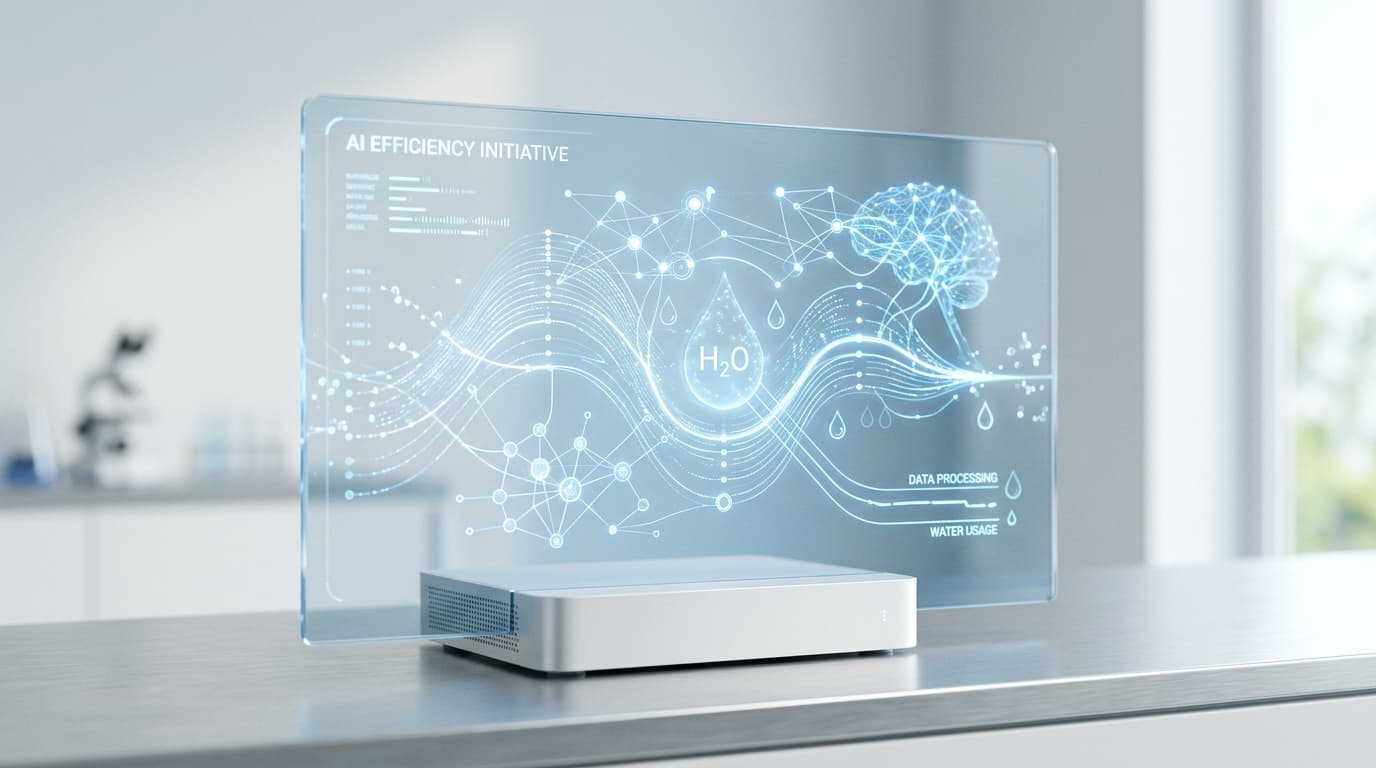
The Reality of AI Water Consumption
Learn more about apple abandons ipad ultra plans: what happened?
Public perception paints artificial intelligence as an environmental villain, particularly regarding water usage. Headlines scream about data centers draining local water supplies, creating anxiety about AI's ecological footprint. But the actual water consumption of AI systems tells a different story.
Recent studies reveal that AI uses less water than the public thinks, especially compared to other industries and everyday activities. Understanding the real numbers helps separate fact from fiction in the ongoing conversation about sustainable technology.
How Much Water Does AI Actually Use?
Data centers running AI workloads consume water primarily for cooling systems. The average large-scale data center uses between 300,000 to 5 million gallons daily. Context matters significantly.
A single golf course uses approximately 312,000 gallons per day. A typical car wash facility consumes around 40,000 gallons daily. When you examine water usage per unit of value created, AI operations prove far more efficient than public perception suggests.
Modern AI data centers achieve impressive efficiency metrics. Google's facilities operate at a Power Usage Effectiveness (PUE) of 1.10, wasting minimal energy on cooling. Microsoft has pioneered liquid immersion cooling that reduces water consumption by up to 90% compared to traditional methods.
What Are the Real Numbers Behind AI Water Usage?
Training a large language model like GPT-3 requires approximately 700,000 liters of water. This figure circulated widely, causing public concern. However, this represents a one-time training event, not ongoing consumption.
For a deep dive on police use license plate readers to stalk: 14+ cases, see our full guide
Once trained, AI models consume dramatically less water during inference (actual use). A single ChatGPT conversation uses roughly 500 milliliters of water, equivalent to a standard water bottle. Compare this to streaming an hour of Netflix, which indirectly consumes about 1 liter through data center operations.
The efficiency gains continue improving. Newer AI chips from NVIDIA and AMD reduce power requirements by 40-60%, directly lowering cooling needs and water consumption.
For a deep dive on ai helps doctors avoid missed diagnoses: new study, see our full guide
What Industries Use More Water Than AI?
Putting AI water consumption in perspective requires comparing it to other sectors:
- Agriculture: Consumes 70% of global freshwater supplies
- Textile industry: A single cotton t-shirt requires 2,700 liters to produce
- Beef production: One kilogram needs 15,000 liters of water
- Microchip manufacturing: A single semiconductor fab uses 2-4 million gallons daily
- Traditional power plants: Coal and nuclear facilities consume 20-50% more water than data centers
The entire data center industry accounts for less than 1% of global water usage. AI operations represent a fraction of that already small percentage.
Why Does the Public Overestimate AI Water Consumption?
Several factors contribute to this perception gap. Media coverage emphasizes absolute numbers without context, making 300,000 gallons sound catastrophic. The invisible nature of data center operations creates mystery and suspicion.
AI's rapid growth amplifies concerns. When people hear about exponential AI adoption, they assume water consumption grows proportionally. Efficiency improvements offset much of this expansion.
Geographic concentration also skews perception. When multiple data centers locate in water-stressed regions like Arizona, local impact becomes visible and concerning, even if global impact remains minimal.
How Do Tech Companies Reduce Water Consumption?
Major AI providers invest heavily in water efficiency. These innovations demonstrate the industry's commitment to sustainability:
- Air cooling systems: Meta's facilities in cold climates use outside air 70% of the year
- Recycled water: Many data centers use treated wastewater for cooling
- Closed-loop systems: Water gets recirculated rather than consumed
- Strategic location: Placing facilities in cooler, water-rich regions reduces consumption
Amazon Web Services achieved water-positive status in 2023, returning more water to communities than their operations consume. Google's newest facilities use zero freshwater for cooling, relying entirely on recycled and non-potable sources.
Advanced cooling technologies like two-phase immersion reduce water needs by eliminating evaporation. These systems submerge servers in non-conductive liquid that absorbs heat directly, requiring no water whatsoever.
What Does the Future Hold for Water-Efficient AI?
Emerging technologies promise even greater efficiency. Neuromorphic chips mimic human brain structure, using 1000x less power than traditional processors. This translates directly to reduced cooling requirements.
Edge computing distributes AI processing to smaller, local facilities rather than massive centralized data centers. This approach eliminates the need for large-scale cooling infrastructure entirely in many applications.
Quantum computing may eventually handle certain AI tasks with minimal water consumption. While still experimental, quantum systems operate at near-absolute-zero temperatures using closed-loop cooling that requires no water replenishment.
What Does This Mean for AI Development?
The reality that AI uses less water than the public thinks should not dismiss environmental concerns entirely. Responsible development remains crucial as AI adoption accelerates.
Transparency helps build public trust. When companies publish detailed water usage metrics, communities can make informed decisions about data center locations. OpenAI, Microsoft, and Google now release annual sustainability reports with specific consumption data.
Regulatory frameworks should focus on actual impact rather than perception. Policies requiring water-efficient cooling and prohibiting data centers in drought-prone areas make sense. Blanket restrictions based on overestimated consumption do not.
How Can We Balance Innovation and Sustainability?
AI delivers enormous benefits, from medical diagnostics to climate modeling. These applications help solve problems far larger than the water they consume to operate.
A single AI-optimized irrigation system can save millions of gallons annually in agriculture. AI-powered water management systems detect leaks and optimize distribution, reducing waste by 20-30% in pilot programs.
The key lies in continued efficiency improvements and strategic deployment. As technology advances, AI's water footprint shrinks while its positive impact grows.
Conclusion: Understanding AI Water Usage
The gap between perception and reality regarding AI water consumption reveals how easily public understanding can diverge from facts. Data centers do use water, but AI operations consume far less than agriculture, manufacturing, or traditional industries.
Ongoing innovations in cooling technology, chip efficiency, and strategic facility placement continue reducing AI's water footprint. The industry's commitment to transparency and sustainability demonstrates responsible growth.
Continue learning: Next, explore apple left claude.md files in support app: what happened
Understanding the true scale of AI water usage allows for informed discussions about technology's environmental impact. Rather than viewing AI as an ecological threat, recognize both its modest water consumption and its potential to solve larger environmental challenges.
Related Articles

AI Tools Reveal Identities of ICE Officers Online
AI's emerging role in unmasking ICE officers spotlights the intersection of technology, privacy, and ethics, sparking a crucial societal debate.
Sep 2, 2025

Transforming Gaza: From Conflict Zone to Tech Hub
A leaked plan from the Trump administration reveals a bold strategy to turn Gaza into a thriving high-tech hub. Discover the potential.
Sep 3, 2025

AI's Role in Unveiling ICE Officers' Identities
AI unmasking ICE officers underscores a shift towards transparent law enforcement, raising questions about privacy and ethics in the digital age.
Sep 2, 2025
Comments
Loading comments...