Trump Iran Deadline: Hormuz Strait Threat and Power Grid
Trump issues ultimatum to Iran: reopen the Strait of Hormuz or face infrastructure strikes. Explore the geopolitical stakes and potential consequences of this high-stakes standoff.

Trump Extends Iran Deadline: What Happens If the Strait of Hormuz Stays Closed?
Learn more about sheila cherfilus-mccormick faces calls to resign
The Strait of Hormuz has become the center of international attention as former President Donald Trump issues a stark ultimatum to Iran. Trump's extended deadline demands Iran reopen the critical waterway or face targeted strikes on its power infrastructure, escalating tensions in a region already fraught with geopolitical complexity.
This development carries enormous implications for global energy markets, Middle Eastern stability, and American foreign policy. The Strait of Hormuz serves as the world's most important oil chokepoint, with roughly 21 million barrels of crude oil passing through daily, representing about 21% of global petroleum consumption.
What Does Trump's Ultimatum to Iran Mean?
Trump's deadline extension represents a calculated pressure campaign targeting Iran's strategic leverage over global energy supplies. The former president's statement explicitly threatens Iran's power grid infrastructure if the Islamic Republic continues blocking or restricting passage through the Strait of Hormuz.
The deadline extension itself signals a tactical shift. Rather than immediate military action, Trump employs a strategy that combines diplomatic pressure with credible military threats. This approach mirrors tactics used during his presidency when dealing with North Korea and other adversarial nations.
Iran's Revolutionary Guard has reportedly increased its naval presence in the strait, conducting exercises and positioning fast-attack boats capable of harassing commercial shipping. These actions have raised insurance premiums for tankers and created uncertainty in global oil markets.
Why Does the Strait of Hormuz Matter to Global Energy?
The strategic importance of this 21-mile-wide waterway cannot be overstated. Countries dependent on Middle Eastern oil, including major Asian economies like China, Japan, and South Korea, watch developments closely.
Key facts about the Strait of Hormuz:
- Connects the Persian Gulf with the Gulf of Oman and Arabian Sea
- Transports oil from Saudi Arabia, Iraq, UAE, Kuwait, and Iran
- Represents the only sea passage from Persian Gulf to open ocean
- Has been threatened with closure by Iran during previous conflicts
- Remains vulnerable to mining, missile attacks, and naval blockades
For a deep dive on tsa funding update: senate advances dhs bill to end shutdown, see our full guide
Any sustained closure would send oil prices soaring, potentially triggering global economic disruption. Energy analysts estimate that a complete blockage could remove approximately 20% of world oil supply from markets within days.
What Would Power Grid Strikes on Iran Accomplish?
For a deep dive on democratic lawmaker seeks to remove trump's kennedy cente..., see our full guide
Trump's specific threat to target Iran's power infrastructure represents a significant escalation in rhetoric. Such strikes would employ precision-guided munitions to disable electrical generation and distribution facilities without necessarily causing mass civilian casualties.
Modern power grids present vulnerable targets for military operations. Iran's electrical infrastructure, while more distributed than in previous decades, still relies on key generation facilities and transformer stations that could be disabled through targeted strikes.
Military strategists suggest several objectives behind threatening Iran's electrical infrastructure. First, it demonstrates capability to inflict significant economic damage without ground invasion. Second, it pressures Iranian leadership by affecting civilian populations and industrial capacity.
The psychological impact would be substantial. Widespread power outages would disrupt Iranian society, potentially undermining public support for confrontational policies. However, such actions also risk galvanizing nationalist sentiment and providing Tehran with propaganda victories.
Critics argue that infrastructure strikes blur lines between military and civilian targets. International humanitarian law requires distinguishing between combatants and non-combatants, and power facilities often serve both military and civilian purposes.
How Has Iran Responded to Trump's Deadline?
Iranian officials have responded defiantly to Trump's deadline extension. Supreme Leader Ayatollah Ali Khamenei reportedly stated that Iran would not bow to American threats and maintained the country's right to control its territorial waters.
The Iranian Foreign Ministry issued statements calling Trump's ultimatum "illegal" and "provocative," warning that any attack on Iranian infrastructure would trigger "overwhelming" retaliation. Iran possesses ballistic missiles capable of reaching American bases throughout the Middle East.
How Are Regional Powers Positioning Themselves?
Saudi Arabia and the United Arab Emirates have expressed concern about potential conflict disrupting regional stability. Both nations depend heavily on Hormuz Strait access for their oil exports and fear becoming collateral damage in any US-Iran confrontation.
Israel has reportedly placed its military on heightened alert, anticipating that any US-Iran conflict could draw Israeli territory into the fighting. Iranian proxy forces in Lebanon, Syria, and Iraq possess thousands of rockets capable of striking Israeli cities.
European allies have urged restraint from all parties. France, Germany, and the United Kingdom issued a joint statement calling for diplomatic solutions and warning against military escalation that could destabilize global energy markets.
What Are the Economic Implications of a Hormuz Closure?
Oil futures have already responded to Trump's deadline extension with increased volatility. Brent crude prices jumped 4.7% following initial reports, while West Texas Intermediate saw similar gains as traders priced in supply disruption risks.
Energy companies are developing contingency plans for potential Hormuz closures. Alternative shipping routes exist but would add significant time and cost to oil deliveries. The Cape of Good Hope route around Africa adds approximately 3,500 miles and two weeks to transit times.
How Would Gas Prices Be Affected?
American consumers could see gasoline prices rise if the situation escalates. While the United States now produces much of its own oil, global markets remain interconnected. Disruptions affecting Asian buyers would ripple through worldwide pricing structures.
Industry analysts project that sustained Hormuz closure could add $1.50 to $2.50 per gallon to US gas prices within weeks. Such increases would have significant political implications, affecting consumer spending and economic growth.
What Can We Learn from Previous Hormuz Crises?
The current standoff is not the first time the Strait of Hormuz has become a flashpoint. During the Iran-Iraq War in the 1980s, both nations attacked tankers in what became known as the "Tanker War."
The United States intervened with Operation Earnest Will, reflagging Kuwaiti tankers and providing naval escorts. That operation demonstrated American commitment to keeping the strait open but also resulted in accidental shootdowns and heightened tensions.
More recently, tensions flared in 2019 when several tankers were attacked near the strait. The United States blamed Iran for the incidents, which Tehran denied. Those events led to increased naval presence by multiple nations seeking to protect commercial shipping.
Historical precedents suggest that actual closure of the Strait of Hormuz remains unlikely despite frequent threats. Iran understands that blocking the waterway would invite overwhelming international response and harm its own ability to export oil. However, the risk of miscalculation or accidental escalation remains real.
What Are the Possible Outcomes of Trump's Deadline?
Several potential outcomes exist as Trump's extended deadline approaches. The most optimistic scenario involves Iran backing down under pressure, allowing normal shipping to resume without military confrontation.
A middle-ground outcome might see continued low-level harassment of shipping without complete closure. This would maintain pressure on global markets while avoiding direct military conflict between the United States and Iran.
The worst-case scenario involves actual strikes on Iranian infrastructure, triggering retaliatory attacks on American forces, regional allies, or global energy infrastructure. Such escalation could draw multiple nations into broader Middle Eastern conflict.
Can Diplomacy Prevent Military Confrontation?
Diplomatic channels remain open despite harsh rhetoric from both sides. Third-party mediators, including Oman and Qatar, have historically played roles in facilitating US-Iran communication during crises.
The extended deadline itself suggests Trump recognizes the value of allowing time for diplomatic solutions. Whether Iranian leadership will use that time to de-escalate or prepare for confrontation remains uncertain.
The High Stakes of the Strait of Hormuz Crisis
Trump's extended deadline for Iran to reopen the Strait of Hormuz represents a critical juncture in US-Iran relations and global energy security. The threat of power grid strikes adds a new dimension to longstanding tensions between Washington and Tehran.
The situation demands careful monitoring as the deadline approaches. Global energy markets, regional stability, and international security all hang in the balance.
Continue learning: Next, explore trump wind power halt fails: renewable energy grows despite
Stakeholders worldwide hope that cooler heads prevail and that the vital waterway remains open to commercial shipping. The alternative carries risks that extend far beyond the immediate parties involved. Whether diplomacy or military force ultimately resolves this crisis will shape Middle Eastern geopolitics and global energy security for years to come.
Related Articles

Trump's Final Ultimatum to Hamas: Accept Hostage Deal
Trump has issued a 'last warning' to Hamas to accept a hostage deal, stating that Israel is on board. This could be a significant turn in Middle East relations.
Sep 7, 2025
Lisa Cook Bank Docs Contradict Mortgage Fraud Allegations
Lisa Cook's bank documents challenge mortgage fraud allegations, revealing crucial insights that could reshape the political narrative. Explore the implications.
Sep 13, 2025
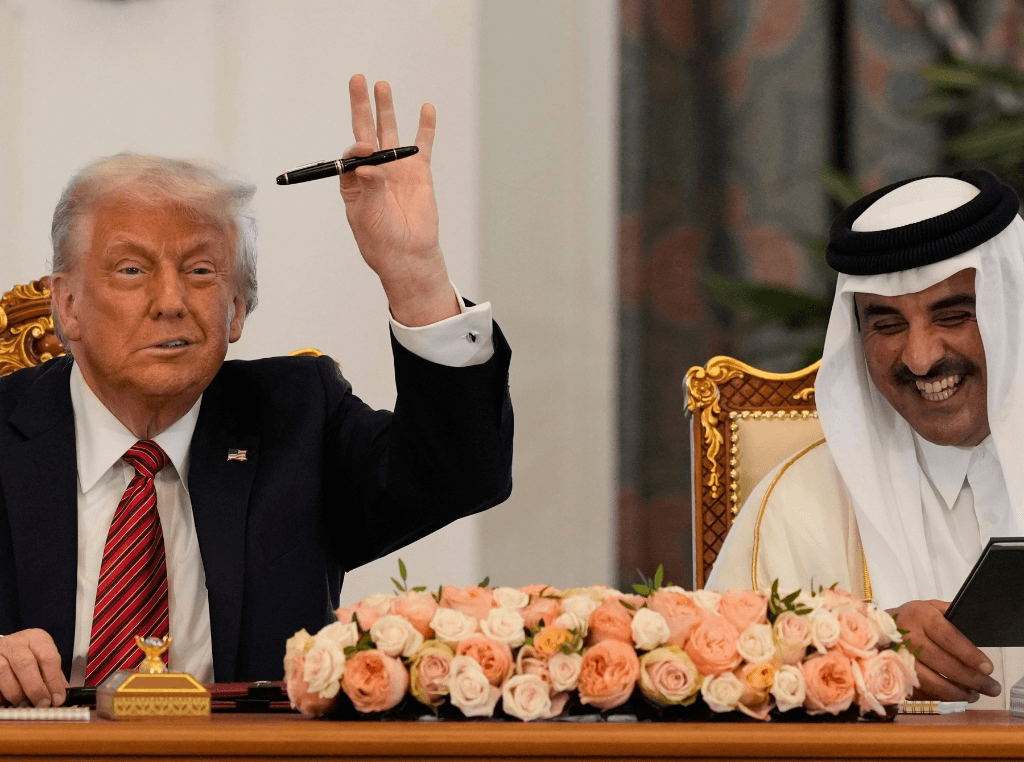
Trump and Witkoff Dine with Qatari PM Amid Tensions in Doha
Trump and Witkoff's recent dinner with Qatar's PM raises questions about U.S. foreign policy amid ongoing Middle Eastern tensions.
Sep 14, 2025