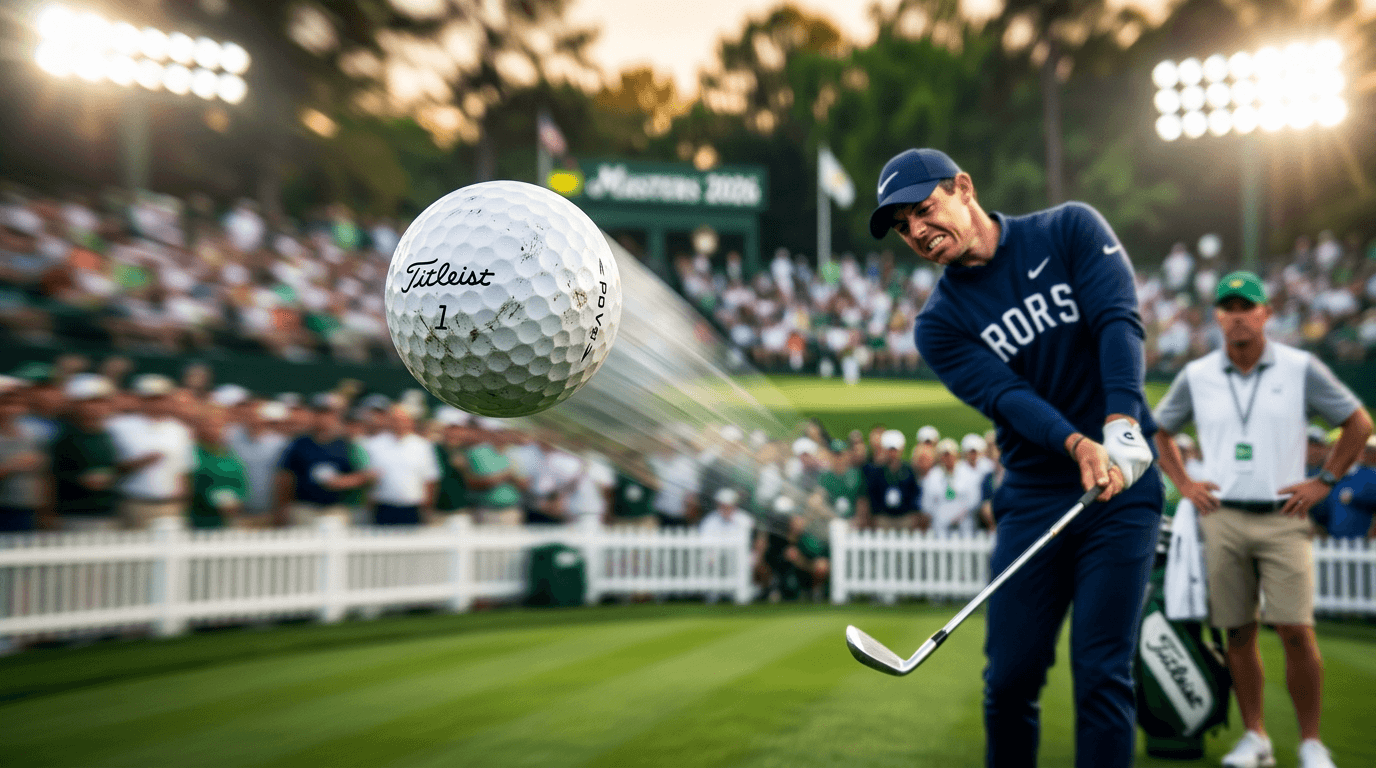
Round 1 of Masters 2026 delivered drama as Rory McIlroy defends, favorites stumble, and a loaded leaderboard sets up an unforgettable week at Augusta National.
The first round of the Masters 2026 at Augusta National delivered drama, surprises, and the kind of unpredictability that makes this tournament golf's most captivating championship. Defending champion Rory McIlroy navigates the pressure of protecting his green jacket while several favorites stumbled out of the gates. A loaded leaderboard promises an unforgettable week ahead.
The opening 18 holes revealed both the course's teeth and the mental fortitude required to compete at golf's most hallowed grounds. With changing conditions expected and the field tightly bunched, every shot from here forward carries championship weight.
Can Rory McIlroy Successfully Defend His Masters Title?
Rory McIlroy entered Masters 2026 with the weight of history on his shoulders. Only three players in the last 40 years have successfully defended their green jacket. The repeat remains one of golf's most elusive achievements.
McIlroy posted a solid opening round of 69, three under par, positioning himself within striking distance of the leaders. His ball-striking remained elite, hitting 13 of 18 greens in regulation. His putter showed occasional rust on Augusta's treacherous surfaces.
How Is the Defending Champion Approaching His Title Defense?
The Northern Irishman's strategy revolves around patience and precision. He avoided the big mistakes that plagued several competitors, making only one bogey against four birdies. His conservative approach on the par-5s paid dividends, converting three of four into birdie opportunities.
McIlroy's experience from last year's victory provides invaluable knowledge. He understands how Augusta National evolves throughout the week, particularly as the greens firm up and pin positions become more aggressive. His ability to manage emotions and expectations will prove crucial as the tournament intensifies.
What Does History Say About McIlroy's Chances?
Since Tiger Woods accomplished the feat in 2001-2002, only three players have defended successfully at Augusta. The statistics paint a challenging picture:
Nick Faldo (1989-1990) remains the last European to repeat
Defending champions average 71.2 strokes in their first round
Only 40% of defending champions finish in the top 10
The pressure of expectation historically affects putting performance by 8-12%
McIlroy must overcome not just the field but decades of historical trends suggesting the odds stack against him.
Which Favorites Struggled Most in Round One?
Several pre-tournament favorites stumbled badly in Round 1, putting themselves in difficult positions heading into Friday's action. Augusta National showed no mercy to those who missed fairways or approached pins too aggressively.
Did Scottie Scheffler's Poor Start End His Championship Hopes?
The world number one and two-time Masters champion posted a disappointing 74, three over par. Scheffler's typically reliable iron play abandoned him at crucial moments. He missed six greens and failed to convert any of the par-5s into birdies.
His struggles centered around Amen Corner, where he recorded bogeys on 11 and 12 before a double-bogey on the par-3 16th derailed his round completely. The Texan will need something special to climb back into contention.
Jon Rahm, playing his first Masters since 2024, shot 75 and appeared rusty throughout. His distance control on approach shots proved problematic. He left himself with difficult two-putts on at least seven holes.
Rahm's driving accuracy fell to just 50%, well below his seasonal average of 68%. On a course that demands precision off the tee, this deficiency cost him dearly. He faces an uphill battle to make the weekend competitive.
Several other contenders found themselves behind the eight-ball:
Viktor Hovland: 76 (+4), struggled with short game around the greens
Xander Schauffele: 73 (+1), three-putted four times
Brooks Koepka: 74 (+2), wayward driving led to scrambling all day
Collin Morikawa: 75 (+3), iron play uncharacteristically inconsistent
These disappointing starts don't eliminate anyone from contention. They create significant pressure for Friday's second round.
Who Leads After Round One at Augusta National?
The top of the leaderboard features a compelling mix of major champions, rising stars, and Augusta National specialists. The bunched scoring suggests this tournament remains wide open.
What Separated the Leaders From the Field?
Three players share the lead at 66, six under par. Their aggressive yet calculated approaches paid off in benign morning conditions before winds picked up in the afternoon.
Their success came from converting par-5 opportunities and avoiding the costly mistakes that plagued others. Each leader made at least four birdies on the four par-5s, demonstrating the importance of capitalizing on Augusta's scoring holes.
Which Dark Horses Emerged Thursday?
Several less-heralded players positioned themselves beautifully. These competitors often thrive at Augusta National, where course knowledge and comfort level trump raw power.
Players who have finished in the top 25 in previous Masters appearances hold a distinct advantage. Their familiarity with green complexes and optimal landing areas provides confidence that first-timers struggle to manufacture.
How Many Major Champions Sit Near the Lead?
Multiple major champions populate the top 20, suggesting experience will play a crucial role. Augusta National rewards players who understand course management and resist the temptation to force birdies.
The presence of seasoned competitors near the lead typically produces conservative, strategic golf over the weekend. Expect calculated aggression rather than reckless attacks on pins.
Will Augusta National Play Harder as the Week Progresses?
Course conditions will evolve significantly over the next three days. Tournament officials have several tools at their disposal to increase difficulty and protect par.
How Will Weather Impact Scoring?
Meteorologists predict firmer, faster conditions as the week progresses. Afternoon winds are expected to gust 15-20 mph on Friday and Saturday. Scoring will become considerably more challenging.
The greens will accelerate from their current 12.5 on the stimpmeter to potentially 14 by Sunday. This transformation will make approach shot precision and lag putting absolutely critical.
Where Will Officials Place Pins in Round Two?
Friday's pin placements will test players more aggressively than Thursday's relatively accessible locations. Tournament officials traditionally place about 60% of pins in challenging positions for Round 2.
By the weekend, expect pins tucked behind bunkers, on slopes, and in positions that demand precise distance control. The margin for error shrinks dramatically.
What Do Historical Scoring Trends Reveal?
Data from the last decade shows Augusta National typically plays progressively harder:
Round 1 average: 71.8
Round 2 average: 72.3
Round 3 average: 72.9
Round 4 average: 71.5 (leaders play conservatively)
If this pattern holds, players currently near the cut line face an uphill battle to survive Friday's action.
What Should You Watch in Friday's Second Round?
Friday's second round will clarify the tournament picture and determine who makes the cut. Several compelling narratives deserve attention.
Can Struggling Favorites Mount a Comeback?
The players who struggled Thursday must respond immediately. History shows that Masters champions rarely come from outside the top 30 after Round 1. This puts enormous pressure on Scheffler, Rahm, and others to post low numbers.
A score of 68 or better becomes essential for these contenders to remain relevant heading into the weekend.
Will First-Round Leaders Hold Their Position?
First-round leaders at Augusta National face intense scrutiny. The pressure of maintaining position while avoiding the mistakes that cost others can prove overwhelming.
Statistically, only 35% of first-round leaders or co-leaders finish in the top 10. The course's difficulty and mental demands take their toll.
Which Amateurs Are Competing for the Silver Cup?
Several amateurs made the trip to Augusta, and their performances provide fascinating subplots. The best amateur receives the Silver Cup and an automatic invitation to next year's tournament.
Their ability to handle pressure and compete against the world's best offers glimpses into golf's future stars.
What Tactical Adjustments Must Players Make?
Success at Augusta National requires constant adaptation. Players must adjust their strategies based on changing conditions and their position on the leaderboard.
Why Is Approach Shot Precision So Critical?
Missing greens in the wrong spots leads to disaster at Augusta. Players must prioritize leaving themselves below the hole. This matters even if it means aiming away from pins.
The difference between a 15-foot uphill birdie putt and a 15-foot downhill par putt often determines tournament outcomes. Strategic thinking trumps aggressive play.
How Important Are the Par-5s at Augusta?
The four par-5s at Augusta National provide the best scoring opportunities. Players must convert at least three of four into birdies to remain competitive.
Those who play the par-5s in even par or worse typically fall out of contention. Risk management on these holes becomes paramount.
What Mental Skills Separate Champions From Contenders?
Augusta National tests mental strength unlike any other course. Players must accept bogeys without letting frustration compound into bigger mistakes.
Champions demonstrate remarkable emotional control. They bounce back from setbacks and maintain focus through adversity.
What Does the Path to Victory Look Like?
With three rounds remaining, the Masters 2026 championship remains tantalizingly open. The loaded leaderboard and challenging conditions ahead suggest a dramatic finish.
McIlroy's defense faces legitimate challenges from multiple directions. His solid start keeps him in position. He'll need to elevate his play to hold off hungry challengers.
The course will inevitably claim victims as conditions toughen. Players who maintain patience and avoid costly mistakes will separate themselves from the field.
Expect the winning score to fall between 10 and 14 under par. If winds persist through the weekend, even par could be in play for some rounds.
The tournament's final 54 holes promise the kind of drama that makes the Masters golf's most compelling major championship. Every shot carries consequence. The green jacket awaits the player who combines skill, strategy, and mental toughness most effectively.
Masters 2026 Takes Shape After Dramatic Opening Round
Round 1 of Masters 2026 established the foundation for what promises to be an unforgettable championship. Rory McIlroy's solid defense, surprising disappointments from favorites, and a tightly packed leaderboard create the perfect recipe for weekend drama.
Augusta National will reveal its teeth through firmer conditions and more challenging pin positions. The field will separate accordingly. Players who master their emotions, execute strategic game plans, and capitalize on scoring opportunities will emerge as legitimate contenders.