Giant Prehistoric Insects Thrived Without High Oxygen
Scientists believed high oxygen levels enabled giant prehistoric insects to exist. A new study dismantles this theory, revealing their breathing systems had plenty of capacity.

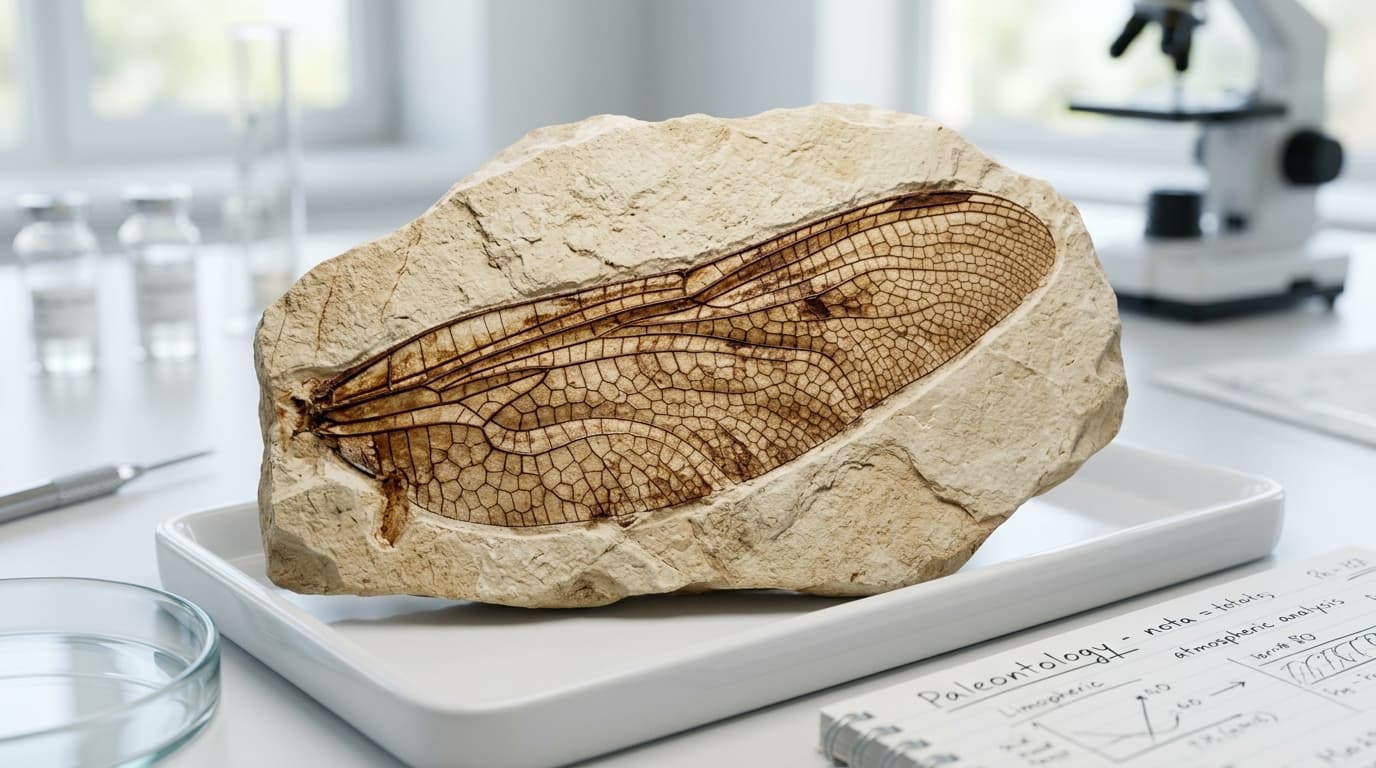
Why Did Giant Prehistoric Insects Really Exist? New Study Challenges Oxygen Theory
Learn more about missing scientists timeline: 11 cases since 2022 examined
For decades, scientists believed they had solved one of paleontology's most intriguing puzzles. Ancient dragonflies with wingspans stretching nearly three feet across once dominated Carboniferous skies, and the prevailing theory credited atmospheric oxygen levels reaching 35% for their enormous size. A groundbreaking study now dismantles this long-held assumption, forcing researchers to reconsider what truly enabled these giant prehistoric insects to exist.
The oxygen hypothesis seemed logical. Modern insects breathe through a network of tubes called tracheae, which passively deliver oxygen throughout their bodies. Scientists reasoned that higher oxygen concentrations in ancient atmospheres compensated for the inefficiency of this system, allowing insects to grow much larger than their modern descendants.
Why Did Scientists Believe Oxygen Caused Insect Gigantism?
The correlation between Carboniferous oxygen levels and insect gigantism appeared too strong to ignore. During this period roughly 300 million years ago, atmospheric oxygen peaked at concentrations far exceeding today's 21%. Fossil records revealed insects of staggering proportions during this same timeframe.
Researchers built mathematical models suggesting insect respiratory systems would struggle to supply oxygen to larger bodies under current atmospheric conditions. The tracheal system, which relies on diffusion rather than active pumping, seemed like an obvious limiting factor.
Scientific consensus doesn't always equal scientific truth. New research challenges this fundamental assumption by examining what actually happens inside insect flight muscles during peak activity.
What Does the New Research Reveal About Insect Breathing?
Researchers from the University of California, Berkeley, conducted detailed physiological studies on modern insects to understand their respiratory limitations. They measured oxygen delivery to flight muscles during maximum exertion, expecting to find evidence of oxygen constraints.
Insect flight muscles operate well below their oxygen supply capacity. The tracheal system delivers significantly more oxygen than these muscles actually consume, even during intense flight. This finding suggests the respiratory system isn't the bottleneck scientists assumed it was.
For a deep dive on giant kraken-like octopuses ruled the cretaceous deep, see our full guide
The study revealed that insect breathing systems have substantial room for expansion. Their tracheal networks could theoretically support much larger body sizes without requiring elevated atmospheric oxygen levels.
How Do Insects Actually Breathe?
For a deep dive on 100-million-year-old snake with hind legs rewrites evolution, see our full guide
Understanding insect respiration helps clarify why this discovery matters. Unlike mammals with lungs and circulatory systems, insects breathe through spiracles - small openings along their bodies that connect to tracheal tubes. These tubes branch throughout the insect's body, delivering oxygen directly to tissues.
The system works primarily through diffusion, though some larger insects can pump their abdomens to enhance air flow. Scientists previously believed this passive system would fail in larger insects under normal oxygen conditions.
Modern dragonflies, despite their relatively small size compared to their prehistoric ancestors, show no signs of oxygen limitation during flight. Their muscles receive ample oxygen supplies, suggesting size constraints must come from elsewhere.
What Really Prevented Insects From Growing Larger?
With oxygen removed as the primary constraint, researchers now explore alternative explanations for why insects don't grow larger today. Several compelling theories have emerged from this paradigm shift.
Did Predators Limit Giant Insect Size?
The evolution of flying predators, particularly birds, may have driven insect size reduction. Giant insects would make easy targets for aerial hunters. Natural selection would favor smaller, more maneuverable insects that could escape predation.
Birds appeared roughly 150 million years ago, long after the age of giant insects ended. However, flying pterosaurs and early bird ancestors may have exerted similar selective pressures.
What Physical Constraints Limit Insect Size?
Insect exoskeletons face mechanical constraints that intensify with size. The square-cube law dictates that as an object grows, its volume increases faster than its surface area. For insects, this means body mass grows more rapidly than the strength of their exoskeleton can support.
Key physical constraints include:
- Weight-to-strength ratios: Larger exoskeletons require proportionally more material, adding weight that compromises flight efficiency
- Wing loading: Giant wings need enormous muscles to power them, creating diminishing returns
- Molting challenges: Larger insects face greater risks during the vulnerable molting process when they shed their exoskeletons
- Temperature regulation: Bigger bodies struggle with heat dissipation, especially during the intense metabolic demands of flight
Do Developmental Factors Limit Insect Growth?
Insect growth patterns may impose their own limitations. Insects develop through metamorphosis, and coordinating the transformation of a massive body presents biological challenges.
Larger larvae require more time to mature, exposing them to predators and environmental hazards for extended periods. Metabolic efficiency also plays a role. Processing nutrients, eliminating waste, and maintaining cellular function all become more complex at larger scales.
How Does This Change Our Understanding of Ancient Ecosystems?
This discovery forces paleontologists to reconsider Carboniferous ecosystems. If oxygen didn't enable giant insects, what environmental factors actually mattered?
The absence of aerial predators likely played a more significant role than previously recognized. The Carboniferous period featured vast swamp forests with limited open spaces. Giant insects may have thrived in these environments where maneuverability mattered less than in open skies.
Climate and temperature patterns may have contributed more than atmospheric composition. Warmer global temperatures could have extended insect growing seasons, allowing more time to reach larger sizes.
What Questions Do Researchers Still Need to Answer?
This study opens new avenues of investigation while closing an old one. Scientists now focus on several key questions:
What specific predator-prey dynamics influenced insect size evolution? Researchers examine fossil records for evidence of predation patterns and hunting behaviors.
How did insect flight mechanics change as body size increased? Scientists analyze wing structures for mechanical constraints that may have limited growth.
What role did plant evolution play in shaping insect communities? The relationship between plant size and insect size remains unexplored.
Could modern insects evolve larger sizes if selective pressures changed? This question has implications for understanding evolutionary potential.
The study also raises questions about other size-oxygen correlations in the fossil record. Did elevated oxygen levels affect other organisms differently than scientists assumed?
What Does This Mean for Evolutionary Biology?
This research exemplifies how scientific understanding evolves. A theory that seemed rock-solid for decades crumbled when researchers examined actual physiological data rather than relying on assumptions.
The findings also highlight the importance of studying modern organisms to understand ancient ones. By measuring oxygen use in contemporary insects, researchers gained insights that fossil evidence alone couldn't provide. This approach combines paleontology with physiology to create more complete pictures of prehistoric life.
Multiple factors typically shape organismal traits. Single-cause explanations rarely capture the full complexity of natural selection and adaptation. Giant prehistoric insects likely resulted from a combination of factors, not just one environmental variable.
What Have We Learned About Giant Prehistoric Insects?
The fall of the oxygen-gigantism hypothesis represents more than just a correction to paleontological theory. It demonstrates how science progresses through questioning established ideas and testing assumptions with new evidence.
Giant prehistoric insects didn't need high oxygen levels to achieve their impressive sizes. Predation pressure, structural constraints, and ecological factors now take center stage in explaining why insects don't grow as large today.
Continue learning: Next, explore lost world discovery: ancient animals found 540m years ago
This shift in understanding enriches our knowledge of ancient ecosystems. As researchers continue investigating what truly limited insect size, they'll undoubtedly uncover more surprises about life on ancient Earth.
Related Articles

Dinosaur Teeth Uncover Jurassic Life Secrets
Dinosaur teeth studies reveal fascinating insights into their diets, migration patterns, and how climate shaped Jurassic life 150 million years ago.
Sep 8, 2025

Why Open Societies Foster Golden Ages in Science and Innovation
Open societies are essential for fostering innovation and scientific breakthroughs. Explore how diversity, education, and freedom create conditions for golden ages.
Sep 16, 2025

Millions Have Diabetes Without Knowing: The Hidden Epidemic
Nearly half of all diabetes cases go undiagnosed, particularly among young adults. Understand the risks and importance of early screening.
Sep 15, 2025
Comments
Loading comments...