France's Aircraft Carrier Exposed by Fitness App Tracking
A French newspaper tracked the country's nuclear aircraft carrier in real time using fitness app data, revealing how consumer technology creates serious national security vulnerabilities.

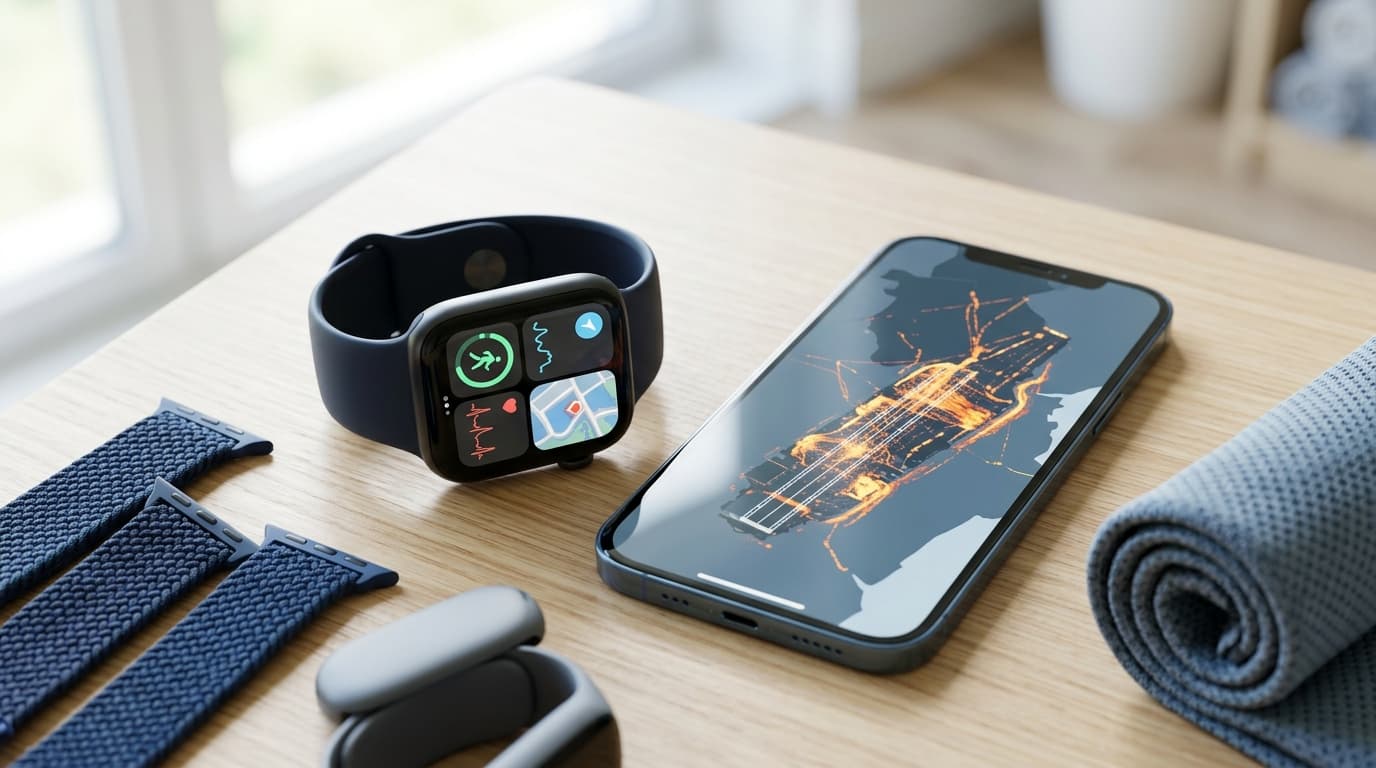
French Aircraft Carrier Tracked Through Fitness App: What Went Wrong?
Learn more about glp-1 microdosers are chasing longevity: what science says
A French newspaper exposed a critical national security vulnerability when it tracked the country's nuclear-powered aircraft carrier in real time using data from a popular fitness application. Le Monde's investigation revealed how military personnel inadvertently broadcast sensitive location data while exercising aboard the Charles de Gaulle, France's flagship naval vessel.
This incident highlights a growing intersection between consumer technology and operational security. Military organizations worldwide now face unprecedented challenges as personal devices and apps create digital footprints that can compromise classified movements and positions.
How Did Le Monde Track France's Aircraft Carrier Using Fitness Data?
Le Monde journalists accessed publicly available data from Strava, a fitness tracking application used by millions of athletes worldwide. Military personnel aboard the Charles de Gaulle used the app to record their workouts, unknowingly creating a digital trail of the vessel's movements.
The investigation revealed precise location coordinates, movement patterns, and operational schedules. Reporters could identify when the carrier departed port, track its route across the Mediterranean, and pinpoint its location during military exercises. The data accuracy reached within meters of the actual position.
Strava's heat map feature aggregates user activity data to show popular exercise routes globally. This crowdsourced information becomes problematic when military personnel use the app in sensitive locations. The platform automatically uploads GPS coordinates, speed, distance, and timestamps unless users manually adjust privacy settings.
What Technical Vulnerability Caused the Breach?
Fitness applications collect extensive metadata beyond basic location information. They record elevation changes, heart rate data, workout duration, and the specific routes users take repeatedly. This granular data creates predictable patterns that intelligence analysts can exploit.
The apps use GPS, GLONASS, and other satellite positioning systems to track movement with remarkable precision. Modern smartphones determine location within 5-10 meters under optimal conditions. When multiple users exercise in the same confined space like a ship deck, their collective data creates an unmistakable signature.
Strava and similar platforms default to public sharing settings to encourage social engagement. Users must actively navigate privacy menus to restrict data visibility. Many service members either overlook these settings or misunderstand the implications of sharing workout data.
What Does This Mean for Military Cybersecurity?
The fitness app incident exposes fundamental tensions between personal technology use and operational security protocols. Military organizations traditionally controlled communication devices and restricted their use in sensitive areas. Smartphones and wearable devices complicate this approach.
For a deep dive on apple urges iphone users to update outdated ios now, see our full guide
Defense departments worldwide now confront a workforce that expects constant connectivity. Young recruits grew up with smartphones and social media, making complete device bans impractical and potentially harmful to morale. Finding the right balance requires sophisticated policy frameworks and technical solutions.
What Security Risks Exist Beyond Location Tracking?
For a deep dive on the los angeles aqueduct is wild: engineering marvel, see our full guide
Fitness apps represent just one category in a broader ecosystem of data-collecting applications. Social media platforms, dating apps, gaming services, and even weather applications gather location data that could compromise security.
Additional vulnerabilities include:
- Photo metadata containing GPS coordinates and timestamps
- Wi-Fi network names that reveal ship or base identities
- Bluetooth device pairing that creates trackable signatures
- Cloud backup services that sync sensitive information
- App permissions that access contacts, calendars, and messages
Each application creates potential attack vectors for adversaries seeking intelligence. State-sponsored actors and sophisticated threat groups actively monitor open-source intelligence (OSINT) from consumer applications and social media platforms.
How Have Other Nations Addressed Similar Issues?
The United States military confronted this problem in 2018 when analysts discovered that Strava heat maps revealed the locations of secret bases in Afghanistan, Syria, and other conflict zones. The Pentagon subsequently banned fitness trackers and similar devices from operational areas.
The U.S. Department of Defense issued specific guidance prohibiting geolocation features on personal devices in designated locations. Service members must disable location services, avoid posting geotagged content, and use privacy zones when exercising near sensitive facilities.
Israel takes an even stricter approach. The Israeli Defense Forces require soldiers to leave personal smartphones at base entrances and provide approved devices with restricted functionality for necessary communication. This policy stems from multiple incidents where adversaries exploited social media posts and app data.
Can Military Organizations Balance Security and Personal Freedom?
Modern militaries struggle to implement effective policies without alienating personnel. Complete device bans create enforcement challenges and may push usage underground rather than eliminating it. Education and technical controls offer more sustainable solutions.
Some organizations issue government devices with pre-configured security settings and approved applications. These devices allow necessary connectivity while maintaining control over data collection and sharing. Geofencing technology automatically disables certain features when users enter restricted areas.
Behavioral training programs teach service members to recognize security risks in everyday technology use. Regular briefings cover emerging threats, demonstrate real-world consequences, and reinforce the importance of operational security. Making security personally relevant increases compliance more effectively than abstract warnings.
What Are the Broader Implications for Privacy and Data Security?
This incident raises questions beyond military contexts about how consumer applications collect, store, and share personal data. Fitness apps gather intimate information about users' daily routines, health status, and geographic movements.
Companies monetize this data through advertising partnerships, aggregate analytics sales, and premium subscription models. Users often consent to extensive data collection without fully understanding the implications. Terms of service documents span dozens of pages written in legal language that obscures actual practices.
Regulatory frameworks like the European Union's General Data Protection Regulation (GDPR) attempt to give users more control over personal information. These laws require explicit consent, transparent data practices, and the right to deletion. Implementation and enforcement remain inconsistent across jurisdictions.
How Can Individual Users Protect Location Privacy?
Consumers should audit the applications installed on their devices and review permission settings. Most smartphones allow granular control over which apps access location data and when. Setting apps to "while using" rather than "always" limits background tracking.
Key protective measures include:
- Disabling location services for apps that don't require them
- Creating privacy zones around home, work, and frequent locations
- Reviewing and adjusting social media sharing settings
- Removing metadata from photos before posting online
- Using VPN services to mask IP addresses and general location
Fitness enthusiasts can still use tracking apps by enabling privacy modes that hide exact locations. Strava and competitors offer settings that blur the start and end points of activities, preventing identification of home addresses or regular locations.
What Lessons Can We Learn from Le Monde's Investigation?
The French aircraft carrier incident demonstrates how investigative journalism can expose security vulnerabilities before adversaries exploit them. Le Monde's reporters used only publicly available information and basic analytical skills to track a nuclear-powered warship.
This type of open-source intelligence gathering requires no hacking, no insider access, and no sophisticated technical capabilities. Anyone with internet access and patience can aggregate data from multiple sources to reveal sensitive patterns. Authoritarian regimes and terrorist organizations actively employ these techniques.
The investigation also highlights the importance of security by design in consumer applications. Technology companies must consider how their products might be misused and implement appropriate safeguards. Default privacy settings should protect users rather than maximize data collection.
How Should Organizations Respond to OSINT Threats?
Military and government agencies need comprehensive strategies addressing both technical vulnerabilities and human behavior. Policy frameworks should evolve as quickly as the technology landscape changes. Regular security assessments must include OSINT analysis to identify potential exposures.
Organizations should establish clear guidelines about personal device usage in sensitive contexts. These policies need enforcement mechanisms while respecting individual privacy in appropriate situations. Training programs must keep pace with emerging applications and evolving threat vectors.
Collaboration between defense departments and technology companies could yield better solutions. App developers might implement automatic security features that detect military installations or vessels and suspend tracking. Such partnerships require balancing commercial interests with national security concerns.
What Does the Future Hold for Personal Technology in Sensitive Environments?
As consumer devices become more sophisticated and ubiquitous, the challenge of maintaining operational security intensifies. Augmented reality glasses, advanced wearables, and Internet of Things devices will create new data collection points and potential vulnerabilities.
Artificial intelligence and machine learning make pattern recognition from disparate data sources increasingly powerful. Adversaries can correlate information from multiple apps, social media platforms, and public databases to build comprehensive intelligence pictures. The volume of available data makes manual analysis obsolete.
Quantum computing may eventually break current encryption standards, exposing historical data that seems secure today. Organizations must plan for long-term data protection, assuming that information collected now might be decrypted in the future.
How Can Organizations Build a Security-Conscious Culture?
Technology solutions alone cannot address these challenges. Organizations need cultures where security awareness permeates every level. Personnel must understand that seemingly innocent actions like recording a workout can have serious consequences.
Leadership commitment to security sets the tone for entire organizations. When commanders and executives model appropriate behavior and prioritize operational security, personnel follow their example. Conversely, inconsistent enforcement and leadership exemptions undermine security policies.
The French aircraft carrier incident serves as a wake-up call for military organizations worldwide. As personal technology becomes inseparable from daily life, the boundaries between public and classified information blur. Protecting sensitive operations requires constant vigilance, adaptive policies, and recognition that every connected device represents a potential security risk.
Conclusion: What Must Change to Prevent Future Breaches?
Le Monde's ability to track France's aircraft carrier through fitness app data exposes critical vulnerabilities at the intersection of consumer technology and national security. This incident demonstrates how everyday applications can inadvertently compromise sensitive military operations through location tracking and data sharing.
Continue learning: Next, explore hp drops mandatory 15-minute support wait times policy
The solution requires a multi-faceted approach combining policy development, technical controls, personnel education, and industry collaboration. Military organizations must balance operational security with the practical reality that connected devices have become essential to modern life. As technology evolves, security strategies must adapt to address emerging threats while maintaining the trust and cooperation of service members.
Related Articles

AI Tools Reveal Identities of ICE Officers Online
AI's emerging role in unmasking ICE officers spotlights the intersection of technology, privacy, and ethics, sparking a crucial societal debate.
Sep 2, 2025

AI's Role in Unveiling ICE Officers' Identities
AI unmasking ICE officers underscores a shift towards transparent law enforcement, raising questions about privacy and ethics in the digital age.
Sep 2, 2025

Transforming Gaza: From Conflict Zone to Tech Hub
A leaked plan from the Trump administration reveals a bold strategy to turn Gaza into a thriving high-tech hub. Discover the potential.
Sep 3, 2025
Comments
Loading comments...