David Allan Coe Dead at 86: Outlaw Country Legend Dies
David Allan Coe, the controversial outlaw country icon who penned hits like "Take This Job and Shove It," has died at 86, leaving behind a complex musical legacy.

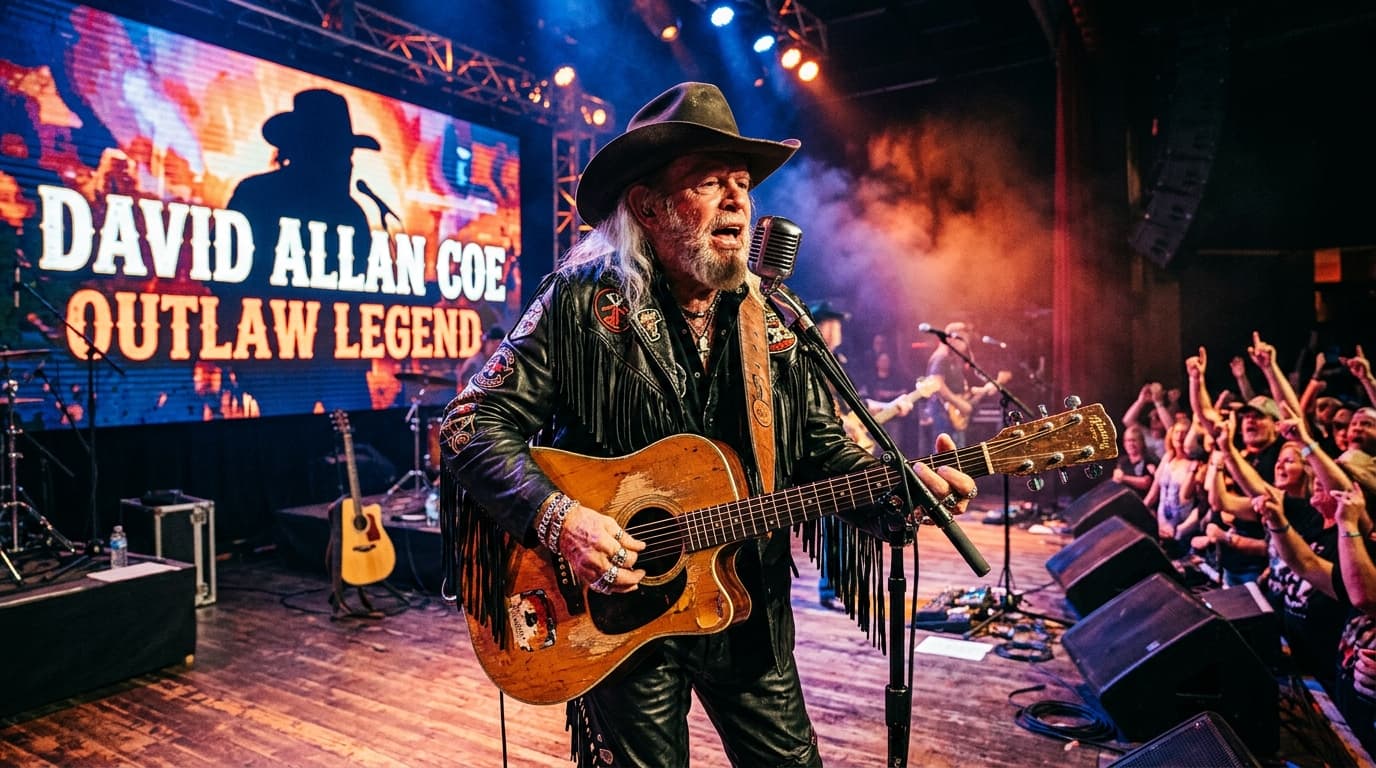
David Allan Coe Dead at 86: What Made This Outlaw Country Legend So Controversial?
Learn more about is this just the price of using cracked software?
The outlaw country music scene has lost one of its most controversial and influential figures. David Allan Coe, the enigmatic singer-songwriter who penned hits for other artists while cultivating his own rebellious persona, died at 86. His passing marks the end of an era for a genre that celebrated rule-breaking and authenticity in country music.
Coe's death resonates beyond typical celebrity obituaries because he embodied the outlaw country movement's raw, unfiltered spirit. While contemporaries like Willie Nelson and Waylon Jennings achieved mainstream success, Coe remained stubbornly on the fringes. He created music that was often too provocative for radio but deeply influential to generations of country artists.
What Songs Did David Allan Coe Write?
David Allan Coe's songwriting prowess generated some of country music's most memorable hits, even when other artists performed them. His composition "Take This Job and Shove It," recorded by Johnny Paycheck in 1977, became a working-class anthem that topped the country charts. The song's defiant message resonated with millions of Americans frustrated with their employment situations.
Coe also wrote "Would You Lay with Me (In a Field of Stone)," which became a number-one hit for Tanya Tucker in 1974. His ability to craft emotionally resonant lyrics demonstrated a sensitivity that contrasted sharply with his outlaw image. These songwriting credits earned him respect within Nashville's music industry, even as his personal brand remained controversial.
Steve Goodman's "You Never Even Called Me by My Name" became one of Coe's signature performances. Coe helped rewrite the song to include a verse about mama, trains, trucks, prison, and getting drunk. It humorously claimed to be the "perfect country and western song." This self-aware approach to country music tropes showcased Coe's understanding of the genre's conventions and his willingness to both honor and satirize them.
How Did David Allan Coe Define Outlaw Country?
The outlaw country movement emerged in the 1970s as a rebellion against Nashville's polished, production-heavy sound. Artists sought creative control over their music, rejecting the constraints imposed by major record labels. Coe took this philosophy further than most of his peers, maintaining an uncompromising artistic vision throughout his career.
His appearance reinforced his outlaw credentials. Coe frequently wore sunglasses, leather, and displayed prominent tattoos at a time when such imagery was uncommon in country music.
For a deep dive on angel reese gets standing ovation in return to chicago, see our full guide
His stage presence suggested danger and authenticity. It attracted fans who felt alienated by mainstream country's increasingly commercial direction.
Coe's troubled past added credibility to his outlaw persona. He spent time in prison during his youth, experiences that informed his songwriting and public image. Unlike artists who manufactured rebellious personas for marketing purposes, Coe's background was genuine, lending authenticity to his music about life's darker corners.
For a deep dive on amc seeks ad dollars for first views of lasting series, see our full guide
Why Was David Allan Coe So Controversial?
Coe's career included underground albums that contained explicit, offensive content that mainstream outlets refused to distribute. These recordings, often sold at concerts, damaged his reputation and limited his commercial opportunities. The material included racist and misogynistic lyrics that Coe later claimed were satirical, though many listeners found them indefensible regardless of intent.
This controversy overshadowed his legitimate musical contributions for many critics and potential fans. Radio stations avoided his music, and mainstream country music largely distanced itself from him.
The situation illustrated the tension between artistic freedom and social responsibility, a debate that continues in contemporary music discussions.
Despite these controversies, Coe maintained a devoted fanbase that appreciated his refusal to conform. His concerts attracted audiences who valued authenticity over polish, substance over style. This loyal following sustained his career for decades, even without significant radio airplay or major label support.
Who Did David Allan Coe Influence in Country Music?
Coe's impact extends to contemporary country and Americana artists who value independence and authenticity. His DIY approach to distribution and marketing anticipated strategies that independent artists now employ routinely. By selling albums directly to fans at concerts, Coe demonstrated that artists could survive outside traditional industry structures.
Several modern country artists have cited Coe as an influence:
- Jamey Johnson has covered Coe's material and praised his uncompromising artistic vision
- Shooter Jennings (Waylon's son) has acknowledged Coe's influence on outlaw country's legacy
- Sturgill Simpson and other Americana artists have embraced the independent spirit Coe exemplified
- Kid Rock collaborated with Coe and introduced his music to younger audiences
- Hank Williams III has performed with Coe and carried forward his rebellious approach
What Made David Allan Coe's Songwriting Special?
Separating Coe's songwriting talent from his controversial persona reveals a craftsman who understood country music's emotional core. His best compositions captured universal human experiences with vivid imagery and emotional honesty. Songs about heartbreak, working-class struggles, and personal redemption demonstrated his ability to connect with listeners' deepest feelings.
Coe's vocal delivery combined roughness with surprising tenderness. He could convey vulnerability and toughness within the same song, creating dynamic performances that kept listeners engaged.
This vocal versatility allowed him to interpret different types of material convincingly, from tender ballads to rowdy drinking songs.
His albums, particularly those released in the 1970s and early 1980s, showcased his range as an artist. "Rides Again," "Once Upon a Rhyme," and "Longhaired Redneck" demonstrated his ability to blend traditional country instrumentation with rock influences. These recordings helped define outlaw country's sound and established templates that subsequent artists followed.
How Did David Allan Coe Build His Outlaw Image?
Coe actively cultivated his mysterious, dangerous image through calculated choices about his appearance and public statements. He claimed connections to motorcycle gangs and emphasized his prison background in interviews. These elements created a persona that fascinated fans and media alike, generating publicity that traditional marketing couldn't achieve.
His autobiography and interviews contained stories that seemed almost too outrageous to be true. Some biographers have questioned the accuracy of certain claims, suggesting that Coe embellished his past for dramatic effect.
Whether entirely factual or partially mythologized, these stories became integral to his legend and appeal.
The mystery surrounding Coe extended to his personal life, which he largely kept private despite his public persona. This contradiction between the public outlaw and the private individual added complexity to his character. Fans speculated about the "real" David Allan Coe, creating an aura of intrigue that sustained interest throughout his career.
What Was the Cost of David Allan Coe's Independence?
Coe's career demonstrated that artistic independence came with financial costs. While his songwriting generated substantial royalties, his own recordings never achieved the commercial success of his compositions performed by others. This disparity highlighted the economic realities facing artists who prioritized authenticity over commercial appeal.
He toured relentlessly throughout his career, performing in small venues and honky-tonks across America. These concerts provided his primary income and maintained his connection with fans.
The grueling schedule reflected both his dedication to his craft and the economic necessity of constant work for independent artists.
Coe's relationship with record labels was often contentious. He signed with various labels throughout his career but frequently clashed with executives over creative control. These conflicts reinforced his outlaw image but also limited his access to the promotional resources that major labels could provide.
What Is David Allan Coe's Legacy in Country Music?
Assessing Coe's legacy requires acknowledging both his musical contributions and his controversial material. His songwriting talent and influence on outlaw country are undeniable, yet his offensive underground recordings cannot be ignored or excused. This duality makes him one of country music's most complicated figures.
Future discussions of outlaw country must grapple with what Coe's career represents. He pushed boundaries in ways that expanded artistic freedom, but also in ways that caused genuine harm.
This complexity offers lessons about the limits of artistic license and the responsibilities that come with public platforms.
Younger artists and fans discovering Coe's music will need to contextualize his work within its time period while also applying contemporary ethical standards. This balancing act between historical understanding and modern values characterizes how we engage with problematic artists across all entertainment mediums.
Remembering David Allan Coe's Impact on Outlaw Country
David Allan Coe's death at 86 closes a chapter in country music history that will never be repeated. His uncompromising approach to artistry, combined with undeniable songwriting talent, secured his place in the genre's evolution. The songs he wrote for others remain country classics that continue to resonate with audiences decades after their release.
His controversial aspects cannot be separated from his legacy, nor should they be. Coe's career serves as a case study in the tensions between artistic freedom, commercial success, and social responsibility.
As the music industry continues evolving, his example offers both inspiration and cautionary lessons for artists navigating their own paths.
Continue learning: Next, explore cherry audio crumar ds-2 free bank: inner space presets
The outlaw country movement that Coe personified changed country music permanently, opening doors for artists who refused to conform to Nashville's expectations. That spirit of independence and authenticity remains his most enduring contribution, influencing artists across genres who value creative control over commercial compromise.
Related Articles

Prince Harry Meets King Charles: A Long-Awaited Reunion
Prince Harry meets King Charles for the first time in over a year. Discover the significance of this emotional reunion and its impact on the royal family.
Sep 12, 2025

Nina Dobrev and Shaun White Call Off Engagement After 5 Years
Nina Dobrev and Shaun White have called off their engagement after over five years together. Explore the timeline of their relationship and insights into their split.
Sep 12, 2025

Selena Gomez Celebrates 'Revival' with Deluxe Vinyl
Selena Gomez's 'Revival' turns 10! Discover the deluxe vinyl edition and the album's enduring cultural impact.
Sep 18, 2025
Comments
Loading comments...