Cuba Oil Blockade: U.S. Bans Russian Tankers to Island
The U.S. has intensified its oil blockade on Cuba, prohibiting Russian tanker deliveries as the island faces its worst energy crisis since the Soviet collapse. What does this mean for business?

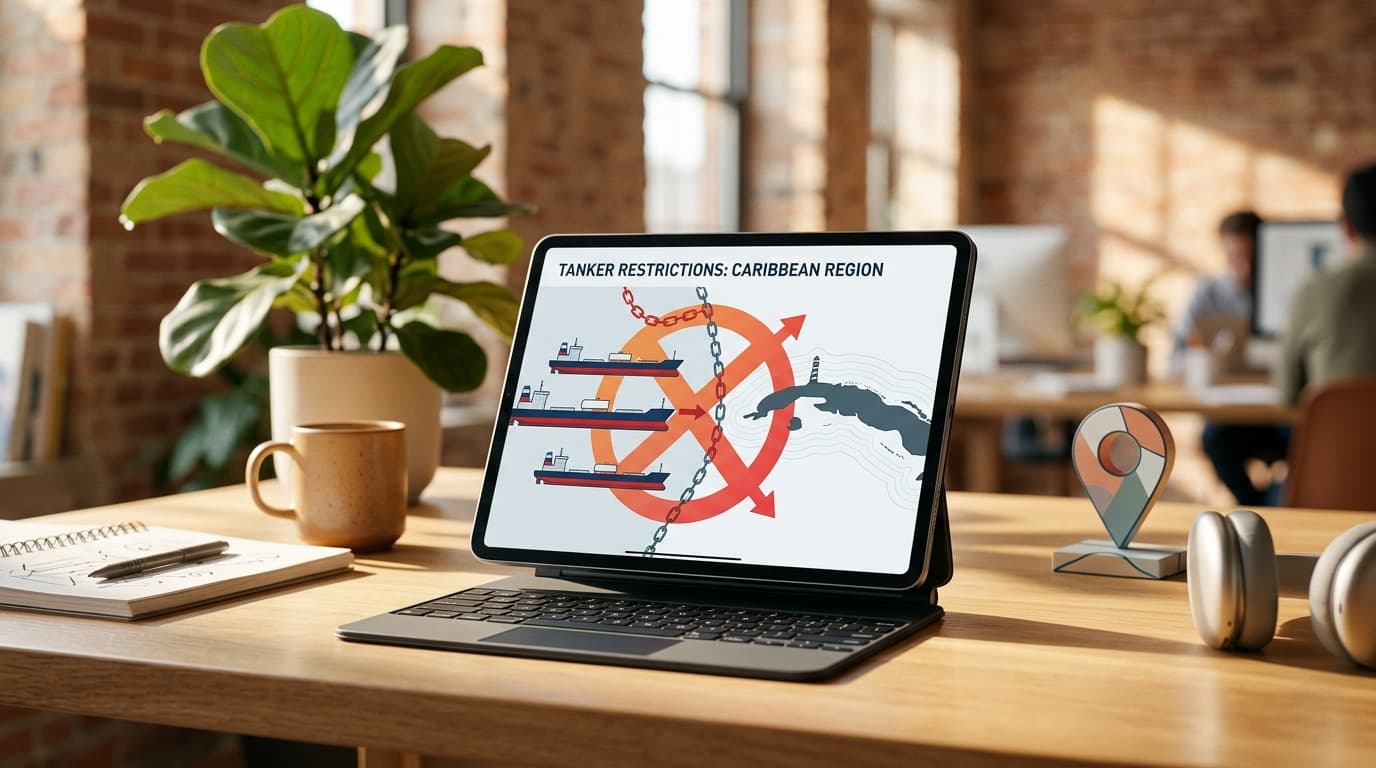
US Blocks Russian Oil to Cuba: What Does This Mean for Caribbean Business?
Learn more about unilever food business merger with mccormick: impact
The United States has escalated its economic pressure on Cuba by prohibiting the island nation from receiving Russian oil shipments, even as two tankers reportedly head toward Cuban ports. This move represents a critical turning point in Caribbean energy markets and highlights how geopolitical tensions directly impact business operations across entire regions.
The fuel-starved island now faces its most severe economic challenge since the Soviet Union collapsed in 1991. For businesses operating in or with Cuba, understanding the implications of this oil blockade is essential for strategic planning and risk management.
What Is the Cuba Oil Blockade and Why Does It Matter for Business?
The U.S. prohibition on Russian oil deliveries to Cuba intensifies decades of economic sanctions. This latest restriction targets vessels carrying petroleum products, creating a complex web of compliance issues for international shipping companies and energy traders.
Cuba's energy infrastructure depends heavily on imported oil. The country consumes approximately 100,000 barrels of oil per day, with domestic production covering only about half of that demand. Russian and Venezuelan supplies have traditionally filled this gap, but U.S. sanctions now threaten to close even these lifelines.
The business impact extends beyond Cuba's borders. Companies with Caribbean operations must now navigate heightened regulatory scrutiny, potential secondary sanctions, and supply chain disruptions that could affect regional trade patterns for years to come.
How Does the Oil Blockade Affect Regional Energy Markets?
The prohibition creates immediate ripple effects across Caribbean energy markets. Fuel prices in the region have already shown volatility as traders anticipate supply shortages and rerouted shipments.
Shipping companies face difficult decisions about vessel deployment. Any tanker that delivers oil to Cuba risks U.S. sanctions, potentially excluding it from American ports and financial systems. This threat effectively removes vessels from the Cuba trade route, regardless of the oil's origin.
Insurance companies and financial institutions are also reassessing their exposure. Banks that process payments for Cuban oil transactions could face penalties, while insurers must weigh the risks of covering sanctioned shipments.
What Are the Business Consequences for Cuba?
Cuba's economy operates on thin margins, and energy shortages create cascading failures across multiple sectors:
For a deep dive on trump invokes pearl harbor to defend iran attack secrecy, see our full guide
- Manufacturing disruption: Factories face rolling blackouts lasting 8-12 hours daily, reducing production capacity by up to 60%
- Tourism impact: Hotels and resorts struggle to maintain services, threatening the island's primary hard currency source
- Agricultural losses: Irrigation systems fail and refrigeration breaks down, causing crop losses and food spoilage
- Transportation paralysis: Fuel rationing limits commercial vehicle operations, disrupting supply chains and delivery schedules
The Cuban government has implemented emergency measures including workplace closures and reduced public services. These actions signal the severity of the crisis and suggest prolonged economic contraction ahead.
For a deep dive on nexstar-tegna merger: how $6.2b deal reshapes sports tv, see our full guide
Why Is Russia Involved in Caribbean Energy Markets?
Russia has increased its presence in Latin American energy markets over the past decade. The country views Cuba as a strategic partner in the Western Hemisphere, providing both political support and economic lifelines.
Russian oil companies have supplied Cuba with approximately 30,000 to 40,000 barrels per day in recent years. This arrangement benefits both parties, as Russia gains a geopolitical foothold while Cuba receives desperately needed fuel, often on favorable credit terms.
The approaching tankers represent a test of Russian commitment to Cuba despite U.S. pressure. If the vessels complete their deliveries, Russia demonstrates its willingness to challenge American sanctions enforcement. If they turn back, the move signals the effectiveness of U.S. economic leverage.
What Are the Compliance Risks for International Businesses?
Companies must now conduct enhanced due diligence on Caribbean operations. The U.S. Treasury Department's Office of Foreign Assets Control (OFAC) enforces these sanctions with significant penalties for violations.
Key compliance considerations include:
- Vessel tracking: Companies must verify that ships in their supply chains have no Cuba exposure
- Payment screening: Financial transactions require scrutiny for Cuban connections
- Third-party risk: Partners and suppliers must demonstrate sanctions compliance
- Documentation requirements: Detailed records prove non-involvement with prohibited activities
Violations can result in fines reaching millions of dollars and criminal prosecution for willful violations. Several major corporations have paid substantial penalties for sanctions breaches in recent years, making compliance a board-level concern.
How Does Economic Warfare Disrupt Markets?
The Cuba oil blockade exemplifies modern economic warfare tactics. Rather than military intervention, the U.S. leverages its financial system dominance to achieve foreign policy objectives.
This approach affects business strategy across multiple dimensions. Companies must balance profit opportunities against sanctions risk, often choosing to avoid entire markets rather than navigate complex compliance requirements.
The blockade also demonstrates how secondary sanctions work in practice. By threatening to penalize third parties who trade with Cuba, the U.S. extends its jurisdiction far beyond its borders. This extraterritorial reach forces international businesses to choose between Cuban markets and American ones, with most selecting the latter due to the U.S. economy's size.
Can Venezuela Still Supply Oil to Cuba?
Venezuela historically provided Cuba with substantial oil supplies, sometimes exceeding 100,000 barrels per day. However, Venezuela's own production has collapsed from over 3 million barrels per day in the 1990s to fewer than 800,000 barrels today.
This decline stems from underinvestment, mismanagement, and sanctions on Venezuela's oil sector. Venezuela can no longer serve as Cuba's primary energy supplier, leaving the island more vulnerable to supply disruptions.
Cuba must either find new suppliers willing to risk U.S. sanctions or fundamentally restructure its economy to operate with significantly less energy. Neither option offers a quick solution.
What Alternative Energy Options Does Cuba Have?
Cuba faces limited options for escaping this energy crisis. The country has explored renewable energy development, with solar and wind projects in various stages of planning and implementation.
Renewable energy requires substantial upfront investment that Cuba cannot easily finance. International lenders hesitate to fund Cuban projects due to sanctions risk and the country's limited ability to repay loans.
Can Cuba Develop Domestic Energy Resources?
Cuba possesses potential offshore oil reserves, but exploration and development require foreign investment and technical expertise. U.S. sanctions effectively block major oil companies from participating in Cuban energy projects.
Smaller firms from countries with less U.S. exposure might consider Cuban opportunities, but the technical challenges and political risks remain substantial. Deep-water drilling requires specialized equipment and expertise that few companies outside major oil firms possess.
The most realistic near-term option involves energy conservation and efficiency improvements. Cuba has already implemented aggressive demand reduction measures, though these come with significant economic costs.
What Should Business Leaders Learn from the Cuba Oil Blockade?
The Cuba oil blockade offers several critical lessons for business strategy and risk management:
- Geopolitical risk is business risk: Political tensions directly impact operations and profitability
- Sanctions compliance requires constant vigilance: Regulatory landscapes shift rapidly, demanding ongoing monitoring
- Supply chain resilience matters: Dependence on single sources or routes creates vulnerability
- Financial system access is leverage: Control over banking networks provides powerful policy tools
- Small markets can create big risks: Even limited exposure to sanctioned countries can trigger penalties
Companies must integrate geopolitical analysis into strategic planning processes. Risk committees should regularly assess sanctions exposure and develop contingency plans for supply chain disruptions.
How Does This Affect Caribbean Business Beyond Cuba?
The Cuba situation affects the entire Caribbean region. Countries with close Cuban ties face pressure to distance themselves or risk complicating their U.S. relationships.
Regional businesses must navigate these political crosscurrents while maintaining commercial operations. Tourism companies, shipping firms, and financial institutions all face heightened scrutiny of their Cuban connections.
The crisis also highlights the Caribbean's energy vulnerability. Most island nations depend on imported petroleum, making them susceptible to supply disruptions and price shocks. This reality drives interest in renewable energy and regional energy cooperation, though progress remains slow.
What Business Scenarios Should Companies Plan For?
The Cuba oil blockade will likely persist as long as the current political dynamics continue. Businesses should plan for multiple scenarios when developing Caribbean strategies.
In a continued blockade scenario, Cuba's economy contracts further, reducing market opportunities but potentially creating openings for companies willing to help the country develop alternative energy sources once sanctions ease. Companies must weigh long-term positioning against short-term risks.
If diplomatic relations improve, Cuba could represent an attractive emerging market with pent-up demand for goods, services, and infrastructure investment. Companies that maintain regional expertise and relationships will be positioned to move quickly when opportunities arise.
The most probable outcome involves prolonged economic pressure with periodic adjustments based on political calculations. This environment demands flexible strategies and careful risk management rather than major commitments.
How Can Companies Navigate Sanctions in Global Business?
The U.S. prohibition on Russian oil deliveries to Cuba demonstrates how economic sanctions shape international business operations. As two tankers approach the island, their fate will signal the effectiveness of American pressure and Russia's commitment to its Caribbean ally.
For business leaders, this crisis underscores the importance of understanding geopolitical risks and maintaining robust compliance programs. The Cuba oil blockade affects not just the island nation but entire regional markets and global supply chains.
Companies must balance opportunity against risk, ensuring that pursuit of profit does not create regulatory exposure or reputational damage. As economic warfare increasingly replaces military conflict, businesses find themselves on the front lines of international disputes, making strategic awareness and careful planning more critical than ever.
Continue learning: Next, explore linkedin influencer speak generator: the viral satire tool
Strategic planning must account for sanctions risk in every market evaluation. Due diligence processes should include geopolitical analysis alongside traditional financial and operational assessments. Companies that master this integrated approach will navigate complex international environments more successfully than competitors who treat compliance as a mere checkbox exercise.
Related Articles

Apple AirPods Pro 3: What Missing Charging Cables Mean for Business
Apple's decision to exclude a charging cable in the AirPods Pro 3 raises questions about sustainability, consumer perception, and business strategy. Explore the implications.
Sep 15, 2025

OpenAI Enhances Voice AI for Enterprise with GPT-Realtime
OpenAI's gpt-realtime sets a new voice AI standard with naturalistic voices and advanced capabilities, aiming to transform enterprise applications.
Sep 10, 2025

Revolutionizing AI: Sakana AI's Evolutionary Algorithm Unveiled
Sakana AI introduces an evolutionary algorithm for building powerful AI models, minimizing costs and data needs. Explore its business implications.
Sep 9, 2025
Comments
Loading comments...