Afroman Wins Defamation Suit Over Police Raid Music Videos
Afroman turned a police raid into viral gold, then beat the cops in court. The rapper's legal victory sets a powerful precedent for artistic expression and First Amendment rights.

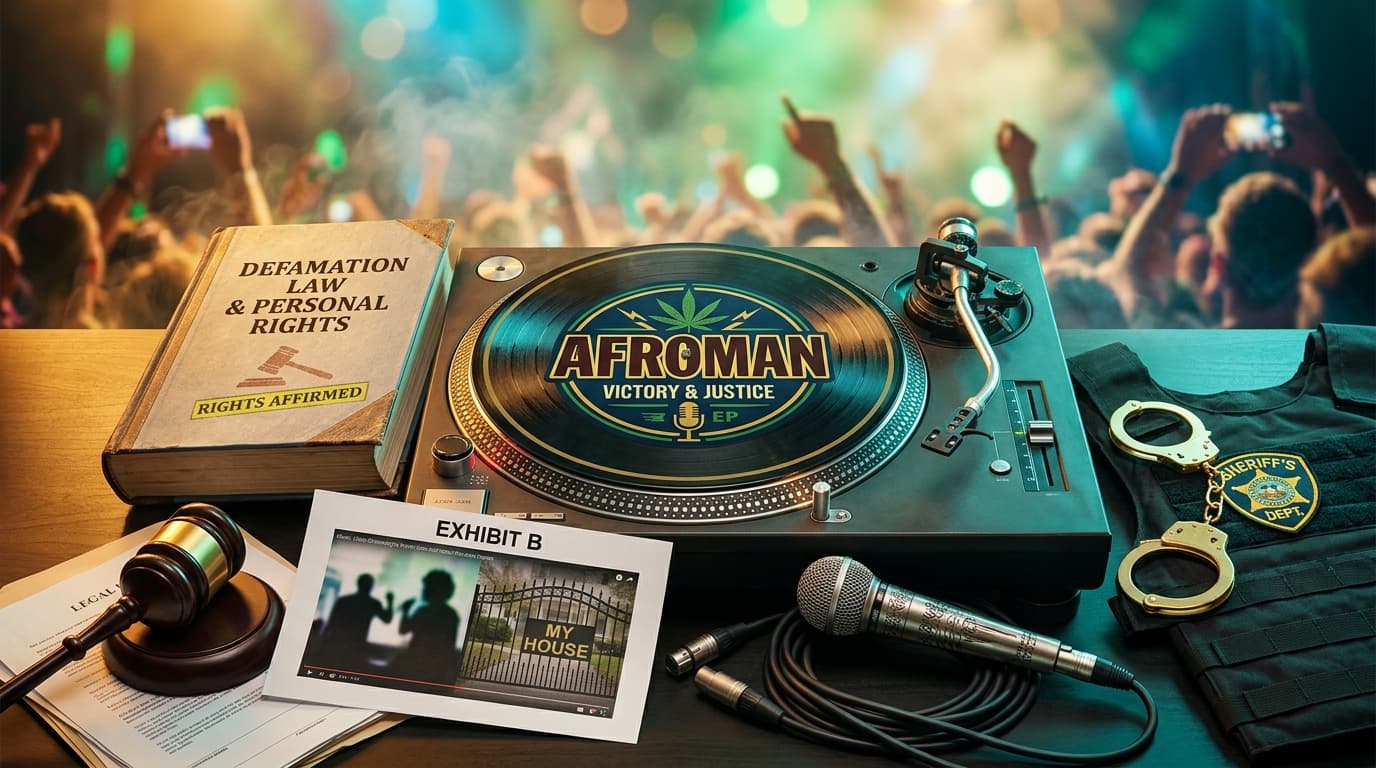
Afroman Wins Defamation Suit After Police Raid Becomes Viral Music Video
Learn more about ensoniq sd-1 32-voice vst emulation: free open source
When law enforcement officers raided rapper Afroman's Ohio home in 2022, they didn't expect to become unwitting stars of his next music videos. The "Because I Got High" artist turned surveillance footage of the search into content gold, spawning hits like "Lemon Pound Cake" and "Will You Help Me Repair My Door." The officers sued for defamation and invasion of privacy, seeking $1.8 million in damages.
After a brief but highly publicized trial, Afroman emerged victorious. A jury ruled in his favor on all counts.
The verdict represents more than just a legal win for the Grammy-nominated musician. It affirms the boundaries of artistic expression and the public's right to critique law enforcement actions, setting a precedent that could influence future cases involving creative works based on real events.
How Did a Police Raid Turn Into Viral Music Videos?
On August 21, 2022, Adams County Sheriff's deputies executed a search warrant at Afroman's home in Winchester, Ohio. Authorities were investigating potential drug trafficking and kidnapping allegations. The raid yielded no arrests, and no charges were ever filed against the rapper, whose real name is Joseph Foreman.
The officers didn't anticipate that Afroman's home security cameras captured the entire operation. The footage showed deputies searching through his belongings, including personal items and his wife's undergarments. One deputy was filmed holding up a large jar of what appeared to be loose change.
Afroman quickly recognized the entertainment value of the footage. Within weeks, he released multiple music videos incorporating the raid footage, mocking the officers' search and questioning the legitimacy of their warrant. The videos went viral, accumulating millions of views across social media platforms.
What Did the Music Videos Show?
The videos featured several memorable moments that caught public attention:
- Deputies rifling through Afroman's personal belongings and his wife's underwear drawer
- An officer examining a large jar of coins in what appeared to be an overzealous search
- Officers walking through his home while Afroman's satirical lyrics played over the footage
- Dramatized reenactments interspersed with actual surveillance footage
- Commentary questioning the necessity and execution of the raid
The videos resonated with audiences who saw them as both entertainment and social commentary on police overreach. Afroman sold merchandise featuring images from the raid, further monetizing the incident.
Why Did the Officers Sue Afroman for $1.8 Million?
For a deep dive on flash sale: 70€ fender studio pro 8 perpetual license, see our full guide
Seven Adams County Sheriff's deputies filed a lawsuit against Afroman in March 2023. They claimed the videos constituted defamation, invasion of privacy, and violated their personality rights. The officers sought $25,000 each in actual damages and $1.8 million total in punitive damages.
The plaintiffs argued that Afroman's videos subjected them to public ridicule and emotional distress. They claimed the footage was used without their consent and portrayed them in a false and humiliating light. One deputy testified about receiving negative attention from the community and experiencing anxiety as a result of the videos.
For a deep dive on leyla bouzid's 'in a whisper' wins at rendez-vous, see our full guide
Afroman's legal team mounted a vigorous defense based on First Amendment protections and the newsworthiness of the raid. They argued that the videos constituted protected speech and commentary on a matter of public concern: law enforcement conduct during the execution of a search warrant.
What Made the Trial Go Viral?
The trial, which took place in early 2025, became a viral sensation in its own right. News outlets and social media users closely followed the proceedings, which featured several bizarre and comedic moments.
The most memorable exchange occurred when CNN's Jake Tapper highlighted testimony from one of the deputies. When asked during cross-examination whether his wife was cheating on him (a claim Afroman made in one of his songs), the officer responded, "I don't know." The moment sparked widespread commentary and became a viral clip.
Afroman testified about his creative process and the intent behind his videos. He maintained that he was exercising his right to free speech and commenting on what he viewed as an unjustified raid on his property. The rapper emphasized that he never intended to make false statements but rather to critique the officers' actions through satire and artistic expression.
What Legal Principles Led to Afroman's Victory?
The jury deliberated and found in favor of Afroman on all counts. Several legal principles contributed to this outcome, demonstrating the strength of First Amendment protections for artistic works.
First, the videos qualified as protected speech under the First Amendment. Courts have long recognized that satire, parody, and social commentary receive robust constitutional protection, even when they make public officials uncomfortable. The officers, acting in their official capacity during the raid, became public figures for purposes of that event.
Second, truth serves as an absolute defense against defamation claims. The surveillance footage showed actual events that occurred during the raid. While Afroman added satirical commentary and music, the underlying visuals depicted what genuinely happened in his home.
How Did Public Interest Factor Into the Verdict?
Afroman's attorneys successfully argued that the raid was a matter of public concern. Law enforcement actions, particularly when they result in no charges or arrests, fall squarely within the realm of issues the public has a right to scrutinize and debate.
The newsworthiness of the incident provided additional protection. Once the raid became public knowledge and Afroman chose to discuss it, the officers' participation in that public event diminished their privacy expectations regarding those specific actions.
The videos constituted artistic expression rather than factual reporting. Courts typically afford greater leeway to creative works that use hyperbole, satire, and artistic license compared to journalistic claims presented as literal truth.
What Does This Mean for Artists and Free Speech?
Afroman's victory carries significant implications beyond his personal case. The verdict reinforces several important principles about artistic freedom and the ability to critique those in power.
Artists can incorporate real events into their creative works without fear of automatic liability, especially when commenting on matters of public interest. This protection extends to using actual footage or recordings of public officials performing their duties, provided the use doesn't involve malicious fabrication.
The case also highlights the limited privacy expectations of law enforcement officers while conducting official duties. When police enter private property with a warrant, their actions become subject to documentation and commentary by the property owner.
What Should Content Creators Learn From This Case?
The ruling provides valuable guidance for content creators, musicians, and artists who want to address real-world events in their work:
- Surveillance footage from your own property can generally be used in creative works
- Satirical commentary on public officials receives strong First Amendment protection
- Truth remains a powerful defense against defamation claims
- Public interest in law enforcement conduct supports the right to create commentary
Creators should still exercise caution. The outcome might have differed if Afroman had fabricated events or made knowingly false statements of fact rather than satirical commentary.
How Did Afroman Respond to His Victory?
Following his victory, Afroman addressed the media with characteristic humor and seriousness. He framed the verdict as a win not just for himself but for all Americans who value free speech and the ability to question authority.
"It's for Americans," he told CBS News. The rapper emphasized that his case demonstrated the importance of holding law enforcement accountable and the right of citizens to speak out when they believe they've been wronged.
Afroman also noted the financial impact of turning the raid into content. He reportedly earned substantial income from the videos and related merchandise, effectively transforming a traumatic experience into a profitable venture.
Why Did This Case Resonate With So Many People?
The case resonated with audiences far beyond Afroman's existing fan base. It tapped into broader conversations about police accountability, surveillance rights, and the power of social media to amplify individual voices against institutional authority.
Many viewed Afroman's approach as a blueprint for how ordinary citizens can respond to perceived injustices using humor and creativity. Rather than simply complaining or filing a lawsuit, he created art that simultaneously entertained, informed, and generated income.
What Are the Key Takeaways From This Case?
The Afroman defamation case offers several key takeaways for artists, legal observers, and anyone interested in the intersection of free speech and law enforcement accountability.
First Amendment protections for artistic expression remain robust, even when that expression makes public officials uncomfortable or subjects them to ridicule. Courts continue to recognize the vital role of satire and commentary in democratic society.
Property owners have significant rights regarding surveillance footage from their own homes. This footage can be used for various purposes, including artistic works, without necessarily violating the privacy rights of those recorded while performing official duties on that property.
The case demonstrates the evolving relationship between traditional legal disputes and social media virality. The trial itself became entertainment, with moments like the cheating wife testimony spreading across platforms and shaping public perception of the case.
What Happens Next for Afroman and the Deputies?
While Afroman prevailed at trial, the deputies could potentially appeal the verdict. However, appeals face significant hurdles given the strong First Amendment issues at play and the jury's clear decision in Afroman's favor.
The rapper has indicated he plans to continue making music and may even create new content about the trial itself. Given his track record of turning life experiences into viral hits, another music video seems likely.
For the deputies, the loss represents not only a failed legal strategy but continued public attention on an incident they hoped to move past. The Streisand effect, where attempts to suppress information lead to greater publicity, operated in full force.
Why This Victory Matters for All Americans
Afroman's victory in the defamation lawsuit represents a significant win for artistic freedom and First Amendment rights. By turning a police raid into viral music videos and then successfully defending his right to do so in court, the rapper demonstrated both creative entrepreneurship and the enduring strength of free speech protections.
The case affirms that artists can incorporate real events into their work, especially when commenting on matters of public interest like law enforcement conduct. It shows that truth, satire, and newsworthiness provide powerful defenses against defamation claims by public officials.
Continue learning: Next, explore kevin spacey settles sexual assault case before trial
As Afroman told reporters, this verdict matters for all Americans who value the right to question authority and express themselves creatively. The "Lemon Pound Cake" case will likely be cited in future disputes involving artistic expression, police accountability, and the boundaries of protected speech. For now, Afroman can celebrate both a legal victory and the millions of views his raid-inspired content continues to generate.
Related Articles

Prince Harry Meets King Charles: A Long-Awaited Reunion
Prince Harry meets King Charles for the first time in over a year. Discover the significance of this emotional reunion and its impact on the royal family.
Sep 12, 2025

Nina Dobrev and Shaun White Call Off Engagement After 5 Years
Nina Dobrev and Shaun White have called off their engagement after over five years together. Explore the timeline of their relationship and insights into their split.
Sep 12, 2025

Selena Gomez Celebrates 'Revival' with Deluxe Vinyl
Selena Gomez's 'Revival' turns 10! Discover the deluxe vinyl edition and the album's enduring cultural impact.
Sep 18, 2025
Comments
Loading comments...